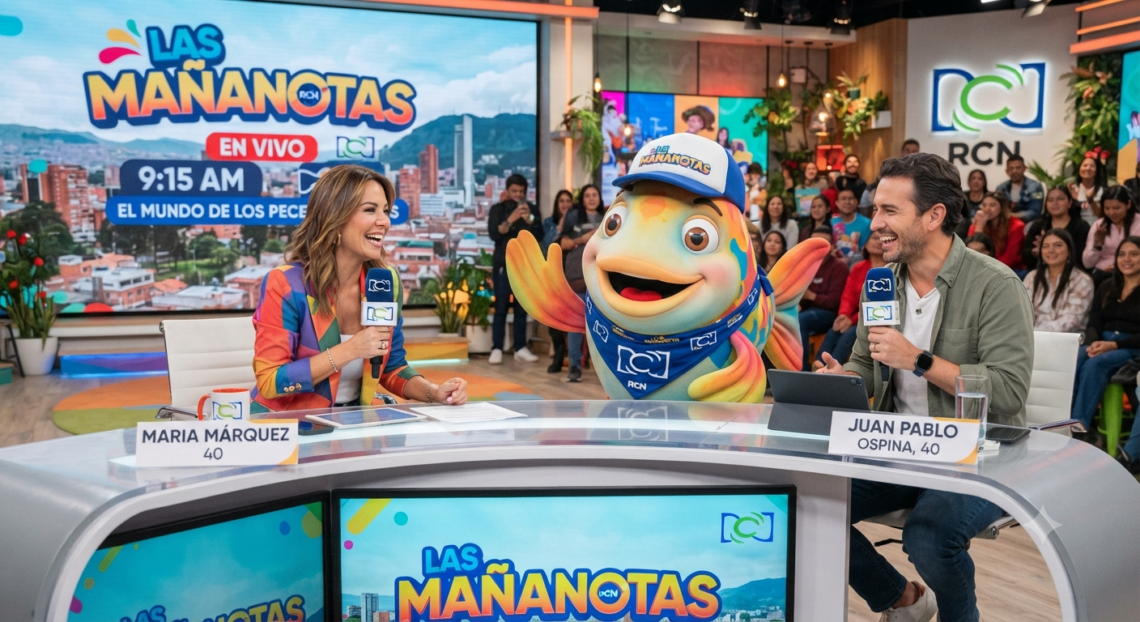
Fish on RCN Las Mañanotas looks like the name of a viral Colombian television moment. Search results may suggest that a fish appeared during a live morning segment, a presenter reacted unexpectedly, or a cooking demonstration went wrong.
The problem is simple: the most frequently repeated version of that story is not supported by a clearly identifiable original video, broadcast date, presenter, episode, or official Canal RCN report.
What can be verified is that Las Mañanotas de RCN is a weekend programming block, historically used to package family and youth-oriented shows on Colombia’s Canal RCN. Official coverage from Noticias RCN placed El Chavo del 8 inside that block in October 2024, while contemporary schedule reporting also listed Los Pitufos, El Chavo del 8, and Margarita within the morning lineup.
That distinction matters. This guide examines what the phrase probably represents, what evidence exists, why low-information searches spread, and how viewers can verify the original source without repeating unsupported claims.
What Does Fish on RCN Las Mañanotas Mean?
At the moment, Fish on RCN Las Mañanotas seems to be more of an ambiguous search term than something with a definitive existence as a show, its particular episode, or a verifiable television occurrence.
One indexed article calls it a funny fish moment supposedly aired on Las Mañanotas, but further down the same source provides a few other mutually exclusive options, including a live-aboard fish show, a cooking segment, or a social media clip talked about on the show.
It does not give an upload date, any particular host, a transcript, or any other RCN source pointing to the same page as confirmation.
That is not to say that any fish-related clip was not shown on the program.
It is only that the particular combination of phrases is not currently supported by the RCN network enough for it to be considered a real story at this time.
The safest assumption is that Las Mañanotas is real TV, and the fish incident is not an officially recognized one, despite the presence of articles talking about it.
It might have come from a mistranslated phrase, a popular search term, an incorrectly labeled clip, a scraped headline, or any number of other sources.
Articles that speak confidently about the fish on RCN Las Mañanotas without providing further context or primary source material should be taken with a grain of salt.
Las Mañanotas de RCN Is a Programming Block, Not a Typical Talk Show
Much of the confusion around Fish on RCN Las Mañanotas comes from the way some websites describe Las Mañanotas. It has been characterized online as a light entertainment or variety show with hosts, interviews, lifestyle features, and spontaneous studio moments.
Reliable evidence points to a different format.
Noticias RCN described “Mañanotas de RCN” as the programming space in which El Chavo del 8 would air on weekend mornings beginning October 5, 2024.
A separate report in El País listed a structured weekend schedule: Los Pitufos from 7:30 to 8:30 a.m., El Chavo del 8 from 8:30 to 10:30 a.m., and Margarita afterward.
That reporting also called Las Mañanotas an infant or family-oriented programming block, not a live presenter-led magazine show.
Historical television references describe Las Mañanotas as the successor to RCN’s earlier children’s block, Tacho Pistacho. Although fan-maintained databases should not be treated as equal to official reporting, this background is consistent with the verified scheduling evidence.
Why the Format Changes the Interpretation
If Las Mañanotas is primarily a branded scheduling block, then a claim about “a presenter interacting with a fish on set” becomes less plausible unless the clip came from:
- A promotional bumper between programs
- An advertisement shown during the block
- A scene inside one of the scheduled shows
- A separately produced RCN segment mislabeled as Las Mañanotas
- A social-media edit using the block’s logo or broadcast graphics
This is the first major information gain competitors often miss. Before explaining a viral moment, a trustworthy article must correctly identify the media format in which it allegedly happened.
That correction gives Fish on RCN Las Mañanotas a firmer factual foundation. It also prevents readers from confusing an entire programming block with one individual show.
Why Fish on RCN Las Mañanotas Became a Search Query
Search trends do not always begin with a major event. Sometimes they begin with a poorly captioned video, an autogenerated title, a translation error, or one webpage that other sites imitate.
Fish on RCN Las Mañanotas has the structure of a fragmented discovery query. It combines an English noun, a Colombian network name, and a Spanish program-block title.
That mixed-language construction suggests the phrase may have been generated by a viewer trying to identify something seen in a clip rather than by RCN itself. Several explanations are possible, but they should remain hypotheses until primary evidence appears.
It May Be a Literal Description
A viewer may have seen a fish, fish costume, fish dish, animated character, aquarium scene, or fishing-related sequence during the block and searched for it in English.
The content may have been part of a television episode rather than a unique RCN production. Without the original footage, the literal-fish explanation remains only one possibility.
It May Be a Captioning or Translation Error
Automatic subtitles and machine translation frequently convert names, slang, audio fragments, or Spanish words into unrelated English terms.
“Fish” may therefore be a mistranscribed word rather than a reference to a literal animal. This would explain why the English word appears beside the Spanish title “Las Mañanotas.”
It May Refer to Content Inside Another Program
Because Las Mañanotas packages multiple shows, the remembered scene may belong to El Chavo del 8, an animated program, a drama, a commercial, or a channel promotion.
In that case, viewers may remember the RCN branding but not the title of the actual show. The resulting search query would combine the most visible clues.
It May Be an SEO-Created Entity
A low-authority page can publish an article around a strange query, after which search engines begin associating the phrase with the page’s speculative explanation.
Other publishers may then rewrite the same claim. This creates the appearance of corroboration without adding independent evidence.
What Is Actually Verified About Fish on RCN Las Mañanotas?
A rigorous review of Fish on RCN Las Mañanotas should divide findings into confirmed facts, plausible interpretations, and unsupported claims.
This approach protects readers from confident but poorly sourced descriptions. It also helps publishers demonstrate stronger editorial judgment.
Confirmed Facts
Canal RCN has used the Las Mañanotas brand as a weekend morning programming space. Official RCN reporting directly used the phrase when announcing the return of El Chavo del 8 in 2024.
The block has carried family-oriented programming. A published schedule from October 2024 placed children’s entertainment and family series within the lineup.
The exact phrase has been indexed as an online article topic. That article presents a supposed viral fish moment but shifts between several possible versions, weakening its reliability as a factual source.
What Is Not Currently Verified?
There is no reliable indexed evidence establishing:
- The date the alleged fish clip aired
- The title of the episode or segment
- The identity of a presenter involved
- Whether the fish was alive, cooked, animated, or metaphorical
- An official RCN upload of the moment
- A confirmed viral trend supported by platform data
- A documented national audience reaction
- The program that contained the alleged scene
These gaps are not minor. They are the core facts needed to report the story responsibly.
How to Find the Original Fish on RCN Las Mañanotas Clip
Anyone researching Fish on RCN Las Mañanotas should start with source verification rather than repeating the first summary that appears in search results.
For Fish on RCN Las Mañanotas, metadata matters more than the number of websites repeating the story. Ten copied summaries are not stronger evidence than one original broadcast recording.
Search in Spanish as Well as English
Use combinations such as:
- “pez Las Mañanotas RCN”
- “pescado Las Mañanotas”
- “animal Las Mañanotas Canal RCN”
- “comercial pescado RCN fin de semana”
- “escena pez El Chavo RCN”
- “promocional Las Mañanotas RCN”
- “video pez Canal RCN”
- “Las Mañanotas escena viral”
Spanish searches are more likely to surface original Colombian posts, television guides, fan comments, or archived channel uploads.
Try singular and plural terms as well. A video uploader may use “peces,” “pescados,” “animal marino,” or the name of a specific species instead of “pez.”
Identify Visual Clues
Pause the clip and look for:
- The Canal RCN logo
- A Las Mañanotas bumper
- Program title graphics
- Actor or host faces
- Closed-caption text
- A timestamp or rebroadcast label
- Advertising disclaimers
- Watermarks from TikTok, Facebook, YouTube, or Instagram
A logo alone does not prove that a scene was produced specifically for Las Mañanotas. It may only show that the content aired during that branded time block.
Trace the Oldest Upload
Reposts often remove context. Search distinctive dialogue, captions, usernames, and watermarks to locate the earliest available version.
The oldest accessible upload is not automatically the original. However, it usually offers more metadata than later meme edits.
Check its publication date, description, comments, account history, and visible logos. Older comments may also reveal the name of the program before the clip was relabeled.
Compare the Clip With Archived Schedules
Once a likely date is known, compare the video with Canal RCN schedules for that weekend.
If a specific show aired at the relevant time, the scene may be traceable to an episode rather than to the block itself. Episode guides, cast lists, and dialogue searches can then narrow the investigation.
Use Reverse Image Search
Capture a clear frame containing a recognizable person, set, costume, title card, or unusual object. Submit that frame to more than one reverse-image search service.
Results may reveal an earlier YouTube thumbnail, social-media post, promotional image, television recap, or episode page. Cropping out repost watermarks can sometimes improve the match.
Demand a Primary Source Before Making Strong Claims
A primary source could include an official RCN video, a complete broadcast recording, a verified cast or presenter post, or an archived schedule tied directly to the clip.
Without one, describe the story as unconfirmed. Avoid claiming that a particular host, animal, or mishap was involved.
Why Competitor Explanations May Be Misleading
Weak pages covering Fish on RCN Las Mañanotas often use confident language while avoiding verifiable details. This creates an illusion of authority.
Common warning signs include:
- Calling Las Mañanotas a live variety show without evidence
- Referring to “the presenter” without naming anyone
- Claiming a clip went viral without view counts, dates, or links
- Listing several mutually exclusive versions of what happened
- Saying audiences reacted positively without documenting real reactions
- Suggesting where to find the clip without identifying it
- Repeating generic observations about memes and social media
- Using stock images unrelated to the alleged broadcast
- Providing no publication or update methodology
This pattern is useful for readers and publishers to recognize. A page can be grammatically polished and still provide almost no factual information.
Confidence Is Not the Same as Evidence
Statements such as “the audience loved it,” “the clip quickly went viral,” or “the presenter’s reaction became iconic” sound specific.
Without dates, names, metrics, or source links, they remain unsupported assertions. A trustworthy article should either document those details or explain that they are unavailable.
The Broader Lesson: Viral Search Terms Can Become False Narratives
The story behind Fish on RCN Las Mañanotas illustrates a larger problem in digital publishing. Search engines reward pages that answer demand, but demand can exist before the underlying facts are clear.
When publishers rush to fill that gap, speculation may harden into a narrative.
One page says the fish appeared in a demonstration. Another rewrites it as a cooking mishap. A third calls it an iconic live-TV moment.
Soon, several pages appear to agree. In reality, they may all derive from one unsupported source.
How Readers Can Avoid Being Misled
Use a simple evidence ladder:
- Original broadcast or official upload
- Direct statement from the network, cast, or production team
- Reputable news report linking the original material
- Archived schedule or independent contemporaneous record
- Social-media repost with visible provenance
- Uncited blog summary
The lower a claim sits on that ladder, the more carefully it should be worded.
Look for Independent Confirmation
Independent confirmation means two sources obtained their information separately. It does not mean two blogs rewrote the same unidentified article.
Compare wording, examples, and factual errors. Nearly identical details or sentence structures can indicate that several pages share one original source.
SEO and Content Strategy Lessons From the Query
For publishers, Fish on RCN Las Mañanotas is a useful example of how to create information gain without inventing facts.
A strong page should not simply make the mystery sound more dramatic. It should improve the reader’s understanding by correcting the program format, labeling uncertainty, offering a verification process, and distinguishing evidence from inference.
Recommended Semantic Topics
Related entities and phrases can be used naturally:
- Canal RCN Colombia
- Las Mañanotas de RCN
- Colombian weekend television
- RCN programming block
- Family television schedule
- El Chavo del 8 on RCN
- Los Pitufos
- Margarita television series
- Viral television clip
- Source verification
- Mislabeled social-media video
- Colombian television archives
- Weekend children’s programming
- RCN broadcast history
These terms broaden topical relevance without forcing the exact keyword into every paragraph.
Recommended Search Intent
The primary intent appears to be informational and navigational. Users likely want to know what the phrase means, whether the moment is real, and where the original clip can be watched.
The best content therefore answers three questions immediately:
- What is Las Mañanotas?
- Is the fish story verified?
- How can the original source be found?
E-E-A-T Requirements for Publishers
A credible article should show its work.
Publishers should include an author or editor name, an update date, a transparent explanation of what was searched, and links or citations to official evidence. Unsupported details should be labeled as speculation rather than presented as established history.
A durable page about Fish on RCN Las Mañanotas should be updated only when primary evidence emerges. Replacing one theory with another unsupported theory would not improve the article.
Frequently Asked Questions About Fish on RCN Las Mañanotas
What Is Fish on RCN Las Mañanotas?
Fish on RCN Las Mañanotas is an ambiguous online search phrase associated with Canal RCN’s Las Mañanotas weekend programming block.
Some blogs describe a viral fish-related television moment. However, no authoritative indexed source currently identifies the original clip, date, presenter, or exact program.
Is Las Mañanotas an RCN Morning Talk Show?
Available evidence indicates that Las Mañanotas is primarily a branded weekend programming block, not a conventional live talk show.
Official RCN coverage placed El Chavo del 8 within the block, and published schedules grouped several family-oriented programs under the same morning lineup.
Did a Presenter Really Interact With a Fish on RCN?
That claim is not currently verified.
The page most directly associated with the story mentions several different possibilities but does not name a presenter or provide an original video, episode date, transcript, or official source.
Where Can I Watch the Fish on RCN Las Mañanotas Video?
There is no confirmed official link identifiable from reliable indexed reporting.
Search official Canal RCN archives and major video platforms using Spanish terms such as “pez,” “pescado,” “Las Mañanotas,” and the names of programs that aired within the block.
Why Are There Conflicting Explanations Online?
Conflicting explanations often appear when websites build articles around an emerging keyword before the original source has been authenticated.
Later pages may paraphrase the first article, turning speculation into apparent consensus without producing independent evidence.
Conclusion: Treat the Phrase as an Unverified Media Mystery
Fish on RCN Las Mañanotas is searchable, memorable, and unusual. It is not yet a well-documented television event.
The verified story is that Las Mañanotas is a Canal RCN weekend programming block associated with family entertainment. The alleged fish moment, however, remains unsupported by the basic evidence a credible report should provide: an original clip, a date, a named program, a presenter, or official confirmation.
The next step is practical.
Locate the oldest video, identify the program graphics, search Spanish-language archives, compare the date with RCN schedules, and only then decide what happened. Until that evidence emerges, publishers should label the claim clearly as unconfirmed rather than turning a confusing search phrase into a fictional viral history.