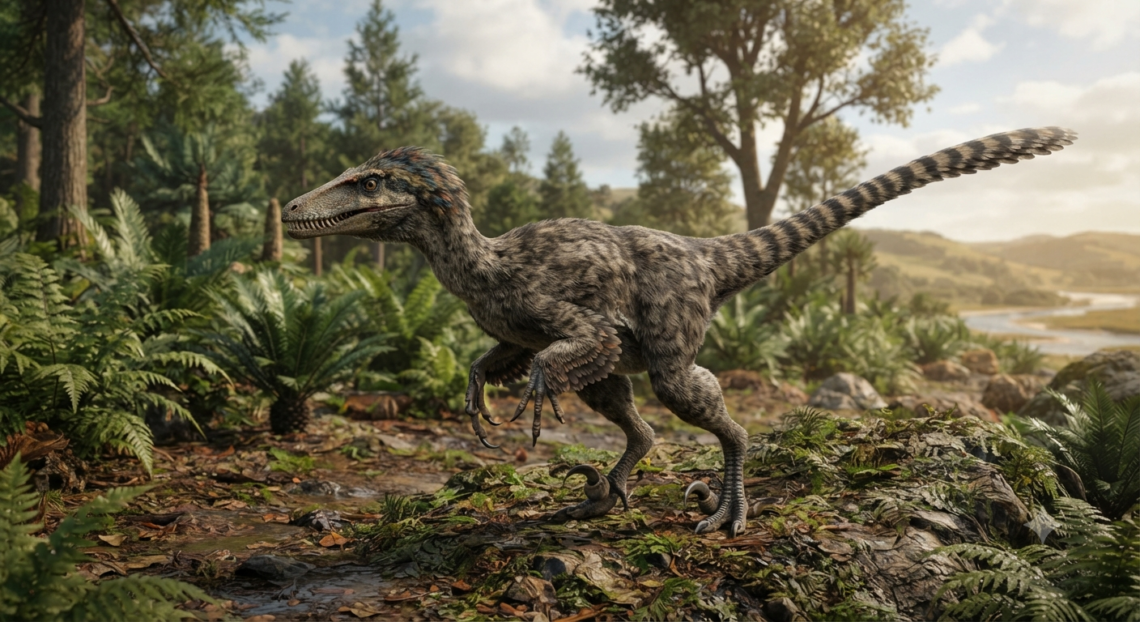
If you searched Hastovenator is it real, the short answer is no—Hastovenator is not a scientifically recognized dinosaur. It is a fictional prehistoric creature created for BLOOD MALL, the retro dinosaur-horror game developed by Ollie Hall. The developer has even directly described Hastovenator as a fictional dinosaur, removing much of the ambiguity surrounding its origin.
The confusion is understandable. Hastovenator has a convincing scientific-style name, a defined geological age, anatomical characteristics, hunting adaptations, and enough detailed lore to sound surprisingly similar to a newly described prehistoric species.
There is an important distinction, though. Hastovenator exists inside the fictional world of BLOOD MALL, not in the scientific fossil record. Here is what is actually known, what comes from game lore, and how you can tell the difference between a fictional dinosaur and a legitimate paleontological discovery.
Hastovenator Is It Real? Quick Answer
For readers wanting the answer immediately, these are the essential facts:
- Real dinosaur species? No.
- Fictional creature? Yes.
- Created for: BLOOD MALL.
- Creator/developer: Ollie Hall.
- In-universe period: Late Triassic.
- In-universe classification: A type of proto-dinosaur.
- Signature ability: Producing and firing spear-like keratin quills from its throat.
- Meaning of the name: Intended by the creator to mean roughly “Spear Hunter.”
- Recognized scientific genus? No evidence supports that status.
The strongest confirmation comes from the creator himself. Ollie Hall has explicitly called it “a fictional dinosaur called the Hastovenator” while explaining its unusual quill-firing biology.
That makes the Hastovenator is it real question much easier to settle than many internet dinosaur mysteries.
What Is the Hastovenator?
Hastovenator is the signature prehistoric threat associated with the BLOOD MALL horror-game universe. Steam describes BLOOD MALL: RETAPED as a first-person dinosaur horror game involving a “unique prehistoric threat” that terrorizes Dayton County Mall. The game was developed by Ollie Hall and released on Steam on April 22, 2026.
The original BLOOD MALL appeared earlier through itch.io. The creator’s itch.io page presents the game around a massacre at Dayton County Mall and the player’s mission to hunt the dinosaur responsible.
The creature subsequently became recognizable enough to inspire fan art, discussion threads, videos, and speculation about whether it might have some obscure paleontological basis. The developer’s own portfolio describes BLOOD MALL as a retro horror game involving a dinosaur, a shotgun, and a massacred shopping mall.
So when someone types Hastovenator is it real, they are usually encountering intentionally convincing fictional world-building rather than a forgotten scientific discovery.
Why Do People Think Hastovenator Might Be Real?
Several clever details make the creature feel plausible.
First, its name sounds exactly like something that could appear in a paleontology paper. Dinosaur and prehistoric-animal names regularly incorporate Greek or Latin-derived elements, and -venator appears convincingly scientific because vēnātor genuinely means hunter in Latin.
Second, the creator gave Hastovenator specific evolutionary and anatomical characteristics rather than treating it as a generic movie monster.
Third, it is assigned to an actual geological period.
Finally, online discussions frequently present its fictional biology in the same descriptive language used for real extinct animals. Remove the context of the game, and a short paragraph about “a Late Triassic spear-hunting proto-dinosaur” can easily look like a genuine paleontology fact.
That combination explains much of the continuing Hastovenator is it real search interest.
Is Hastovenator a Scientifically Recognized Dinosaur?
No credible evidence indicates that Hastovenator is an accepted paleontological genus.
Scientific animal names are not established simply because somebody creates a Latin-sounding binomial or genus name. Zoological nomenclature operates under formal rules administered through the International Code of Zoological Nomenclature, and scientific names normally have traceable scholarly documentation associated with their establishment and use.
The International Commission on Zoological Nomenclature points researchers toward resources such as the Zoological Record, Nomenclator Zoologicus and ZooBank when investigating zoological names.
Searches for Hastovenator instead overwhelmingly lead back to BLOOD MALL, its developer, gaming discussions and fan-created material. More importantly, Ollie Hall himself explicitly identifies the animal as fictional.
That is decisive evidence for anyone investigating Hastovenator is it real from a factual rather than in-universe perspective.
Hastovenator Is It Real or Based on a Real Dinosaur?
There is an important difference between being real and being inspired by real prehistoric biology.
Hastovenator is fictional, but its design uses enough recognizable dinosaur characteristics to feel grounded. Its theropod-like body plan, predatory lifestyle and Triassic setting give players familiar evolutionary reference points.
According to developer comments, the creature is imagined as a natural proto-dinosaur from the Late Triassic, rather than a laboratory-made hybrid. The game’s lore says the animal existed naturally in that fictional prehistoric ecosystem before somehow appearing in the modern era.
That statement concerns BLOOD MALL lore, not Earth’s actual evolutionary history.
So the safest answer to Hastovenator is it real or based on a real animal? is: the creature uses realistic-looking prehistoric concepts, but Hastovenator itself is an invented species.
When Is Hastovenator Supposed to Have Lived?
Within the fictional canon, Hastovenator is associated with the Late Triassic.
Ollie Hall has described it as a kind of proto-dinosaur that existed during that period. Developer commentary also indicates that the creature seen in the game’s modern setting was pulled from the Triassic into the present as part of the story’s larger mystery.
An official developer post on X has likewise characterized the creature as a spear-hunting proto-dinosaur from the Triassic period.
This detail is probably another reason Hastovenator is it real generates confusion. The Triassic is a genuine geological period associated with early dinosaurs, but placing a fictional creature inside a real geological period does not make it a documented species.
What Makes Hastovenator So Unusual?
The creature’s defining feature is far stranger than ordinary theropod teeth or claws.
Hastovenator can produce elongated projectiles inside its throat and launch them toward prey. The developer has explained the fictional mechanism as keratin-based quills grown in specialized throat structures and expelled through powerful muscular contraction.
That transforms the animal from a conventional dinosaur predator into a ranged hunter.
In the creator’s fictional biology, the adaptation is not merely defensive. It is portrayed as a hunting mechanism capable of helping the animal attack prey at distance and potentially hunt in shallow water.
No fossil evidence establishes such an adaptation in an animal called Hastovenator. The mechanism belongs to the imaginative biology of the game.
Are the Hastovenator’s Spears Bones?
Descriptions sometimes call them “bone spears,” but the developer’s more detailed explanation describes them as keratin-based quills. Keratin is the structural protein associated with features such as hair and nails in humans and a wide variety of external structures across animals.
For SEO queries such as Hastovenator is it real, this distinction matters because fan summaries can easily blur game dialogue, community terminology and official creator explanations.
The strongest source should always be the creator’s description when discussing fictional canon. In this case, that points toward keratinous projectile structures rather than literal skeletal bones.
What Does the Name Hastovenator Mean?
The scientific-sounding name is one of the creature’s smartest design choices.
Ollie Hall explained in a developer Q&A that the intended construction combines “Hasto” for spear with “Venator” for hunter, producing the meaning “Spear Hunter.”
There is genuine Latin behind the wordplay. Lewis and Short’s Latin dictionary defines hasta as a spear, lance, pike or javelin, while vēnātor means hunter.
That does not turn Hastovenator into a legitimate taxonomic genus. It simply shows why the fictional name sounds convincing.
For anyone arriving through Hastovenator is it real, the name is therefore an excellent example of how believable fictional taxonomy can be created from authentic linguistic components.
How Would Scientists Confirm a Real Dinosaur?
This is where readers can gain something useful beyond the Hastovenator question.
When researchers announce a genuinely new extinct species, there should be a scientific trail. A legitimate dinosaur description normally involves identifiable fossil material, an anatomical diagnosis distinguishing the taxon from related animals, information about where the fossils came from, and a formal scientific publication.
Animal nomenclature is governed by defined conventions rather than internet popularity. The ICZN explains that zoological names provide a standardized way to communicate about living and extinct animals and connect those names with their scholarly origins.
When checking a suspicious “new dinosaur,” look for:
- A peer-reviewed or scholarly description
- Named researchers and institutional affiliations
- A specimen or fossil repository
- A geological formation and fossil locality
- Diagnostic anatomical characteristics
- References in reputable paleontology databases or literature
- Coverage that links back to the original research rather than social-media reposts
A creature appearing mainly in game pages, fandom discussions, artwork and YouTube videos should immediately trigger additional verification.
That verification process provides a stronger answer to Hastovenator is it real than relying on whether a creature’s name merely sounds scientific.
Why Hastovenator Works So Well as a Fictional Dinosaur
Believable creature design often begins with reality and then breaks one carefully chosen rule.
Hastovenator follows that formula exceptionally well. Its overall identity resembles something that belongs in prehistoric life, but its projectile hunting system pushes it into monster-horror territory.
The game itself embraces that style. Steam describes BLOOD MALL: RETAPED as drawing inspiration from pulpy 1980s B-movie creature features while placing the player in a mall overrun by a prehistoric threat.
That context matters. Hastovenator was designed to be memorable and frightening inside a horror game, not reconstructed from incomplete fossil bones.
The Hastovenator is it real confusion can therefore be seen as a compliment to the creature design: its fictional taxonomy is detailed enough that some players genuinely stop to check.
Hastovenator vs. a Real Dinosaur Discovery
A useful comparison makes the distinction obvious.
Hastovenator has:
- A game creator
- Fictional evolutionary lore
- An invented biological weapon
- A horror-game narrative
- Fan art and community discussions
- A deliberately scientific-sounding name
A scientifically described dinosaur would instead have:
- Fossil specimens
- Anatomical documentation
- Geological context
- Researchers responsible for describing it
- A scholarly publication
- A formal taxonomic history
Hastovenator has extensive fictional lore, but those two evidence categories should never be confused.
Could a Dinosaur Really Shoot Spears?
There is currently no evidence that a dinosaur possessed the exact Hastovenator-style system depicted in BLOOD MALL. The ability should be interpreted as speculative creature design rather than established paleobiology.
That does not mean fictional biology must ignore nature completely. Evolution has produced extraordinary defensive and hunting adaptations across living organisms, which gives creature designers plenty of inspiration.
But plausibility is not proof.
When answering Hastovenator is it real, the relevant question is not whether evolution could theoretically produce something unusual. The relevant question is whether scientists have discovered and documented this particular animal.
They have not, based on the available evidence, while the creature’s creator explicitly identifies it as fictional.
Why Search Results Can Make Fictional Creatures Look Real
Modern fictional universes accumulate information extremely quickly.
A creature can receive wiki pages, concept art, biological diagrams, fan reconstructions, speculative evolutionary trees and lengthy discussions within months of appearing. Search engines then encounter hundreds of pages containing the same scientific-looking name.
Volume is not scientific verification.
This is particularly important with terms such as Hastovenator is it real, because someone seeing dozens of Hastovenator images or discussions may reasonably assume the creature has an established paleontological history.
Instead of counting search results, trace the claim backward.
Ask: Where did the name first come from?
For Hastovenator, that trail leads to Ollie Hall and BLOOD MALL, not to a fossil-description paper. The developer’s own statements explicitly establish its fictional nature.
Frequently Asked Questions
1. Hastovenator is it real or fictional?
Hastovenator is fictional. It was created for Ollie Hall’s BLOOD MALL universe and is not a recognized prehistoric genus. The developer has directly referred to it as a fictional dinosaur.
Its detailed anatomy, Triassic backstory and Latin-inspired name make it sound convincing, which explains why people frequently mistake it for an obscure real dinosaur.
2. Is Hastovenator a real Triassic dinosaur?
No. The Late Triassic origin belongs to the game’s fictional lore.
Ollie Hall describes the animal within that universe as a proto-dinosaur from the Late Triassic, but this is part of the BLOOD MALL story rather than a paleontological classification.
3. Where did Hastovenator come from?
Hastovenator comes from BLOOD MALL, a retro dinosaur-horror game created by Ollie Hall. The franchise later expanded with BLOOD MALL: RETAPED, while BLOOD MALL: PART II continues the story and specifically references the ongoing “Hastovenator Crisis.”
So anyone researching Hastovenator is it real should start with the game’s creator rather than dinosaur encyclopedias.
4. What does Hastovenator mean?
The creator says the name is intended to mean “Spear Hunter,” combining a spear-related element with venator, meaning hunter.
The linguistic idea has genuine Latin roots: hasta means spear or lance, while vēnātor means hunter.
5. Can Hastovenator actually shoot spears?
Only within its fictional universe. The creator describes female Hastovenators as growing keratin-based quills inside the throat and forcefully ejecting them toward targets using specialized muscles.
There is no scientific evidence of a real dinosaur species named Hastovenator possessing this adaptation.
Final Verdict: Hastovenator Is It Real?
The evidence leaves little room for confusion: Hastovenator is not a real, scientifically recognized dinosaur. It is a fictional prehistoric predator created for the BLOOD MALL horror-game universe. Most decisively, creator Ollie Hall has personally described Hastovenator as fictional.
Its convincing name, Late Triassic backstory, proto-dinosaur identity and elaborate spear-firing anatomy are pieces of world-building. Even the name has intelligently chosen Latin roots—hasta for spear and venator for hunter—which helps make the animal sound like authentic taxonomy.
So the next time someone asks Hastovenator is it real, point them toward the original BLOOD MALL material and the creator’s explanation. Enjoy Hastovenator for what it was designed to be: a memorable fictional predator whose biology is convincing enough to make people wonder whether somewhere, buried in Triassic rock, paleontologists had actually found one.