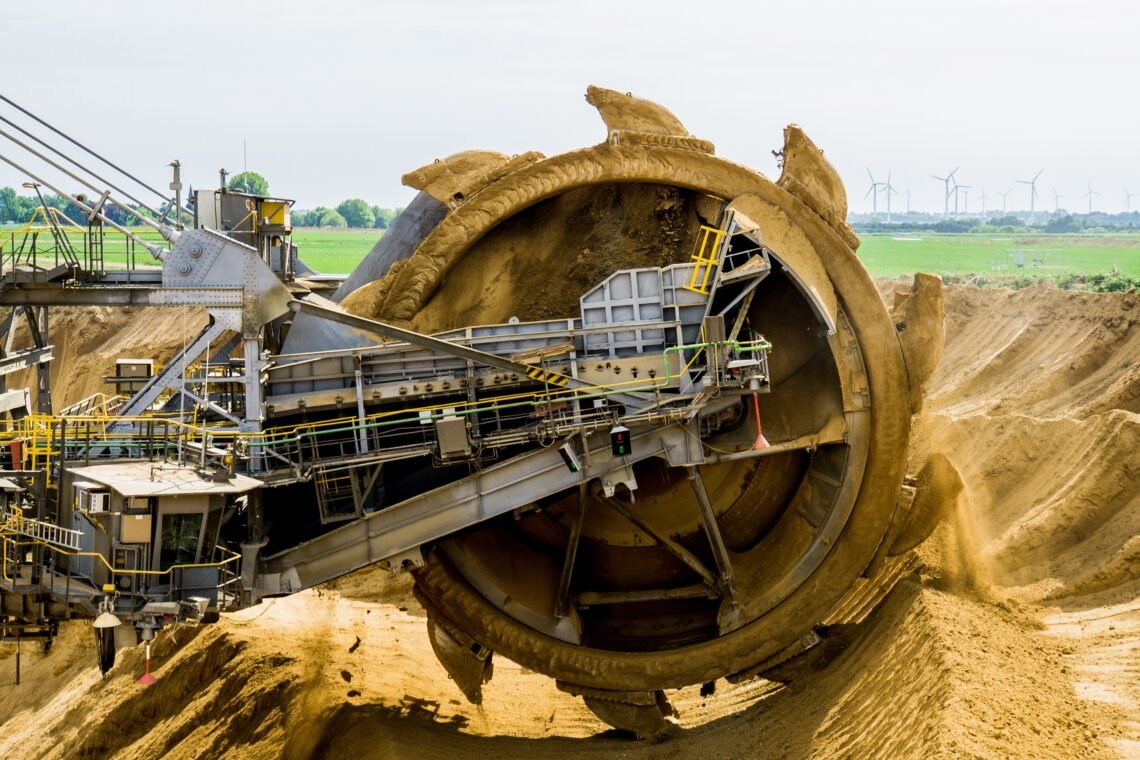
Maschinenring Mining is a search term that can be surprisingly easy to misunderstand. At first glance, it sounds like the name of a mining company or a specialized heavy-equipment network serving mines and quarries. The verified picture is different: the term is strongly connected with Maschinenring Braunau und Umgebung, whose regional office is located at Hofmark 5, 4962 Mining, Austria.
That distinction matters. Several websites now describe Maschinenring Mining as though it were a dedicated mining-sector business model, yet the official Maschinenring sources primarily document agricultural machinery coordination, labor services, landscape care, facility management, forestry-related services and support for regional businesses. Understanding that context gives readers a far more accurate picture than simply repeating what appears across low-information search results.
This guide explains what the term actually represents, how the Maschinenring system works, which services are available around Mining and Braunau, and why its cooperative machinery model remains commercially relevant well beyond traditional farming.
What Is Maschinenring Mining?
Maschinenring Mining most accurately refers to the presence and activities of Maschinenring Braunau und Umgebung in Mining, Upper Austria, rather than a conventional mineral-extraction company.
The official regional organization lists its address as Hofmark 5, 4962 Mining and supports farmers, businesses, municipalities and other customers through a broad range of practical services. Its activities include agricultural machinery coordination, staffing solutions, grounds maintenance, winter services, facility support and specialist rural services.
The word Maschinenring itself describes a cooperative or organized network built around more efficient use of machinery and labor. Historically, such organizations were created so agricultural businesses could access expensive equipment without every individual farm having to purchase and maintain the same machines independently.
That principle remains central today.
Instead of tying large amounts of capital to equipment that may only be needed for limited periods, participating businesses can coordinate resources, machinery and specialist expertise through a broader network.
Why the Word “Mining” Causes So Much Confusion
A key piece of information missing from many competing articles is simple: Mining is a place name in Austria.
Official Maschinenring pages repeatedly list the regional contact location as 4962 Mining. Staff profiles, service pages and regional contact information all use the same address, demonstrating that “Mining” in this context is geographical rather than a reference to underground or open-pit mineral extraction.
This explains why Google searches for Maschinenring Mining can produce confusing results.
Some third-party publications reinterpret the phrase as a theoretical system in which mining companies share excavators, loaders, technical staff and other resources. That interpretation borrows logically from the Maschinenring cooperative concept, but it should not be confused with the verified activities of the organization operating from Mining, Austria.
For users searching for a company address, agricultural services, employment, machinery coordination or regional support, Maschinenring Braunau und Umgebung is the more relevant entity.
How the Maschinenring Model Works
The Maschinenring idea solves a very practical economic problem: expensive machinery is only profitable when it is used enough.
A farmer purchasing specialized equipment independently has to absorb the purchase price, financing, maintenance, depreciation, insurance and storage costs. Yet certain machines may only be required during short planting, fertilizing or harvesting windows.
A machinery-sharing community changes that equation.
Official Maschinenring information describes machinery communities as an alternative to costly individual mechanization and states that the organization helps initiate, develop and coordinate these communities.
The basic model can involve:
- Shared access to specialized machinery instead of unnecessary duplicate ownership.
- Coordinated scheduling so equipment reaches businesses when required.
- Higher equipment utilization, improving the economic value of expensive assets.
- Access to skilled labor for seasonal or specialist work.
- Regional cooperation between farms, contractors and service providers.
- Central coordination and administration, reducing organizational friction.
The result is not merely equipment rental. At its strongest, the Maschinenring structure functions as a local operating network.
Maschinenring Mining and Agricultural Machinery Services
Agricultural machinery remains one of the most important areas associated with Maschinenring Mining.
The Braunau regional organization provides agricultural machinery services and coordinates equipment and labor according to operational requirements. Official material explains that machinery and work chains can be organized across businesses so farms can complete time-sensitive work more effectively.
Timing is critical in agriculture.
Harvesting three days too late can affect crop quality. Fertilization has weather-dependent windows. Silage production may require several machines and operators working in sequence. A breakdown in one stage can disrupt the entire operation.
Shared coordination therefore creates value in areas that cannot be measured solely by the hourly cost of a tractor or implement.
Better Equipment Utilization
Heavy agricultural equipment represents significant capital expenditure.
When several businesses use compatible machinery through coordinated arrangements, ownership and operating costs can be distributed more efficiently. The Maschinenring concept was specifically developed around reducing unnecessary capital commitment while increasing utilization of existing machinery.
This approach can be especially valuable for equipment that performs specialized tasks only a few times per year.
Coordinated Work Chains
One machine rarely completes an entire agricultural process.
Harvesting may involve mowing, collecting, transporting, processing and storage. Maschinenring documentation emphasizes coordinating labor and machines to create efficient cross-business work chains.
That coordination can reduce idle time while helping individual farms avoid purchasing every machine involved in the sequence.
More Than Machinery: Services Available Through Maschinenring
Modern Maschinenring organizations have expanded considerably beyond their original machine-sharing role.
The Braunau operation states that its portfolio includes tree management, garden and landscape work, green-space maintenance, winter services, building care and specialist services. It also provides employment opportunities for people from agricultural backgrounds through work for municipalities and regional industrial companies.
This broader service portfolio is an important part of understanding Maschinenring Mining today.
Landscape and Green-Space Management
Municipalities, businesses and property owners need outdoor areas maintained throughout the year.
Maschinenring services can include landscape maintenance, vegetation work and related environmental services. The Braunau organization also publishes specialist offerings involving natural spaces and ecological projects, including habitat-related work such as amphibian protection installations.
That expands the network from agricultural production into professional land management.
Facility Management
The regional operation also provides facility-related services.
Its official facility-management page describes support for maintaining clean, safe and well-kept properties throughout the year, including cleaning of offices and communal spaces.
For commercial customers, this creates a single regional service network capable of handling both outdoor and property-support work.
Winter Services
Agricultural operators possess something particularly valuable during winter: machinery, operational experience and personnel who understand difficult outdoor conditions.
The Maschinenring Braunau organization notes that people from agricultural backgrounds work through the network in municipal winter services.
This is a good example of resource optimization beyond farming. Equipment and labor that might otherwise experience seasonal downtime can generate productive work elsewhere in the regional economy.
Personnel Services at Maschinenring Mining
Machines are only part of the equation. People matter just as much.
The organization provides several workforce-related services, including employee leasing, recruitment and payroll support. Its personnel-services information states that businesses can obtain workers according to changing workloads while recruitment services help identify suitable employees.
That flexibility is particularly useful in industries where labor demand fluctuates.
A company facing a temporary production peak may not require another permanent employee. A seasonal business may need workers for only part of the year. Another employer may need specialized workers but lack the internal recruiting capacity to find them quickly.
The Maschinenring structure creates another layer of shared resources: human capacity.
Payroll and Administrative Support
Maschinenring Mining is also associated with payroll services through the Braunau operation.
Its payroll offering includes employment-contract administration, wage and salary processing, transparent cost structures and support with labor and social-law compliance.
This may appear unrelated to agricultural machinery at first. Economically, however, the connection is logical.
The same regional network that coordinates people and equipment can also reduce administrative workload for businesses using those resources.
The Economic Logic Behind Maschinenring Mining
The strength of the Maschinenring concept can be understood through one word: utilization.
Equipment becomes expensive when it sits unused.
Labor becomes inefficient when demand and availability do not align.
Administrative systems become costly when small organizations each duplicate the same processes.
A cooperative network attempts to improve all three.
For individual members or customers, potential economic advantages include lower capital requirements, access to specialist resources, reduced pressure to maintain oversized equipment fleets and greater flexibility during peak workloads.
The wider regional economy may also benefit because money, machinery and labor circulate between nearby businesses instead of remaining locked inside isolated operations.
Digitalization and Modern Resource Coordination
Traditional Maschinenring networks were built long before cloud software, mobile apps and digital scheduling became standard.
The concept now fits naturally with digital resource management.
Maschinenringe Deutschland describes digital solutions as part of its wider offering, while the MeinRing mobile application provides members with access to membership information, regional updates, benefits and the organization’s digital services.
Digital tools can make cooperative resource use much more practical.
A modern network can potentially coordinate availability, scheduling, documentation, customer communication and operational records faster than manual telephone-based systems.
The technology does not replace cooperation. It removes friction from it.
Sustainability Benefits of Shared Machinery
The environmental case for machinery sharing is also worth considering.
Sustainability is often discussed only in terms of fuel consumption. Capital equipment has an environmental footprint too. Manufacturing tractors, loaders, implements and other machines requires raw materials, energy, transportation and industrial processing.
If several businesses can obtain productive value from one appropriately utilized machine rather than purchasing several underused machines, the resource intensity per unit of useful work may improve.
This does not automatically make every sharing arrangement environmentally superior. Travel distances, machine efficiency, maintenance quality and scheduling all matter.
Still, higher asset utilization is an important sustainability lever that deserves more attention.
Maschinenring Mining and the Local Economy
The regional role of Maschinenring Mining extends beyond individual farms.
Maschinenring Braunau says its activities support regional value creation, help preserve smaller agricultural structures and contribute to employment opportunities in rural areas. Members can work in agriculture while also participating in services for municipalities and industrial businesses.
This diversification can strengthen rural resilience.
Agricultural income is exposed to weather, commodity prices, input costs and seasonal cycles. Giving farming households additional ways to monetize machinery or labor can create another source of economic stability.
That was one of the powerful ideas behind the Maschinenring concept from the beginning: cooperation can allow smaller operations to access capabilities normally associated with much larger businesses.
Innöl: An Interesting Example From Mining
One particularly useful local example is the Maschinenring-Ölmühle Innöl CoKG.
According to Maschinenring Braunau, Innöl was founded in Mining in 2003 and processes oilseeds including rapeseed, soybeans and sunflower seeds.
This example helps explain why Maschinenring should not be understood simply as a machinery-rental organization.
Its regional ecosystem can connect agricultural production, machinery, processing, labor and local value creation.
That broader network effect is one of the most important aspects competitors often overlook when discussing Maschinenring Mining.
Who Can Benefit From the Maschinenring Model?
Different users approach the organization with different needs.
A small farm may need occasional access to equipment it cannot economically justify purchasing.
A larger farm may already own machinery but want higher utilization or assistance during peak periods.
A municipality might require seasonal grounds or winter services.
A commercial property could need landscape or facility support.
An industrial employer may need temporary personnel.
This flexibility explains why modern Maschinenring organizations serve a wider market than their agricultural origins might suggest.
How to Evaluate a Machinery-Sharing Arrangement
Before joining or using any cooperative equipment arrangement, businesses should look beyond the headline rental price.
Several operational questions matter:
- Availability: Will the machine actually be available during your critical working window?
- Transport: Who moves the equipment and who pays the transport cost?
- Maintenance: Who is responsible for servicing, inspections and breakdowns?
- Operator requirements: Does the equipment require trained or certified personnel?
- Scheduling: How are conflicts between multiple users resolved?
- Insurance: What happens if machinery is damaged during use?
- Utilization: Would shared access genuinely cost less than ownership at your expected annual usage?
- Compatibility: Does the equipment integrate with your existing tractors, tools or processes?
The cheapest hourly price is not always the cheapest operational solution.
Reliability during a two-day harvest window may be worth far more than a small difference in machine cost.
Why Maschinenring Mining Has Growing Search Interest
Search interest around Maschinenring Mining appears to be driven partly by semantic ambiguity.
The phrase looks like a combination of a German machinery-network term and the English mining industry. That has encouraged numerous websites to describe it as a new cooperative mining concept involving shared heavy equipment.
The verified regional context tells a more useful story.
Maschinenring Braunau genuinely operates from Mining, Austria, and its documented activities show how shared machinery, workforce coordination and diversified rural services work in practice.
For readers researching cooperative resource management, that real-world model is arguably more valuable than an invented mining-industry definition.
Frequently Asked Questions About Maschinenring Mining
Is Maschinenring Mining a mining company?
Not according to the official Maschinenring information reviewed for this guide. The phrase is primarily associated with Maschinenring Braunau und Umgebung because its regional office is located at Hofmark 5, 4962 Mining, Austria. Its documented services focus heavily on agriculture, machinery coordination, personnel, landscape services, winter work and facility management.
What does Maschinenring mean?
Maschinenring refers to an organized machinery-sharing network historically associated with agriculture. The model allows businesses to cooperate in using machinery and labor so individual operators can reduce unnecessary capital investment while improving equipment utilization.
Where is Maschinenring Mining located?
The Maschinenring Braunau und Umgebung regional office lists its address as Hofmark 5, 4962 Mining, Austria. Current official staff and regional pages repeatedly identify this location.
What services does Maschinenring Mining provide?
The regional organization provides or coordinates services including agricultural machinery support, machinery communities, labor services, recruitment, payroll, landscape and green-space maintenance, winter services, facility management and other specialist services. Specific availability can vary by region and customer requirements.
Can the Maschinenring concept work outside agriculture?
Yes, the underlying principle can apply beyond farming: organizations can improve asset utilization by sharing expensive resources or coordinating specialist labor. Maschinenring Braunau already demonstrates this diversification through services for municipalities, regional industrial businesses, property management and other non-farm customers.
Conclusion: Understanding Maschinenring Mining Correctly
Maschinenring Mining is more interesting when examined through verified information rather than assumptions created by the word “mining.” The strongest evidence points to Maschinenring Braunau und Umgebung and its base in Mining, Austria, where the organization connects agricultural businesses, machinery, workers, municipalities and commercial customers through a regional service network.
Its biggest lesson is straightforward. Not every business needs to own every resource it uses. Better coordination can turn expensive machinery, specialized labor and operational capacity into resources that generate value across multiple businesses.
If you are researching Maschinenring Mining because you need machinery services, agricultural support, personnel solutions or regional services in the Braunau and Mining area, the most useful next step is to identify the relevant service through the official regional Maschinenring network and compare availability, scheduling, responsibilities and total operating cost before making a decision.