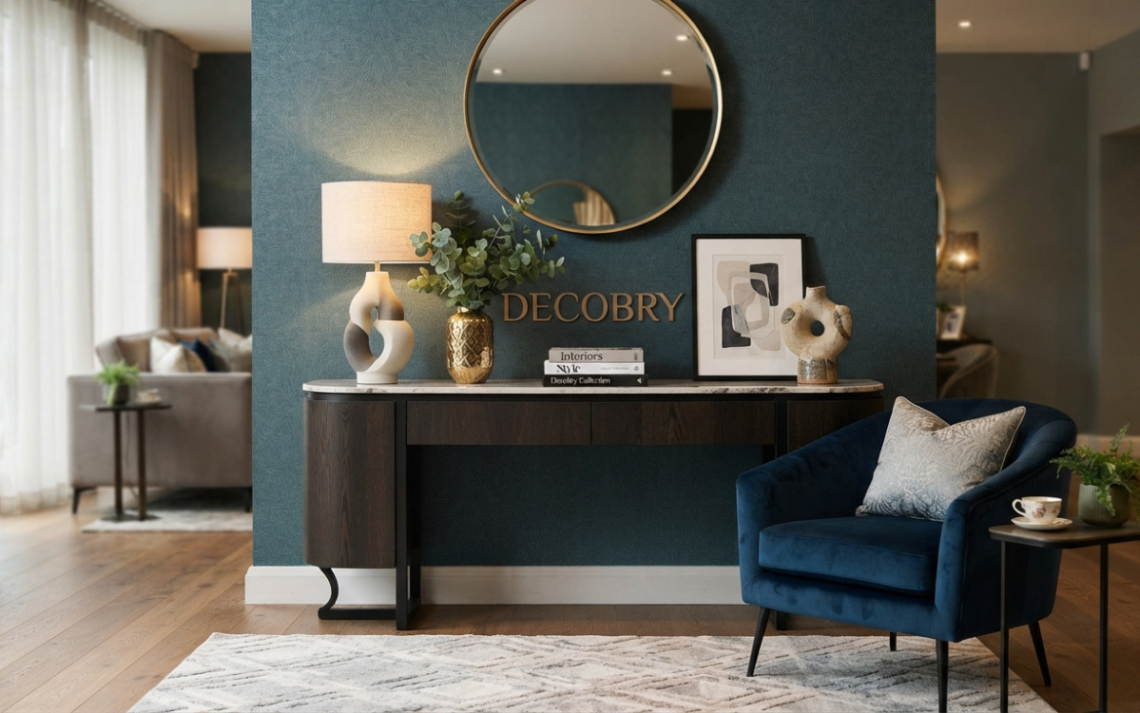
Search for Decobry and you encounter an unusual problem: the web does not agree on what it is. Some articles describe it as a home décor brand. Others present it as a new interior design philosophy, sustainable-living movement, furniture concept, or even a creative design platform. A closer source check tells a more useful story.
There is a website using the Decobry name, but its homepage identifies itself as “Latest Home Trends” and publishes content across home trends, business, technology, and general blogs rather than operating as a dedicated furniture store. At the same time, there is a well-established online design retailer called DECOVRY, spelled with a “v,” whose products and positioning closely match many descriptions circulating under the other spelling.
That distinction matters. It separates verifiable information from attractive-sounding claims that have been repeated without clear sourcing.
This guide explains what can actually be established about the term, how it relates to modern home design, what consumers searching for the retailer are probably trying to find, and how to apply the genuinely useful design principles associated with the idea.
What Is Decobry?
The most accurate definition is surprisingly simple: Decobry is currently an ambiguous web term rather than a clearly documented, standardized interior-design movement or established furniture manufacturer.
The confusion becomes obvious when comparing search results. One publisher defines it as a modern design approach combining minimalism, comfort, and personality. Another calls it a furniture concept. Others describe a home décor brand, a sustainable design philosophy, or a digital creative platform. Those definitions are not consistent with one another.
The actual domain decobry.com offers another clue. Instead of presenting a product catalog or a formal design manifesto, it labels itself “Latest Home Trends” and publishes articles covering topics ranging from furniture pricing and patio covers to business and technology.
So readers should distinguish three different things:
- Decobry as a search term: a keyword appearing increasingly across home and lifestyle publications.
- Decobry as an informal design idea: a loose label writers use for functional, warm, sustainable, modern interiors.
- DECOVRY: a real online concept store selling furniture, lighting, textiles, lifestyle goods, storage products, gifts, and other home essentials.
That distinction is the foundation for understanding the topic without turning speculation into fact.
Decobry vs. Decovry: The One-Letter Difference That Changes the Answer
Anyone researching Decobry should know about DECOVRY immediately.
DECOVRY’s official storefront describes the business as an online concept store offering hand-picked products for “slow living and soulful places.” Its current catalog includes furniture, small furniture, lighting, textiles, lifestyle items, pet products, gifts, and themed collections such as Natural, Retro, Boho, The Slow Kitchen, The Slow Bedroom, and The Slow Bathroom.
This is much more concrete than many third-party descriptions attached to the alternative spelling.
DECOVRY says its collection is curated by people rather than algorithms and highlights designers and brands including Yamazaki, Mifuko, Recollector, Printworks, Remember, Shupatto, Paveau, Vinga, and Libeco. It positions the assortment around natural materials, craftsmanship, practical design, mindfulness, and sustainability.
One recent competitor article explicitly argues that people entering the other spelling are often looking for DECOVRY. That interpretation fits the similarity between the names and the overlap in the products and themes described across search results, although it should still be treated as an interpretation rather than proof that every searcher has the same intent.
A Useful Search-Intent Rule
If you are searching because you want to buy a lamp, table, storage solution, textile, kitchen accessory, or other design product, DECOVRY is probably the entity worth investigating.
If you are searching because you encountered the term in an article about interior style, however, you are more likely dealing with an informal design concept built around practical modern living.
That simple distinction prevents a lot of confusion.
The Decobry Design Idea: What Is Actually Useful?
Although no authoritative design institution appears in the reviewed sources establishing Decobry as a formal style, the ideas repeatedly associated with it are genuinely useful.
Strip away the invented origin stories and marketing language, and a coherent philosophy remains:
A home should be attractive, comfortable, functional, personal, and durable at the same time.
That sounds obvious. In practice, many interiors fail because one objective dominates the others. A perfectly minimalist room may feel sterile. A heavily decorated room can become visually exhausting. A beautiful chair that is uncomfortable is decoration pretending to be furniture.
A more balanced interpretation centers on five principles:
- Function before decoration
- Warmth without unnecessary clutter
- Natural and tactile materials
- Furniture selected for longevity and flexibility
- Personal objects used deliberately rather than randomly
This places the style somewhere near warm minimalism, slow living, functional interior design, biophilic influences, and contemporary natural décor rather than making it an entirely separate historical movement.
Core Principles of a Decobry-Inspired Home
1. Make Every Major Piece Earn Its Space
The fastest way to improve a room is not to add more décor. It is to question what the largest objects are doing.
A sofa should support the way you actually sit. A dining table needs proportions that suit the room when chairs are occupied, not merely when they are pushed underneath. Storage should hide what creates visual noise while keeping frequently used objects accessible.
This is especially important in small apartments, open-plan interiors, and multifunctional rooms.
For a practical Decobry-inspired buying decision, ask:
- Does this solve an everyday problem?
- Will I still use it if the trend disappears?
- Does its scale fit the room?
- Can it perform more than one function?
- Can it be repaired, cleaned, or maintained?
- Will it work if my layout changes?
Those questions are more valuable than asking whether a product photographs well.
2. Use Warm Minimalism, Not Empty Minimalism
Minimalism is frequently reduced to white walls, sparse furniture, and almost no visible possessions. That is only one interpretation.
A warmer approach retains visual breathing room while introducing wood grain, woven fibers, linen, wool-like textures, ceramics, soft lighting, plants, books, artwork, and objects with personal meaning.
The trick is restraint.
Instead of covering six surfaces with small accessories, create one or two deliberate visual moments. A large ceramic vessel beside a stack of books often creates more impact than ten unrelated ornaments competing for attention.
3. Build the Room in Layers
Professional-looking interiors rarely depend on one spectacular object. They work because several layers cooperate.
Start with:
- Architecture: flooring, walls, windows, ceiling height.
- Core furniture: sofa, bed, table, desk, major storage.
- Lighting: ambient, task, and accent sources.
- Textiles: rugs, curtains, cushions, throws, bedding.
- Personal layer: art, books, ceramics, photographs, collected objects.
Following this sequence keeps spending focused on the elements that have the greatest impact.
It also avoids a common mistake: buying accessories before solving the room’s underlying layout.
Colors and Materials That Fit the Aesthetic
Articles describing Decobry commonly gravitate toward neutrals, natural materials, layered textures, and restrained accents. Some competitors go much further and assign specific historical influences or fixed palettes, but those claims are not consistently sourced.
A more flexible palette works better.
Begin with grounding tones such as:
warm white, oatmeal, stone, taupe, clay, sand, mushroom, charcoal, soft brown, muted olive, and natural timber.
Then introduce stronger colors selectively. Rust, burgundy, forest green, muted blue, ochre, or black can give the room definition without overpowering it.
Material variation matters even more than color.
Think timber beside ceramic, linen beside metal, smooth surfaces beside woven textures, matte finishes beside small reflective accents. A room made entirely from similar flat surfaces can look lifeless even when the colors are attractive.
How to Use Decobry Ideas Room by Room
Living Room
Begin with movement and conversation.
Leave sensible pathways between furniture, position seating so people can interact without twisting awkwardly, and choose a rug large enough to visually connect the main pieces.
Then solve clutter. Closed storage is useful for cables, chargers, games, remote controls, paperwork, and other objects that accumulate quickly.
Finish with fewer, better accents: a sculptural lamp, tactile throw, artwork, plant, or meaningful object rather than a collection of filler décor.
Bedroom
The bedroom benefits from the quietest version of Decobry.
Prioritize the mattress, bedding, usable bedside surfaces, light control, and storage before styling the room. Soft textiles and indirect lighting usually create more comfort than adding decorative objects to every available surface.
Keep visual noise away from the bed wherever possible. Clothing piles, exposed cables, packaging, exercise equipment, and overloaded nightstands can make even expensive furniture feel chaotic.
Kitchen and Dining Area
Function becomes even more important here.
Objects used daily should be easy to reach. Objects used rarely can live farther away. Countertops need enough free space to prepare food comfortably rather than becoming permanent display shelves.
In the dining area, choose furniture based on actual household habits. Someone who regularly hosts six people needs a very different table from a person living alone in a compact apartment.
Expandable tables, stackable seating, wall storage, and multifunctional furniture can be especially effective.
Home Office
A good workspace needs fewer distractions and better ergonomics.
Start with chair comfort, screen position, task lighting, power access, and cable management. Only then add decorative features.
One strong artwork, shelf, plant, or textured accessory can soften the workspace without turning the desk into another clutter zone.
The result should feel inviting enough to use but organized enough to support concentration.
Sustainability: Separate Values From Verifiable Claims
Sustainability is attached repeatedly to Decobry across third-party content, but broad claims deserve scrutiny.
If the intended retailer is DECOVRY, there is at least a documented company position. Its official sustainability page says the company prioritizes recycled, organic, and more ecological materials, favors recycled materials over virgin alternatives where possible, limits plastics and polyester, and considers longevity, repair, reuse, and recycling part of its approach.
Those are company-reported commitments, not independent lifecycle assessments of every item in the catalog. That distinction is important for E-E-A-T.
Consumers evaluating sustainable furniture or décor should look beyond broad words such as eco-friendly and conscious.
Check for:
- Specific material composition
- Recognized certifications where relevant
- Country of manufacture
- Repairability
- Replacement parts
- Expected product lifespan
- Packaging materials
- Care requirements
- Whether components can be recycled
- Whether the product is likely to survive several moves or redesigns
The greenest-looking product is not automatically the most sustainable. Keeping a durable table for 15 years can be more meaningful than repeatedly replacing supposedly eco-conscious furniture because it wears out quickly.
Is Decobry a Legitimate Store?
This question requires precision.
The decobry.com domain is a functioning content website focused broadly on home trends and other subjects. Its public homepage does not present itself as the furniture marketplace described by many third-party articles.
If by Decobry you mean DECOVRY, then there is substantial evidence of an operating retail business. DECOVRY maintains an active product catalog, publishes contact information and policies, sells products from identifiable brands, and links to an established Trustpilot profile.
At the time checked, Trustpilot displayed 3,570 reviews and a 4.0/5 score for DECOVRY. Reviews include both positive experiences and complaints; Trustpilot also makes clear that customer opinions are not automatically equivalent to independently verified factual claims.
Customer feedback visible on the profile includes praise for product quality and successful problem resolution alongside reports of delayed deliveries and communication problems. That mixed evidence is considerably more useful than simply labeling the company “good” or “bad.”
What Does DECOVRY Actually Sell?
The retailer’s current assortment goes considerably beyond conventional furniture.
Categories and featured products include:
- Small furniture and storage
- Lighting
- Textiles
- Kitchen and dining accessories
- Lifestyle products
- Pet accessories
- Gifts
- Books and design objects
- Organizers and practical home accessories
The store also organizes products by aesthetic collections and carries third-party design brands rather than presenting every item as an in-house manufactured product.
That curated model is important. You are essentially shopping a selection of brands and designers through one concept store, which means quality, materials, manufacturing origins, warranties, and care requirements may vary from product to product.
Evaluate the individual item, not merely the retailer’s overall aesthetic.
What Competitor Articles Commonly Get Wrong
The biggest opportunity for better content around Decobry is not length. It is epistemic discipline: knowing what the evidence actually supports.
Several ranking articles confidently assign the term an origin, historical influences, sustainability standards, product ranges, brand missions, or technology features without identifying primary sources for those claims. Others define the same term in completely different ways.
That creates three common problems.
First, repetition becomes mistaken for verification. Ten websites repeating the same sentence do not turn it into a documented fact.
Second, useful design advice gets mixed with invented brand history. The decorating ideas may be sensible even when the story surrounding them is unsupported.
Third, the Decovry spelling gets overlooked. Readers trying to research products, customer feedback, shipping, or sustainability can end up reading descriptions of a loosely defined concept instead of examining the actual retailer.
For users and search engines alike, the better approach is simple: separate verified entity information, company claims, independent customer feedback, and editorial interpretation.
That is what strong E-E-A-T content should do.
A Practical Decobry Makeover Checklist
You do not need to replace an entire room to experiment with the aesthetic.
Start with what already exists.
- Remove: take out objects that are broken, unused, uncomfortable, or visually distracting.
- Reposition: improve walking paths and furniture relationships before buying anything.
- Hide: give cables, paperwork, cleaning supplies, toys, and miscellaneous objects proper storage.
- Warm: introduce wood, woven materials, curtains, rugs, cushions, or soft lighting.
- Personalize: display objects that carry genuine meaning rather than generic filler décor.
- Upgrade strategically: replace the weakest high-use item first.
- Maintain: repair and care for furniture before treating replacement as the default.
- Review: after several weeks, notice what still causes friction in everyday routines.
A thoughtful room is rarely created in one shopping trip.
It evolves.
Frequently Asked Questions
Is Decobry a brand or an interior design style?
The term is used inconsistently online. The Decobry domain currently operates as a broad content website, while various third-party publishers use the word as an informal label for modern, functional, sustainable home design. There is not enough authoritative evidence in the reviewed sources to treat it as a formally established design movement.
Are Decobry and Decovry the same thing?
They should not automatically be treated as identical. DECOVRY is a verifiable online concept store with an active home and lifestyle catalog, while the other spelling appears across a mixture of editorial content and loosely defined design concepts. Because the names and subject matter overlap heavily, some searches for the latter may actually be attempts to find DECOVRY.
What is the Decobry interior style?
As an informal design label, it is best understood as a blend of functional modern interiors, warm minimalism, natural textures, restrained decoration, adaptable furniture, personal objects, and sustainability-minded purchasing. Rather than following rigid style rules, the emphasis is on making the home visually calm while keeping it genuinely practical.
Is DECOVRY trustworthy for online shopping?
DECOVRY operates an active store and has a substantial independent review footprint. Trustpilot showed 3,570 reviews and a 4.0/5 score when checked, with feedback ranging from positive product and service experiences to complaints about delivery timing and communication. Buyers should still review the latest feedback, product-specific information, shipping terms, and return conditions before purchasing.
How can I create a Decobry-inspired home on a small budget?
Start with layout, decluttering, lighting, storage, and textiles rather than purchasing a complete furniture set. Rearrange existing furniture, remove unnecessary objects, conceal cables, use warmer bulbs where appropriate, add one or two tactile materials, and buy second-hand or repair existing pieces when practical. Spend more only when a heavily used item—such as a sofa, desk chair, mattress, or dining table—genuinely needs replacing.
Conclusion: Use Decobry as a Design Lens, Not a Label You Have to Chase
The smartest way to approach Decobry is to avoid getting trapped by the name.
If you were looking for a retailer, examine DECOVRY, its individual brands, current product details, policies, sustainability statements, and recent customer reviews before spending money. If you were looking for a design style, take the useful principles—functional furniture, restrained clutter, natural texture, flexible spaces, thoughtful purchasing, durability, warmth, and personal meaning—and make them your own.
Start with one room. Fix the layout first, identify the biggest everyday frustration, and improve that before buying decorative extras.
A home does not become better because it fits a newly invented category. It becomes better when everything in it supports how you actually want to live.