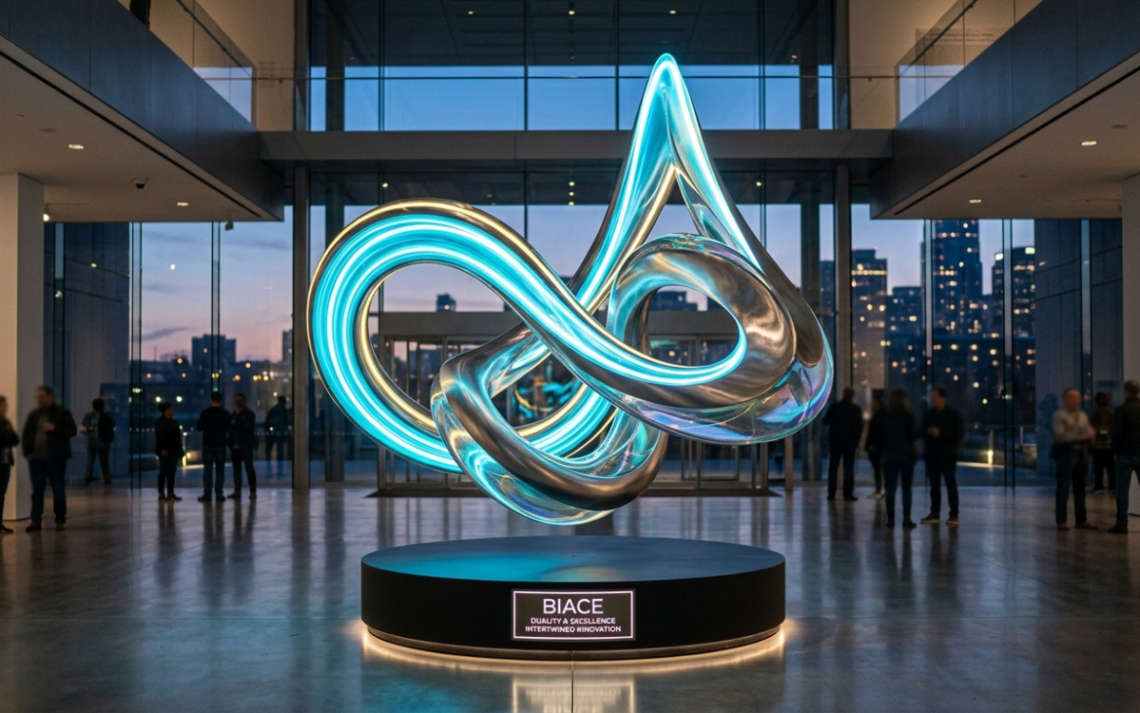
Biace is a concept built around the idea that nature has already solved many of the complex problems engineers and designers face today. The term refers to a Bioinspired Artificial Creativity Engine, an approach that studies biological systems, extracts their underlying principles, and translates those principles into practical innovations.
Instead of creating solutions only from human imagination, Biace looks at billions of years of evolutionary experimentation. Every organism represents a collection of tested strategies shaped by survival, adaptation, efficiency, and environmental pressure.
The central idea behind Biace is simple: nature is a massive library of proven designs.
A bird wing, spider silk structure, shark skin texture, or plant-based energy system is not just a biological feature. It is an engineering solution refined through natural selection.
Why Biace Matters in Modern Innovation
Traditional engineering often begins with a problem and attempts to design a solution from scratch. Biace introduces another path: identify where nature has already encountered a similar challenge and learn from that example.
This approach combines:
- Artificial intelligence and computational analysis
- Biomimicry principles
- Evolutionary biology
- Advanced materials science
- Engineering optimization
Biace can help researchers move beyond trial-and-error development by searching for biological patterns that have already demonstrated efficiency.
For example, nature has developed:
- Lightweight but strong structures through bones and shells
- Efficient water collection through desert organisms
- Self-repair mechanisms through biological tissues
- Energy-efficient movement through animal locomotion
The goal of Biace is not to copy nature exactly. It is to understand the design logic behind natural systems.
How Biace Works: Turning Biological Intelligence Into Engineering Solutions
The process behind Biace can be viewed as a bridge between biology and technology.
Step 1: Define the Human Problem
Every innovation begins with a challenge.
A company may need:
- A stronger material
- A more efficient cooling system
- A lightweight structure
- A better optical device
- A sustainable manufacturing method
Biace starts by identifying the physical problem rather than immediately searching for a manufactured solution.
Step 2: Search Evolutionary Solutions
Once the challenge is understood, Biace analyzes biological examples where similar problems have been solved.
For instance:
- Heat management can be studied through animal circulation systems.
- Structural strength can be examined through shells, bones, and plant fibers.
- Optical performance can be inspired by specialized animal vision systems.
Evolution provides countless examples of optimization under real-world constraints.
Step 3: Translate Biology Into Engineering Specifications
The most important stage of Biace is translation.
A scientist does not simply copy a leaf or insect. Instead, they ask:
- What physical principle creates this advantage?
- Can that principle be reproduced artificially?
- What materials and manufacturing processes are required?
This converts biological knowledge into engineering blueprints.
Biace Applications Across Different Industries
The potential applications of Biace extend across multiple sectors because biological systems solve universal challenges.
Biace in Product Design and Engineering
Modern products often require a balance between strength, weight, cost, and sustainability.
Biace can influence:
- Lightweight vehicle components
- Durable consumer products
- Advanced manufacturing techniques
- Sustainable materials
A structure inspired by natural patterns may achieve better performance while using fewer resources.
Biace in Healthcare and Medical Technology
The human body itself is one of the greatest examples of biological engineering.
Researchers can use Biace principles to explore:
- Regenerative materials
- Medical devices
- Artificial tissues
- Improved diagnostic technologies
Biological systems provide insights into compatibility, adaptability, and efficiency.
Biace in Sustainable Technology
Environmental challenges require solutions that work with natural systems rather than against them.
Biace supports sustainable innovation by studying:
- Energy-efficient natural processes
- Circular biological systems
- Low-waste structures
- Renewable material concepts
Nature rarely wastes resources. Many ecosystems operate through efficient cycles where one process supports another.
Biace and Artificial Intelligence: A Powerful Combination
Artificial intelligence makes Biace significantly more practical because modern AI systems can analyze enormous amounts of biological information.
A human researcher may study hundreds of examples. An AI-powered Biace system can potentially examine thousands or millions of patterns.
This combination enables:
- Faster discovery of biological relationships
- Automated pattern recognition
- Simulation of possible designs
- Better prediction of engineering outcomes
The future of Biace will likely depend on combining machine learning with biological understanding.
Examples of Nature-Inspired Ideas Behind Biace
Nature provides many examples that demonstrate the philosophy behind Biace.
Spider Silk and Advanced Materials
Spider silk is famous for combining flexibility and strength. Researchers study its molecular structure to understand how lightweight materials can achieve exceptional performance.
Shell Structures and Lightweight Strength
Many shells provide protection while maintaining low weight. Their layered structures inspire designs in architecture, aerospace, and material engineering.
Animal Vision and Optical Technology
Some marine organisms have highly advanced visual systems. These natural solutions inspire research into cameras, sensors, and imaging technologies.
These examples show why Biace attracts interest from innovators: biological systems contain design strategies that have survived extreme conditions.
Advantages of Using Biace for Innovation
Organizations exploring Biace can gain several advantages.
1. Reduced Development Risk
Nature-based concepts are often supported by millions of years of evolutionary testing.
2. Better Sustainability
Biological systems frequently demonstrate resource efficiency and low waste.
3. New Creative Possibilities
Biace encourages designers to explore solutions outside traditional engineering thinking.
4. Improved Performance
Natural structures often achieve remarkable combinations of strength, flexibility, and efficiency.
Challenges and Limitations of Biace
Although Biace offers exciting possibilities, it is not a magical shortcut.
Several challenges remain:
- Biological systems can be extremely complex.
- Translating natural processes into industrial production can be difficult.
- Research requires collaboration between multiple disciplines.
- Commercial implementation may require significant investment.
A successful Biace project requires cooperation between biologists, engineers, designers, and technology specialists.
The Future Potential of Biace
The future of Biace is connected to a broader movement toward intelligent and sustainable innovation.
As AI becomes better at understanding biological information, researchers may discover more connections between evolution and engineering.
Future developments could include:
- AI-generated biomimetic designs
- New sustainable materials
- Smarter manufacturing systems
- Advanced medical solutions
- More efficient energy technologies
Biace represents a shift in thinking. Instead of asking only, “How can humans invent something new?” it asks, “What solutions has nature already developed, and how can we adapt them responsibly?”
How Businesses Can Use Biace Thinking
Companies interested in applying Biace principles should begin with a structured approach:
- Identify a specific engineering challenge.
- Study biological systems with similar functions.
- Work with experts from different fields.
- Test small-scale prototypes.
- Measure performance against existing solutions.
The strongest results come when biological inspiration is combined with practical engineering knowledge.
Frequently Asked Questions About Biace
What does Biace stand for?
Biace stands for Bioinspired Artificial Creativity Engine. It describes an approach that uses biological principles and advanced technologies to discover innovative solutions.
Is Biace the same as biomimicry?
Biace is closely related to biomimicry, but it focuses more heavily on using artificial intelligence and systematic analysis to discover and translate biological solutions into engineering applications.
How can Biace improve product development?
Biace can help companies discover alternative designs by studying natural systems that have already optimized performance through evolution.
What industries can benefit from Biace?
Industries such as healthcare, aerospace, manufacturing, robotics, materials science, and sustainability can benefit from Biace-inspired innovation.
Why is nature important in Biace research?
Nature represents billions of years of adaptation. Biace uses these biological examples as inspiration for solving modern technological challenges.
Final Thoughts: Why Biace Represents the Next Step in Innovation
Biace offers a different way to think about creativity. It does not replace human imagination; it expands it by connecting human engineering with the intelligence found in natural systems.
The biggest opportunity with Biace is not copying nature. It is learning the principles behind nature’s success.
For researchers, businesses, and innovators, the next step is clear: identify a real-world problem, explore biological solutions, and use technology to transform those discoveries into practical designs. Biace represents a future where innovation becomes more efficient, sustainable, and inspired by the planet itself.