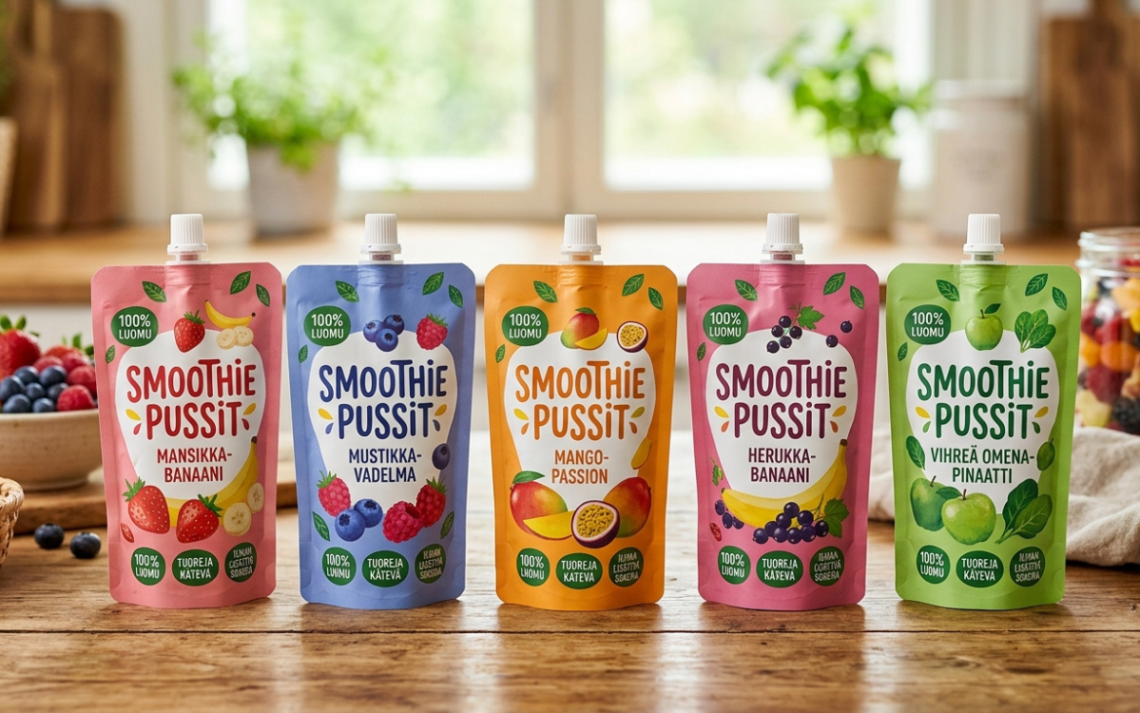
Smoothiepussit is an emerging online term for a simple idea: making smoothies easier to prepare, store, carry, and enjoy. Depending on the context, it can describe pre-portioned smoothie ingredient bags, reusable squeeze pouches filled with blended smoothies, or commercially prepared smoothie pouches.
That flexibility is also why the term can be confusing. There is no single official recipe, nutrition standard, product specification, or regulated food category called Smoothiepussit, so the safest approach is to judge the actual pouch, ingredients, storage instructions, and intended use rather than the name alone.
What Does Smoothiepussit Mean?
The word is commonly explained as a blend of “smoothie” and the Finnish word pussit, the plural of pussi, meaning bags or pouches. Finnish-English references define pussi as a small flexible bag or pouch, which makes “smoothie bags” a useful literal interpretation.
In current online usage, Smoothiepussit generally falls into three practical categories:
- Ready-to-blend freezer packs: measured fruit, vegetables, oats, seeds, or other ingredients portioned in advance.
- Reusable smoothie pouches: refillable containers that hold a smoothie after it has been blended.
- Ready-filled commercial pouches: packaged smoothies or fruit-and-yogurt blends designed for convenient eating or drinking.
These formats solve different problems. A freezer pack saves preparation time, while a refillable pouch improves portability; a commercial pouch prioritizes convenience but gives you less control over ingredients.
Why Smoothiepussit Has Become a Useful Meal-Prep Idea
The real appeal is not a new type of smoothie. It is workflow design.
Many people abandon homemade smoothies because the process creates several small points of friction: washing produce, cutting fruit, measuring add-ins, finding containers, cleaning the blender, and deciding what to make when time is short. Smoothiepussit moves some of that work to a single prep session so the daily decision becomes easier.
That can be especially useful for:
- busy mornings;
- school or work lunches;
- gym bags and post-workout snacks;
- families preparing several portions at once;
- using ripe fruit before it spoils;
- portioning ingredients consistently;
- travel days when a rigid bottle is inconvenient.
Convenience, however, should not be mistaken for nutritional superiority. A pouch is only a delivery or storage format; the health value still depends on what goes inside it.
The Two Best Ways to Use Smoothiepussit at Home
1. Build Ready-to-Blend Freezer Packs
This method works well when you want a fresh smoothie but do not want to measure ingredients every morning. Put solid ingredients into individual freezer-safe bags or containers, freeze them, then empty one portion into the blender and add liquid when you are ready to drink it.
A practical formula for one pack is:
- 1 to 1½ cups produce: berries, mango, pineapple, peach, banana, spinach, kale, or a mix;
- 1 fiber-rich addition: oats, chia, flaxseed, or another suitable whole-food ingredient;
- 1 protein component added at blending time: plain yogurt, milk, soy beverage, kefir, cottage cheese, or a protein product that fits your diet;
- liquid as needed: water, milk, fortified plant beverage, or coconut water;
- optional flavor: cinnamon, ginger, cocoa, vanilla, mint, or citrus zest.
Keeping liquid out of freezer ingredient packs usually makes storage neater and lets you adjust thickness later. Label each pack with the date and any ingredient that could matter to someone with an allergy or intolerance.
2. Fill Reusable Pouches After Blending
The second Smoothiepussit method reverses the sequence. Blend the smoothie first, then pour it into a clean, food-contact-safe refillable pouch for lunch, travel, or portioned snacking.
This format works best for smooth blends without large seeds, hard chunks, or unusually thick mixtures that can block a narrow spout. Leave enough headspace for closing and handling, and follow the pouch maker’s instructions if the product is designed for refrigeration, freezing, dishwashing, or hand-washing only.
How to Build a More Balanced Smoothie Pouch
A smoothie can contain whole fruit and vegetables yet still become surprisingly calorie-dense when large amounts of juice, sweetened yogurt, syrups, nut butter, dates, or sweetened protein products are added. Harvard’s Nutrition Source notes that smoothies made from whole blended produce retain fiber, but whole fruits and vegetables generally provide greater satiety and make portion control easier.
A stronger Smoothiepussit formula balances four elements instead of relying on fruit alone:
Produce + protein + fiber + suitable liquid
For example, berries, plain Greek yogurt, oats, and milk create a different nutritional profile from mango, fruit juice, honey, and sweetened yogurt. Neither needs to be labelled “good” or “bad,” but the first combination is usually easier to structure as a filling snack because it contains more protein and avoids stacking several concentrated sweet ingredients.
Watch the “Healthy Ingredient Pile-Up”
One of the most common smoothie mistakes is assuming that every nutritious ingredient should go into the same serving. Peanut butter, oats, seeds, avocado, protein powder, full-fat yogurt, banana, dates, and milk can all have a place in a diet, but combining generous portions of all of them can turn a small snack into a substantial meal.
Decide what the pouch is supposed to be before you blend it. A snack, breakfast, recovery drink, and child-size serving should not automatically use the same portion or ingredient load.
Smoothiepussit for Children: Convenience Needs Extra Thought
Reusable pouches can make homemade blended foods easier to pack for children, but convenience should not remove normal supervision, hygiene, and age-appropriate feeding decisions. Thick blends, caps, detachable parts, allergens, and temperature control all deserve attention.
For child-focused Smoothiepussit, keep the practical checklist simple:
- choose a pouch intended for food and the child’s age range;
- inspect the cap, seal, zipper, and spout before each use;
- avoid ingredients the child cannot safely tolerate;
- wash all internal surfaces thoroughly;
- keep perishable fillings cold;
- discard a damaged pouch that cannot be cleaned reliably;
- supervise young children according to the product instructions.
A pouch can also make it easy to consume food quickly without seeing the portion. For everyday eating, continue offering whole fruits, vegetables, and foods with varied textures rather than treating blended pouches as a universal replacement.
Food Safety and Storage Rules That Matter
This is where many casual guides become too vague. Smoothiepussit containing cut produce, dairy, yogurt, or other perishable ingredients need the same temperature control as comparable foods stored in regular containers.
The U.S. FDA recommends keeping refrigerators at 40°F (4°C) or below and freezers at 0°F (-18°C). It also advises that foods requiring refrigeration should generally not remain at room temperature for more than two hours, or more than one hour when temperatures are above 90°F (32°C).
That means a smoothie pouch packed for school, work, hiking, or travel may need an insulated lunch bag and a reliable cold source. Do not assume a sealed cap makes a perishable smoothie shelf-stable.
Should You Refrigerate or Freeze Smoothiepussit?
Use refrigeration for short-term storage when you plan to consume the smoothie soon and freezing for longer meal-prep storage where the ingredients and pouch are suitable for freezing. Always prioritize the specific manufacturer’s directions for commercial products and reusable containers.
Freezing is useful for ingredient packs because it can reduce food waste and keep prepared produce available for later blending. FDA guidance also identifies freezing as a useful way to keep many foods from going bad before they are needed.
For an already blended smoothie, freezing may change texture after thawing. Test one portion before preparing a large batch.
Cleaning Reusable Pouches Properly
The hardest part of a reusable pouch is often not filling it. It is cleaning corners, seams, valves, caps, and narrow spouts.
Rinse soon after use so residue does not dry in place, then clean according to the manufacturer’s instructions. If you can still see or smell residue after washing, or a pouch develops damage that creates hard-to-clean areas, replacing it is more sensible than extending its life at the expense of hygiene.
How to Choose the Right Smoothiepussit Format
Do not shop by appearance alone. Start with the job the pouch needs to do.
For Freezer Meal Prep
Look for a container or bag that is explicitly suitable for food storage and freezing. A wide opening, reliable seal, label area, stackable shape, and appropriate portion capacity are more useful than decorative features.
For Refillable On-the-Go Use
Prioritize a secure closure, easy-to-clean construction, comfortable spout, appropriate capacity, and manufacturer instructions that clearly explain cleaning and temperature limits. If you plan to freeze the filled pouch, confirm that the specific product permits it.
For Commercial Ready-to-Eat Pouches
Read the ingredient list, nutrition label, serving size, added sugars where declared, allergen information, refrigeration instructions, and use-by guidance. Two products that look almost identical can have very different ingredient profiles.
This is an important information gap in much of the Smoothiepussit discussion: the format tells you almost nothing about nutritional quality. Labels and ingredients do.
A Simple Weekly Smoothiepussit Prep System
Meal prep works best when it is repeatable, not ambitious. Instead of making ten complicated combinations, build three or four base packs that use overlapping ingredients.
Try this sequence:
- Choose your purpose. Decide whether each portion is breakfast, a snack, or post-exercise food.
- Select two produce bases. For example, berry-banana and mango-spinach.
- Pre-portion dry add-ins. Keep oats, seeds, spices, or powders measured separately if that gives better texture.
- Freeze solid ingredients. Use labeled, freezer-suitable containers.
- Add protein and liquid when blending. This gives you more control over consistency and freshness.
- Fill a reusable pouch only when needed. Keep the transport container out of the freezer-prep workflow unless it is designed for both jobs.
- Keep cold foods cold. Use refrigeration or an insulated cold pack during transport.
This system reduces decision fatigue without forcing you to drink the exact same smoothie every day. You can change the liquid, protein source, spice, or topping while using the same frozen base.
Three Practical Smoothiepussit Combinations
Berry-Oat Breakfast Pack
Freeze berries and sliced banana in a measured portion. At blending time, add plain yogurt, oats, and enough milk or fortified plant beverage to reach your preferred texture.
The berries add tartness, banana adds body, and oats make the blend feel more substantial. If your yogurt or milk is already sweetened, taste before adding any additional sweetener.
Mango-Ginger Green Pack
Combine mango, spinach, and a small amount of fresh ginger in the freezer pack. Blend with plain yogurt or a suitable protein source plus water or milk.
The mango can soften spinach’s earthy flavor without requiring syrup. Start with a small amount of ginger because its intensity increases quickly.
Cocoa-Banana Snack Pouch
Blend banana with plain yogurt or milk, unsweetened cocoa, and a modest portion of oats or nut butter if appropriate for your needs. This works particularly well in a refillable pouch because the ingredients can create a smooth, spoonable texture.
Avoid making it excessively thick if the pouch has a narrow spout. The best consistency is one that flows easily without separating immediately.
Common Smoothiepussit Mistakes to Avoid
Smoothiepussit is simple, but a few mistakes undermine the convenience.
- Overfilling pouches: makes closing messy and can stress the seal.
- Ignoring temperature control: a capped pouch is not automatically safe at room temperature.
- Using too many sweet ingredients: fruit plus juice plus honey plus sweetened yogurt can be more sugar-heavy than expected.
- Treating smoothies as a complete whole-food replacement: blended produce can retain fiber, but whole fruits and vegetables still deserve a regular place in the diet.
- Buying a pouch that is difficult to clean: a cheap container becomes poor value if residue remains trapped in seams.
- Freezing unsuitable materials: not every refillable pouch is freezer-safe.
- Making every portion identical: energy and protein needs differ by person, purpose, and serving size.
The best system is boring in a good way: safe container, sensible portion, predictable cleaning, balanced ingredients, clear labeling, and reliable cold storage.
Are Reusable Smoothie Pouches More Sustainable?
Potentially, but “reusable” does not automatically mean low-impact. Environmental value depends on how many times the pouch is actually reused, how it is washed, what materials it contains, and whether its components can be recycled or responsibly discarded at end of life.
Packaging rules are also becoming stricter in Europe. The EU’s Packaging and Packaging Waste Regulation entered into force on February 11, 2025 and generally began applying on August 12, 2026, with measures aimed at reducing packaging waste and promoting recyclability, reuse, and refill systems.
For households, the practical lesson is simpler: buy only as many reusable Smoothiepussit pouches as you will genuinely use, care for them properly, and replace single-use habits where reuse is realistic. Durability and repeated use matter more than a “green” label by itself.
Is Smoothiepussit Actually Healthy?
It can be. It can also be little more than a convenient container for a dessert-like drink.
A healthy Smoothiepussit routine is built around whole produce, appropriate portions, sufficient protein or other filling components when needed, minimal unnecessary added sweeteners, and safe storage. The pouch itself contributes convenience, not nutrients.
Harvard’s nutrition guidance recommends prioritizing whole fruits and vegetables overall while recognizing that properly portioned smoothies made from whole produce can retain fiber and nutrients. That distinction matters because a smoothie should complement a varied diet rather than automatically replace whole foods.
For most people, the smartest approach is to use smoothies as one tool within a varied diet. Keep eating whole fruit and vegetables, use pouches when they solve a genuine preparation or transport problem, and judge commercial options by their labels rather than wellness-style marketing.
Frequently Asked Questions About Smoothiepussit
1. Is Smoothiepussit a Brand or a Type of Food?
Not necessarily. Current search usage does not support one universally standardized product definition; the term is used broadly for smoothie pouches, refillable squeeze containers, and pre-portioned smoothie packs.
When you encounter the word on a product page, check what is actually being sold. A freezer ingredient bag, reusable feeding pouch, and ready-to-drink commercial smoothie have different storage, cleaning, and nutrition considerations.
2. Can You Freeze Smoothiepussit?
You can freeze ready-to-blend ingredient packs in containers that are designed for freezer storage. A refillable smoothie pouch should only be frozen if its manufacturer explicitly states that the material, closure, and fill limits are freezer-compatible.
Remember that liquids expand when frozen. Leave appropriate headspace where directed and never assume every pouch can move safely from freezer to hot water, microwave, or dishwasher.
3. How Long Can a Smoothie Pouch Stay Out of the Refrigerator?
If the pouch contains ingredients that require refrigeration, follow standard perishable-food safety rules. FDA guidance uses a two-hour maximum at room temperature, reduced to one hour when the temperature is above 90°F (32°C).
For commuting, school, workouts, or outdoor trips, use suitable cold storage rather than relying on the pouch itself. Commercial shelf-stable products are different, so follow the unopened and opened storage instructions printed on their packaging.
4. Are Smoothiepussit Better Than Bottled Smoothies?
They are better for some use cases, not automatically better nutritionally. Refillable pouches can be lighter and easier to portion, while bottles may be easier to inspect and clean; commercial versions of either format can vary widely in ingredients and sugar content.
Compare the actual product, not the shape of the package. Look at serving size, ingredients, protein, fiber, added sugar information, allergens, storage requirements, and how realistically you will reuse or recycle the container.
5. What Ingredients Work Best in Homemade Smoothiepussit?
Ingredients that blend smoothly and remain pleasant after chilling work best: berries, banana, mango, peaches, spinach, oats, yogurt, milk, fortified plant beverages, chia, flax, cocoa, and mild spices are common options. For a narrow-spout pouch, avoid large chunks or mixtures so thick that they are difficult to squeeze out.
Build the serving around its purpose. A light snack may need only fruit, yogurt, and liquid, while breakfast may benefit from a more substantial protein and fiber component.
Conclusion: Use Smoothiepussit as a System, Not a Shortcut
The best way to think about Smoothiepussit is not as a miracle food or a mysterious trend. It is a prep-and-packaging system that can make smoothies easier to portion, freeze, carry, and fit into busy routines.
Start with one use case: freezer breakfast packs, lunch pouches, or portable post-workout smoothies. Choose a food-safe container suited to that job, build balanced recipes, label your portions, keep perishables properly chilled, and maintain a cleaning routine you can actually follow.
If the system saves time without compromising food safety, nutrition, or whole-food variety, keep it. That is where Smoothiepussit becomes genuinely useful rather than simply another wellness keyword.