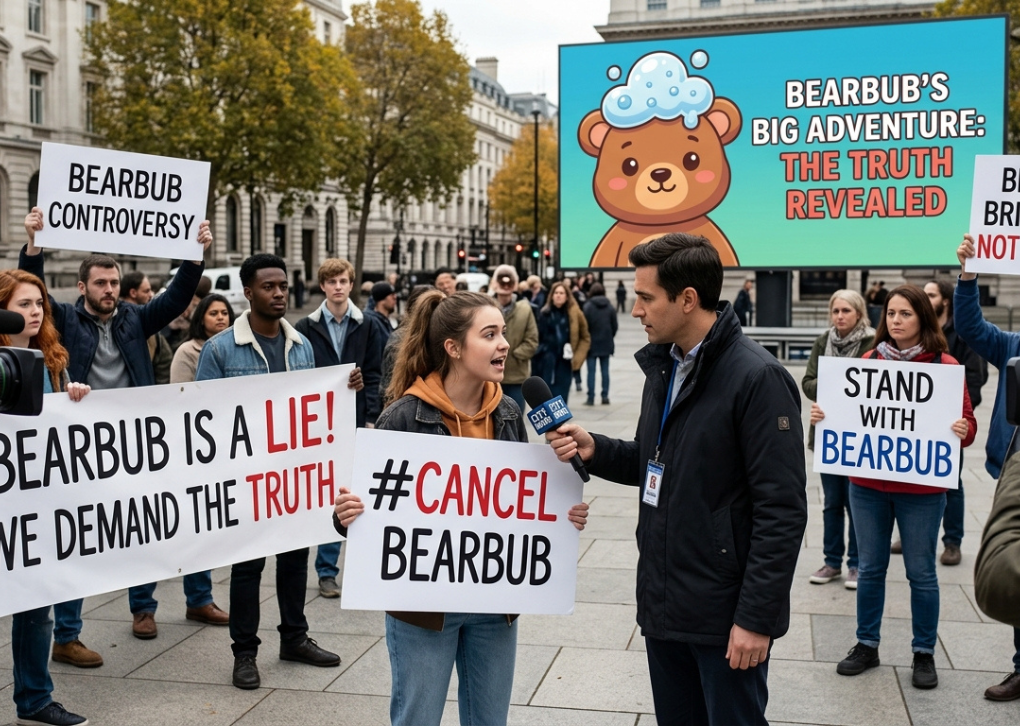
The Bearbub controversy is a good example of why internet drama needs careful source checking before a viral claim becomes “fact.” Search results currently connect the phrase to allegations involving a bear-themed furry creator, yet the documented 2025 dispute centers on Boof, also known as Brother Boofer, while Bearbubb is a separate streamer and meme creator with an established online history going back years. That distinction is not cosmetic; it changes who the story is actually about.
A recent article ranking for this search term explicitly describes Boof/Brother Boofer while simultaneously labeling the story “Bearbub,” creating an entity mismatch. Independent sources document Boof’s 2025 furry-fandom drama under his own names, while older and separate sources identify Bearbubb as a meme maker, streamer, Bear SMP creator, and participant in isaacwhy’s “Last to Leave VC” content.
This guide separates those identities, reconstructs the verified timeline, summarizes the major allegations without presenting accusations as proven facts, and explains why the Bearbub controversy keyword can mislead readers. It also shows which details are documented, which remain disputed, and where the current search results appear to have gone wrong.
Bearbub Controversy: The Most Important Fact First
The central information gain is simple: Bearbubb and Boof/Brother Boofer appear to be different online creators. Available sources do not establish that Bearbubb is the person at the center of the February 2025 furry allegations described by Know Your Meme.
Bearbubb was profiled by Know Your Meme in November 2020 as a meme creator who had been posting since 2017. He later became associated with Minecraft communities and with isaacwhy’s “Last to Leave VC” series; isaacwhy’s 2025 video description lists Bearbubb among the participants.
Boof, by contrast, is described in coverage of the 2025 dispute as a bear furry also known as Brother Boofer whose social accounts began growing in late 2024. The allegations and response cycle documented in February 2025 concern that creator.
That means anyone researching the Bearbub controversy should first perform basic entity resolution: confirm the handle, platform, profile history, and source material before attributing claims to a person. A similar nickname is not enough to connect a creator to serious allegations.
Bearbubb vs. Boof: A Quick Identity Check
The names are easy to blur because both involve “bear” branding, but the available record shows different histories. Those histories matter more than superficial naming similarity.
- Bearbubb: A meme creator and streamer with an online footprint predating the 2025 dispute by years. Know Your Meme profiled Bearbubb in 2020, and isaacwhy later credited Bearbubb in “Last to Leave VC.”
- Boof / Brother Boofer: A bear-themed furry creator whose rapid rise in late 2024 and early 2025 became the subject of allegations and debate on X/Twitter.
- The confusion: A 2026 SEO article uses the disputed phrase as its headline keyword but then states that the controversy involved Boof/Brother Boofer.
This is the first reason the Bearbub controversy deserves a more careful explainer: the search phrase itself can carry a false implication if the identity mismatch is not disclosed. Search intent should be answered, but not at the expense of naming accuracy.
What Actually Triggered the Bearbub Controversy Search Trend?
There is no well-sourced evidence of one single event formally called the Bearbub controversy. The strongest documented match is the Boof furry drama that developed on X in February 2025 and was later cataloged as a distinct internet controversy.
According to Know Your Meme’s event timeline, criticism initially focused on Boof’s fast growth, an attempted social-media interaction with Charmin, and claims that commissioned artwork was being placed behind a Patreon paywall. Other accusations followed, including questions about people he associated with, his knowledge of controversial fursuit maker DHC, political assumptions, and an alleged Discord message.
The story then accelerated because several different issues were bundled together. Some were complaints about judgment or etiquette, some were political or reputational associations, and some were serious allegations based on screenshots or secondhand claims.
That distinction matters. Treating every item in a controversy thread as equally verified is one of the fastest ways to turn online discourse into misinformation.
Bearbub Controversy Timeline: What the Sources Show
December 2024: Boof’s Online Presence Begins Growing
Know Your Meme reports that Boof opened social accounts in December 2024 and gained a following over the next several months. Rapid audience growth became part of the criticism, with some users joking or arguing that he was an “industry plant.”
“Industry plant” is internet slang, not proof of undisclosed corporate backing. In this context, it functioned mainly as a suspicion about unusually fast visibility and networking.
February 1, 2025: Charmin and Patreon Criticism Surfaces
A February 1 X post highlighted a screenshot showing Boof contacting Charmin about a possible collaboration because his fursona was a bear. The same criticism also raised questions about commissioned art and Patreon access.
This episode helped give the dispute its first viral hook. It combined brand outreach, creator monetization, fandom norms, and resentment about perceived fast-track popularity—four topics that reliably generate engagement.
February 10–11, 2025: Political and Association Claims Expand the Dispute
Boof publicly denied supporting Donald Trump and denied supporting DHC after claims and assumptions about those subjects circulated. The next day, critics raised additional questions about his partner, people he had appeared with, and the Patreon issue.
This phase is crucial to understanding the Bearbub controversy keyword because it shows how quickly a narrow complaint can become a broad reputational dossier. Photos, friendships, business practices, political assumptions, and community affiliations were increasingly discussed in the same stream.
February 16, 2025: Alleged Discord Screenshot Spreads
A screenshot circulated that purported to show Boof repeating a white-supremacist slogan. Boof denied the message was authentic and said the Discord image had been fabricated.
Because the screenshot’s authenticity is disputed, it should be described as an alleged or purported screenshot, not as a verified statement by Boof. This is where many low-quality summaries fail: they flatten “someone posted an image” into “the creator said it.”
February 18, 2025: Boof Publishes a Response Video
Boof uploaded a YouTube response addressing multiple points in sequence. The archived video includes dedicated sections on the convention filming issue, Patreon, the “industry plant” accusation, DHC and politics, the alleged Discord message, and other claims.
Know Your Meme’s summary says Boof apologized for filming convention attendees without permission in a “smash or pass”-style joke, disputed claims about monetizing commissioned art without permission, rejected the “industry plant” framing, and said he did not know about controversies surrounding some people or brands he had encountered.
A later post visible through his official Telegram channel points readers to a separate page addressing rumors and allegations and asks followers to share it when misinformation appears. That shows the dispute remained part of his reputation-management efforts beyond the initial February 2025 cycle.
The Major Claims — and What Is Actually Verified
A useful Bearbub controversy explainer should not merely list accusations. It should separate documented actions, critic interpretations, disputed evidence, and creator responses.
That distinction is especially important when a controversy combines relatively mundane disputes—such as social-media etiquette—with accusations carrying much more serious reputational consequences. Evidence should be evaluated claim by claim.
1. “Industry Plant” Accusations
The verified part is that critics used the label after Boof grew quickly and publicly reached out to Charmin. The available sources do not establish that he was secretly installed or financed by a company.
So the accurate formulation is: Boof was accused of being an industry plant; the accusation itself is not proof. The distinction between a viral label and a verified business relationship is essential here.
The phrase spread partly because it supplied a simple narrative for rapid online growth. But fast growth can result from algorithms, networking, reposts, collaborations, novelty, timing, or ordinary virality without requiring a hidden corporate strategy.
2. Patreon and Commissioned Artwork
Critics claimed that commissioned art was being used as paid Patreon content. Boof said he had permission from artists, and a later Patreon-change screenshot discussed in a furry subreddit showed him saying he would stop posting Boof art there even though he maintained that artists had given permission.
A commenter claiming to be an artist said they had not been asked, but that Reddit exchange is community testimony, not independent adjudication. It raises a relevant question while still leaving room for missing context or disagreements about what permissions had been granted.
For readers following the Bearbub controversy, this is a classic evidence-quality problem. A creator’s statement, an artist’s comment, a Patreon screenshot, and an independently verified licensing agreement are not equivalent forms of proof.
3. Political Beliefs and DHC Associations
Boof publicly denied being a Trump supporter and denied supporting DHC. Critics also pointed to photos or interactions involving people they associated with those categories.
The responsible distinction is between association and endorsement. Being photographed with someone, attending the same convention, or failing to know another person’s background does not automatically establish agreement with that person’s politics or conduct.
This matters because online controversy threads routinely rely on guilt by association. Strong reporting asks what the creator personally said, endorsed, funded, promoted, or demonstrably knew—not merely who appeared in the same photo.
4. The Alleged Discord Message
The circulated Discord screenshot carried the most severe reputational implication because it purported to contain a white-supremacist slogan. Boof denied authorship and said the image was photoshopped.
Without reliable authentication, the claim remains disputed. A screenshot can be evidence, but its weight depends on provenance, metadata, corroboration, account ownership, and whether the underlying message can be independently verified.
The internet often skips that forensic step. Once a screenshot generates enough quote-posts, repetition itself can begin to feel like verification even when every repost traces back to the same unverified image.
5. Convention Filming and Consent
One element appears less ambiguous because Boof addressed it himself: he discussed filming furries at a convention without their consent for a “smash or pass”-style joke and apologized for not asking permission. That self-acknowledged point can be described more confidently than allegations based only on disputed screenshots.
That does not validate unrelated allegations. It simply demonstrates why a claim-by-claim approach is more accurate than treating the entire Bearbub controversy as one binary question of guilt or innocence.
Why the Bearbub Controversy Became So Easy to Misreport
The internet is excellent at preserving fragments and poor at preserving context. A screenshot can detach from its original thread, a nickname can lose its platform handle, and a search-optimized article can accidentally—or carelessly—merge two people.
Several dynamics make the Bearbub controversy especially vulnerable to distortion. Each one compounds the others once a story starts ranking in search:
- Handle similarity: “Bearbub,” “Bearbubb,” “Boof,” and “Brother Boofer” are visually and semantically easy to conflate.
- Fandom shorthand: Communities often use nicknames that make perfect sense internally but become ambiguous in search results.
- Screenshot culture: Images move faster than verification and are easy to repost without timestamps, links, or context.
- Aggregation: Later summaries often cite earlier summaries rather than original posts.
- Search-engine reinforcement: Once one page pairs a keyword with the wrong entity, future writers can repeat the association and make it look established.
- Context collapse: Statements meant for one niche community can be interpreted very differently when surfaced to outsiders unfamiliar with its terminology.
- Algorithmic incentives: Outrage, surprise, and conflict usually create stronger engagement signals than cautious corrections.
This is not just an SEO issue. It is a reputational accuracy issue.
If search results repeatedly attach allegations to the wrong identifier, that confusion can become self-reinforcing. A weak article copies another weak article, then a third article cites both and mistakes repetition for corroboration.
What E-E-A-T Looks Like for Internet-Controversy Coverage
Google’s E-E-A-T framework is often discussed as a ranking concept, but for controversy reporting it is also a practical editorial standard. The goal is not to sound authoritative; it is to make the evidence trail easy for readers to audit.
For the Bearbub controversy, strong content should do four things. These are editorial controls, not decorative trust signals.
Experience: Understand How Online Communities Actually Communicate
Fandom disputes rarely unfold in a single formal statement. They move through X posts, quote-posts, Discord screenshots, Patreon updates, Telegram messages, YouTube responses, Reddit discussions, and convention interactions.
A useful article therefore explains the platform context instead of stripping each artifact down to a sensational claim. Context tells readers what a screenshot or post can—and cannot—prove.
A quote-post, for example, may show that a criticism gained traction without proving the underlying criticism. A creator response establishes what the creator says happened, but it does not automatically settle factual disagreements.
Expertise: Separate Evidence Types
A first-party denial is evidence of what a creator says, not proof that the denial is true. A viral accusation shows what was alleged, not that the allegation was verified.
This distinction is the backbone of responsible Bearbub controversy coverage. It prevents a source from being assigned more evidentiary weight than it deserves.
The strongest evidence typically comes from authenticated original posts, complete recordings, independently corroborated records, or statements that can be cross-checked against other sources. Screenshots of unknown provenance require considerably more caution.
Authoritativeness: Prefer Named, Traceable Sources
Know Your Meme provides a dated event chronology and links the dispute to specific posts. Bearbubb’s older Know Your Meme profile and isaacwhy’s video credits provide independent identity markers showing that Bearbubb existed as a separate creator long before the Boof dispute.
The archived February 2025 response video also provides a direct record of the subjects Boof chose to address. Its timestamps independently confirm that the response covered Patreon, Charmin, DHC, political claims, the Discord screenshot and other allegations circulating at the time.
The strongest article does not hide uncertainty. It documents it.
Trust: Correct the Search Query Instead of Exploiting It
If users type this query, an SEO publisher has two choices: reinforce the ambiguity because the keyword has traffic, or answer the query while clearly explaining that the documented controversy appears to concern another creator. The latter serves both search intent and factual accuracy.
That approach creates genuine information gain. Readers learn not only what happened but also why competing pages may be giving them conflicting identities.
It also reduces the risk of attaching serious allegations to someone who was not involved. For a controversy article, that is not a minor editorial detail—it is fundamental.
The SEO Lesson Hidden Inside the Bearbub Controversy
There is another reason this case is useful for publishers. Search engines do not merely process keywords; they increasingly rely on entities, relationships, contextual relevance, topical authority, and corroborating signals.
An article that repeats a trending keyword without resolving which person the keyword refers to may achieve superficial optimization while creating an entity-level accuracy problem. That can undermine trust even if the page uses perfect headings, schema, internal links, and keyword placement.
The Bearbub controversy therefore demonstrates an important semantic SEO principle: optimize for the user’s underlying question, not just the literal string they typed. When search intent contains a misconception, the best page corrects the misconception while still satisfying the intent.
That is meaningful information gain. Competitors can copy a timeline, but a page that identifies and explains the underlying entity confusion provides something materially new.
How to Evaluate Bearbub Controversy Claims for Yourself
When you encounter a new post, thread, or video about the Bearbub controversy, use a simple verification checklist before sharing it. The goal is to verify identity first and interpretation second:
- Confirm the handle. Is the post about @bearbubb, Brother Boofer, Boof, or someone else?
- Find the original upload. Reposts can omit dates, replies, edits, and surrounding context.
- Check the date. A post from 2020 should not automatically be treated as evidence about a dispute that began in 2025.
- Label allegations accurately. Use “claimed,” “alleged,” or “purported” when evidence is disputed.
- Look for a direct response. A response does not settle the issue, but readers should know it exists.
- Check independent corroboration. One screenshot repeated 500 times is still one screenshot.
- Separate conduct from association. A photo, follow, collaboration, or convention encounter can require context.
- Distinguish apology from admission. Someone acknowledging one mistake does not automatically validate every accusation circulating around them.
- Avoid identity merging. Similar names are not proof that two accounts belong to the same person.
That process takes longer than a quote-post. It is also far more likely to produce an accurate understanding.
FAQ About the Bearbub Controversy
What is the Bearbub controversy?
The Bearbub controversy is a search term currently used for online drama that appears to have been mislabeled in some recent web content. The best-documented underlying dispute concerns furry creator Boof/Brother Boofer and a series of allegations that spread on X in February 2025, while Bearbubb is separately documented as a meme creator and streamer.
Readers should therefore be careful when a page uses “Bearbub” and “Boof” interchangeably. Current source evidence does not justify assuming those identifiers refer to the same creator.
Is Bearbubb the same person as Boof or Brother Boofer?
Available sources do not establish that they are the same person. Bearbubb had a documented meme-making presence years before the Boof controversy and later appeared in isaacwhy-related content, whereas the Boof timeline describes a bear furry whose accounts began growing in late 2024.
That separate chronology is one of the strongest indicators that the names should not be merged without additional evidence. Publishers covering the story should identify the exact account or handle they mean.
What allegations were made in the dispute associated with the Bearbub controversy keyword?
Claims documented in coverage of the Boof drama included accusations about rapid “industry plant” growth, Patreon use of commissioned art, political and community associations, DHC, “cub” imagery, and an alleged Discord message containing extremist language. Boof denied or contextualized multiple claims and published a response video; several allegations remained disputed rather than independently proven.
Those claims should not be bundled into a single statement that everything was either “proven” or “debunked.” Different accusations have different evidence, responses, and levels of verification.
Did Boof respond to the allegations?
Yes. Boof posted a YouTube video on February 18, 2025, addressing multiple accusations, including Patreon, Charmin, DHC, political assumptions, convention filming, the Discord screenshot and other topics. An archived copy retains a timestamped description of those sections.
He later promoted a written page intended to address continuing rumors and misinformation. His response included an apology regarding filming convention attendees without consent while disputing or contextualizing several other claims.
Were all claims in the Bearbub controversy proven?
No. The source record contains a mixture of documented posts, criticism, screenshots, denials, creator explanations, and community testimony.
The alleged Discord screenshot, for example, was publicly disputed by Boof, so it should not be presented as authenticated fact without stronger corroboration.
That does not mean every criticism was false. It means responsible reporting must distinguish what is verified from what remains contested.
Conclusion: Read the Bearbub Controversy With the Identity Problem in Mind
The biggest takeaway from the Bearbub controversy is not another sensational allegation. It is the danger of entity confusion—the process by which search engines, aggregators, social posts, and rushed publishers can attach one person’s controversy to another person’s name.
If you are publishing, researching, or sharing this story, start by naming the subject correctly. Treat Bearbubb and Boof/Brother Boofer as separate creators unless reliable evidence demonstrates otherwise, label disputed claims as disputed, and connect important assertions to the strongest available source.
That approach is better for readers, better for search quality, and far more consistent with E-E-A-T than recycling an ambiguous keyword. Before you share the next Bearbub controversy claim, verify the handle, find the original source, and ask one question: Am I certain this allegation belongs to the person I am naming?