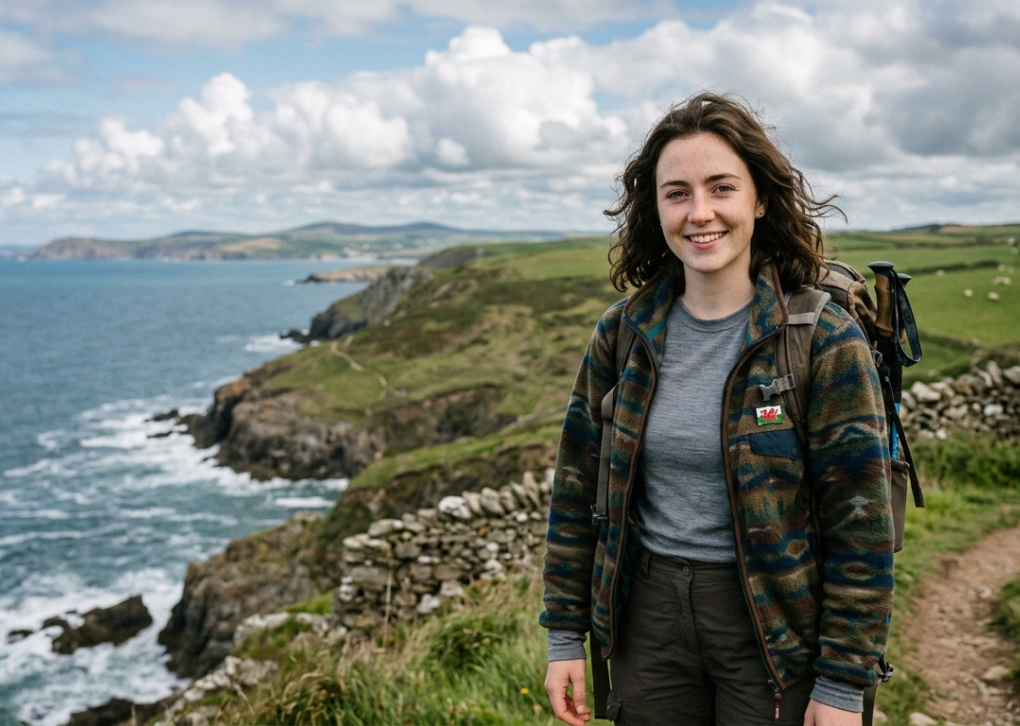
Ninawelshlass1 is an unusual online name that has generated a surprisingly large collection of articles, searches, and competing explanations. Search for it and you will encounter confident descriptions of a Welsh content creator, lifestyle personality, artist, blogger, and digital influencer.
There is one problem. Those descriptions do not consistently agree with one another.
That distinction matters because repeating a claim across multiple websites does not automatically make it verified. A genuinely useful guide therefore needs to separate observable information, third-party claims, reasonable interpretation, and speculation rather than blending them into a polished biography.
This article does exactly that.
What Is Ninawelshlass1?
At the most defensible level, Ninawelshlass1 is an online identifier or username that has developed its own search footprint.
Numerous independent-looking articles discuss the term. Some describe the person behind it as a social media creator associated with lifestyle content and Welsh identity, while others characterize the name in substantially different ways.
That inconsistency is important.
There is currently a difference between saying “websites describe this username as belonging to a creator” and saying “the identity and biography behind this username have been independently established.” The first statement reflects the available search landscape; the second requires stronger evidence.
For readers trying to understand the name, this is the best starting point: treat the username as an online identity requiring source verification, not as a complete biography in itself.
Why Is Ninawelshlass1 Appearing in Search Results?
The search visibility surrounding the name demonstrates an interesting feature of the modern web. A distinctive username can become a searchable entity even when reliable biographical information remains limited.
Several factors can drive that process:
- Exact-match searches from people who encounter a username elsewhere
- Third-party publishers targeting emerging or low-competition queries
- Social-media references and mentions
- Repetition of claims from one article to another
- Algorithmic discovery of unusual names and identifiers
- Curiosity generated by the lack of obvious authoritative information
This creates what could be called an information asymmetry. There may be many pages answering the query while comparatively little primary evidence establishes exactly who or what the query represents.
That appears particularly relevant here.
Understanding the Ninawelshlass1 Username
A username can provide clues, but clues should never be confused with verified facts.
The name can naturally be divided into four components: Nina + Welsh + lass + 1. “Nina” resembles a personal name, “Welsh” suggests an association with Wales or Welsh identity, and “lass” is an informal British term for a girl or young woman.
The final numeral may simply distinguish the handle from an unavailable version of the same username. Numbers are routinely appended to usernames for availability, personal preference, or branding.
None of these observations proves the account holder’s legal name, nationality, location, age, or gender.
That is an essential privacy and research distinction. A username is self-selected metadata, not independently verified identification.
Does the Name Prove a Connection to Wales?
No.
The “Welsh” component makes a connection with Wales or Welsh culture plausible, but it does not establish residence, birthplace, nationality, or ancestry.
People choose geographic terms for dozens of reasons. They may reflect heritage, an interest, a nickname, an old location, a community affiliation, or simply a memorable online identity.
Until a reliable first-party or authoritative source establishes the relationship, the geographical interpretation should remain exactly that: an interpretation.
Who Is Behind Ninawelshlass1?
This is where the available online material becomes particularly complicated.
Some published pages describe the account as a digital creator or influencer. Other articles frame the individual as an artist, while another detailed profile identifies the person as “Nina Salt” and associates the account with Welsh landscapes, nature photography, and personal storytelling.
Those descriptions sound specific. Specificity, however, is not the same thing as corroboration.
When researching an online identity, a biographical claim becomes substantially stronger when it can be connected to evidence such as:
a first-party profile, an established personal website, documented interviews, reputable journalism, professional records, or multiple genuinely independent sources.
Without that chain of evidence, an exact name or elaborate personal history should be presented as a reported claim, not settled fact.
This is one of the biggest weaknesses in much of the existing coverage of the term.
Why Existing Information About Ninawelshlass1 Conflicts
The discrepancies reveal something broader about web research.
One article describes an authentic lifestyle personality. Another presents a modern artist whose work is influenced by music and collaboration. Elsewhere, the username is discussed almost as a generic digital identifier rather than a clearly documented public figure.
Those cannot simply be merged into one biography.
Three explanations are possible. Different publishers could be discussing different aspects of the same person; some articles may contain assumptions derived from other articles; or search-focused content may have filled gaps where primary information was unavailable.
Without authoritative evidence, choosing one narrative and presenting it as fact would create false certainty.
A higher-quality approach is to preserve uncertainty where uncertainty genuinely exists.
How to Verify Information About Ninawelshlass1
Anyone researching Ninawelshlass1 should use a verification hierarchy instead of relying on whichever article ranks first.
1. Start With Primary Sources
Look for accounts that actually use the exact handle.
Then examine whether those accounts link to one another. Cross-linked profiles can provide much stronger evidence of common ownership than an unrelated blog post claiming that two profiles belong to the same person.
Check the profile history as well. Long-term posting patterns, consistent identity signals, linked websites, and references from established accounts can all contribute to confidence.
2. Separate Claims From Evidence
Suppose an article says a creator has “thousands of loyal followers.”
Ask: Where is the number coming from?
If no platform, date, screenshot, archived record, analytics source, or profile is provided, the statement is not independently reproducible.
Apply the same standard to claims about:
- real names
- occupations
- follower counts
- hometowns
- collaborations
- artistic careers
- personal histories
- audience demographics
- brand partnerships
The more specific the claim, the more useful a source becomes.
3. Check Publication Independence
Ten articles repeating the same unsupported sentence do not equal ten independent confirmations.
Look for distinctive reporting. Does a publisher cite an interview? Did it examine an original profile? Does it provide dates, direct evidence, or independently obtained information?
If several pages use remarkably similar descriptions without showing their sourcing, you may be seeing information propagation rather than corroboration.
4. Check Dates
Online identities evolve.
A username can be renamed, abandoned, reassigned, impersonated, or used differently across platforms. A claim that was accurate several years ago might no longer describe the current account.
For that reason, reliable research should attach dates to time-sensitive observations.
Is Ninawelshlass1 a Social Media Influencer?
Several third-party publications use terms such as digital creator, social media personality, influencer, and content creator when discussing the username.
That establishes that an influencer narrative exists around the term. It does not, by itself, verify the scale or nature of the person’s influence.
Influence should ideally be measured through observable signals: audience size, engagement quality, publishing frequency, recognizable collaborations, citations, community interaction, and cross-platform reach.
Follower count alone is also a poor proxy.
A smaller creator with an engaged niche community can exert more meaningful influence than an account with a large but passive audience. Modern creator analysis therefore considers engagement, relevance, trust, audience fit, and demonstrated impact alongside raw reach.
The Bigger Story: How Search Engines Turn Usernames Into Entities
The most interesting part of the Ninawelshlass1 search landscape may not be a conventional influencer biography at all. It is how quickly an obscure or niche identifier can develop an extensive informational ecosystem.
Search engines encounter entities through repeated associations.
If enough pages associate a username with concepts such as “Welsh creator,” “lifestyle,” “artist,” “social media,” and “authenticity,” those semantic relationships can become increasingly visible across search results—even when the underlying sources are weak.
This creates an important distinction between search prominence and real-world prominence.
A term can have many indexed pages without representing a widely documented celebrity. Likewise, a genuine person can have substantial influence inside a niche community while receiving almost no mainstream press.
Search volume, article count, and public notability are different metrics.
Digital Identity and the Problem of Circular Sourcing
Circular sourcing occurs when Website B repeats Website A, Website C rewrites Website B, and Website D treats the repeated claim as established information.
Eventually, a searcher sees four pages saying approximately the same thing.
It feels corroborated.
It may still originate from a single unsupported assertion.
This phenomenon is particularly relevant to niche personalities, usernames, emerging products, unusual terminology, and long-tail search queries because there may be little authoritative documentation available to counter weak claims.
For publishers, the remedy is straightforward: trace important claims as close to their original source as possible.
For readers, the rule is even simpler. Do not count pages. Evaluate evidence.
Could Ninawelshlass1 Be an Online Alias Rather Than a Public Brand?
Absolutely.
An online handle does not automatically indicate an influencer business or formal personal brand. It can represent a private individual, hobby account, historical username, pseudonym, community identity, or account with an audience limited to one platform.
This possibility is frequently overlooked when websites attempt to construct complete biographies from minimal digital signals.
The distinction also has ethical implications.
If the individual behind a username has not deliberately made private biographical information public, researchers should avoid attempting to expose sensitive personal details. Responsible coverage should focus on publicly attributable information and public-facing activity, not invasive identity discovery.
What Makes the Ninawelshlass1 Search Trend Interesting?
The query illustrates several important developments in online culture.
First, usernames increasingly function as brands and searchable entities. A memorable handle can accumulate recognition independently from a person’s legal name.
Second, niche search demand creates publishing opportunities. Once people begin searching for an unfamiliar term, websites have an incentive to explain it—even when the evidence base remains thin.
Third, generative publishing makes source evaluation more important than ever. Producing a fluent biography is easy. Establishing whether every biographical statement is actually true is much harder.
That is why provenance is becoming a competitive advantage.
The strongest content does not merely answer “Who is this?” It also shows readers how we know.
What Readers Should Treat as Established vs. Uncertain
Based on the publicly indexed material, a cautious evidence framework is more useful than a dramatic origin story.
Relatively safe observations include:
- The exact username has generated multiple dedicated web articles.
- Publishers commonly associate it with an online or social-media identity.
- Welsh identity is a recurring interpretation of the handle.
- Different websites provide materially different descriptions of the person or persona behind it.
- The available search landscape contains more secondary commentary than clearly demonstrated primary biography.
Claims deserving additional verification include a specific legal identity, career history, audience size, artistic background, brand relationships, residence, personal history, and other detailed biographical assertions.
That distinction protects both readers and the person potentially represented by the username.
Lessons for Creators and Personal Brands
There is also a practical branding lesson hidden inside this unusual search query.
A distinctive username is highly searchable. Unlike generic handles composed of common words, a unique identifier can create an almost exclusive search-result footprint.
Creators can strengthen that advantage by maintaining entity consistency across their public presence:
- Use consistent naming and profile imagery where appropriate.
- Link official profiles to each other.
- Maintain an authoritative website or profile hub.
- Publish a clear public bio if discoverability matters.
- Correct major misinformation when it could cause confusion.
- Make official partnerships and professional contact channels identifiable.
These practices help search engines and humans distinguish an authentic identity from unrelated mentions, impersonation, or speculative third-party coverage.
FAQ About Ninawelshlass1
Who is Ninawelshlass1?
The name is discussed across multiple websites as an online personality or digital creator, but the publicly indexed secondary sources do not present a fully consistent biography. Some publications attach more specific identities and occupations to the username, but those claims should be independently verified before being treated as established facts.
Is Ninawelshlass1 a real person?
The username appears in online discussion, but the existence of search results alone cannot authenticate the identity of the person controlling an account. Verification requires stronger evidence, ideally from first-party profiles, consistent cross-platform links, reputable independent coverage, or another authoritative source.
What does the username mean?
The most natural interpretation combines “Nina,” “Welsh,” “lass,” and the number “1.” That could suggest a personal name and association with Wales, but usernames are self-selected and should not be treated as proof of someone’s legal name, nationality, residence, or background.
Why is Ninawelshlass1 becoming popular in Google searches?
Distinctive usernames can generate search demand when users encounter them on social networks, forums, other websites, or recommendation systems. Once publishers notice that demand, additional articles may appear, increasing the term’s search visibility. Importantly, the number of pages discussing a term should not be confused with verified public prominence.
Is the information published about Ninawelshlass1 trustworthy?
It varies. Existing articles offer conflicting descriptions, so readers should prioritize first-party evidence and independently sourced reporting. Any highly specific claim—especially a real name, location, profession, follower count, partnership, or personal history—deserves verification before being repeated as fact.
Conclusion: Look Beyond the Search Results
Ninawelshlass1 is a useful case study in how digital identities develop around distinctive usernames. There is clearly an expanding search footprint surrounding the term, and multiple publishers associate it with a creator or online personality.
What remains less clear is the detailed biography.
That uncertainty should not be hidden. It is the most important fact a careful reader needs to understand.
If you encountered the username and want to know who is genuinely behind it, start with the original account, verify cross-platform links, check dates, distinguish primary evidence from secondary claims, and avoid assuming that repeated information is independently confirmed.
That method takes a little longer than accepting the first biography in Google.
It also produces a much more reliable answer.