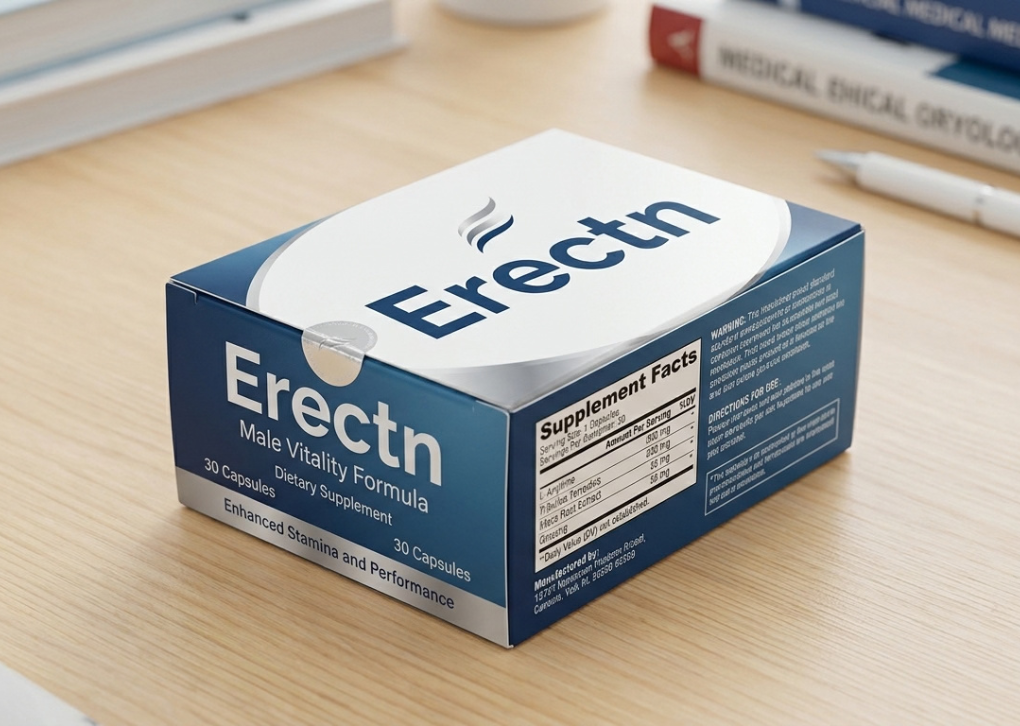
Erectn is not a standard medical diagnosis or an established clinical term. Online, it is most often used as a shortened or misspelled form of “erection,” and many searches appear to be looking for information about erectile function, erection problems, or erectile dysfunction (ED). That distinction matters because a temporary erection difficulty is common, while persistent problems can point to a treatable physical or psychological issue.
This guide explains what the term likely means, how erections actually happen, what can disrupt them, and how clinicians evaluate and treat ongoing erectile difficulties. It also separates evidence-based care from supplement marketing, an area where safety concerns are easy to underestimate.
What Does Erectn Mean?
In practical search intent, Erectn usually refers to erection health rather than a separate disease, drug, or scientific concept. An erection is the result of coordinated activity involving the brain, nerves, hormones, blood vessels, smooth muscle, and erectile tissue in the penis.
It is useful to distinguish an occasional difficulty from erectile dysfunction. ED generally describes an ongoing problem getting or maintaining an erection firm enough for satisfactory sexual activity, whereas a single episode after stress, fatigue, alcohol, illness, or relationship tension does not automatically mean someone has ED. The National Institute of Diabetes and Digestive and Kidney Diseases similarly defines ED around difficulty getting or maintaining an erection adequate for sex.
How Erectn Works: The Physiology Behind an Erection
Sexual arousal starts with sensory or psychological signals processed by the brain and nervous system. Nerve activity in the penis promotes processes involving nitric oxide that help relax smooth muscle in penile blood vessels and erectile tissue.
As those tissues relax, more blood enters the corpora cavernosa, the two main erectile chambers. Expanding erectile tissue also restricts venous outflow, helping retain blood in the penis and maintain rigidity. Mayo Clinic describes the process as nerve impulses increasing blood flow into these spongelike structures during sexual arousal.
This is why Erectn depends on more than testosterone or “blood flow” alone. Healthy vascular function, intact nerves, sufficient arousal, appropriate hormone balance, and a nervous system that is not overwhelmed by anxiety all contribute to the response.
Why Morning and Nighttime Erections Matter
Erections can occur during sleep without conscious sexual stimulation. Clinicians sometimes ask about morning or nighttime erections because their presence can offer clues about whether an erection problem may have a strong psychological, neurologic, vascular, or mixed component.
That clue is not a diagnosis by itself. Formal nocturnal erection testing is reserved for selected cases, and most people with ED are assessed first through medical and sexual history, physical examination, and targeted tests when indicated.
Erectn Problems vs. Erectile Dysfunction
A common mistake is treating every imperfect sexual experience as a medical disorder. Erection quality naturally varies with sleep, stress, emotional context, alcohol consumption, medication use, illness, age, and the degree of sexual stimulation.
Persistent difficulty deserves more attention. Recognized ED symptoms include repeatedly being unable to get an erection, getting one only sometimes, or obtaining an erection that does not remain firm long enough for sexual activity.
The key word is persistent. If Erectn problems continue, become more frequent, or appear alongside reduced sexual desire, penile pain, curvature, diabetes, cardiovascular disease, or other health changes, a medical evaluation is reasonable.
Common Causes of Erectn Difficulties
Erectile function can act like a systems check because many different conditions influence it. In clinical practice, causes are frequently mixed rather than being completely physical or completely psychological; current European Association of Urology guidance specifically cautions against assuming a simple one-cause classification.
Vascular problems are especially important. High blood pressure, atherosclerosis, high cholesterol, diabetes, obesity, smoking, cardiovascular disease, and metabolic syndrome can interfere with blood-vessel function and the ability to increase penile blood flow efficiently.
Neurologic causes can include spinal cord injury, multiple sclerosis, nerve damage associated with diabetes, stroke, or damage following pelvic surgery. Hormonal conditions such as testosterone deficiency and thyroid disorders can contribute as well, although testosterone represents only one component of the erectile response.
Psychological and relationship factors matter too. Performance anxiety, depression, chronic stress, conflict with a partner, negative body image, and fear of “failing again” can interfere with arousal and create a self-reinforcing cycle in which one difficult experience increases anxiety during the next encounter.
Some prescription and over-the-counter medicines can affect erectile function. Antidepressants, certain blood-pressure medicines, sedatives, hormonal treatments, and other drugs may contribute, but prescribed treatment should not be stopped without medical advice; medication changes are best reviewed with the prescribing clinician.
Why Erectn Can Be a Cardiovascular Health Signal
One of the most important facts missing from many superficial erection-health articles is that persistent ED can represent more than a sexual-health issue. Major urology guidance describes erectile dysfunction as a cardiovascular risk marker, meaning its appearance may justify closer attention to a person’s wider cardiovascular risk profile.
The biological connection makes sense. Penile erection depends heavily on healthy vascular and endothelial function, so conditions that impair arteries throughout the body can also interfere with erectile blood flow.
This does not mean that every erection problem predicts heart disease. It means new or persistent ED—particularly when other vascular risk factors are present—creates an opportunity to review blood pressure, smoking, cholesterol, diabetes, weight, exercise, and overall cardiovascular health.
For younger men with unexplained persistent erection difficulties, this broader health assessment can be particularly valuable. The 2026 European urology guideline notes an association between ED and increased cardiovascular risk and recommends cardiovascular risk assessment as part of appropriate evaluation.
How Doctors Evaluate Persistent Erectn Problems
A proper assessment starts with a detailed medical, sexual, and mental-health history. A clinician may ask when the problem began, whether erections occur during masturbation or sleep, whether sexual desire has changed, which medications and supplements are being used, and whether stress or relationship difficulties are present.
Physical examination may focus on cardiovascular signs, genital anatomy, nerve function, or clues suggesting hormonal disease. Depending on the individual situation, laboratory testing can help investigate diabetes, hormonal abnormalities, thyroid problems, cardiovascular risk factors, or other suspected contributors.
Specialized investigations are not automatically necessary. Penile Doppler ultrasound, nocturnal erection testing, or intracavernosal injection testing may be considered when the diagnosis remains unclear or when a more complicated vascular or structural problem is suspected.
That distinction is important for consumers. A legitimate assessment is not simply “Which erection pill do you want?” Good evaluation asks why the problem is happening first.
Evidence-Based Treatment Options for Erectn
The most appropriate treatment depends on the cause, severity, medical history, medications, expectations, and patient preference. Good care usually addresses reversible contributors while also treating erectile symptoms when necessary.
Lifestyle changes can be useful when modifiable risk factors are present. Increased physical activity, smoking cessation, sensible alcohol consumption, healthy weight management, and improved control of cardiovascular or metabolic disease may improve erectile function in some patients. Both NIDDK and current European guidance include lifestyle and cardiovascular-risk management as components of ED care.
Prescription phosphodiesterase type 5 inhibitors (PDE5 inhibitors) include sildenafil, tadalafil, vardenafil, and avanafil. These medicines improve erectile response to sexual stimulation; taking a tablet does not automatically create sexual desire or produce an erection without appropriate stimulation.
A critical safety point deserves emphasis. PDE5 inhibitors should not be combined with nitrate drugs or nitric-oxide donors, because the interaction can produce a dangerous decrease in blood pressure. Current European guidelines describe concomitant organic nitrate use as an absolute contraindication.
People with significant cardiovascular disease, complex medication regimens, or uncertainty about whether sexual activity is medically appropriate should discuss treatment with a qualified healthcare professional.
What If Tablets Do Not Work?
A poor response to a PDE5 inhibitor does not automatically mean the treatment is useless. Timing, correct use, sexual stimulation, food intake with some medicines, expectations, dosing decisions, and underlying disease can all influence the response.
Other established options include vacuum erection devices, intraurethral or injectable alprostadil, psychological or psychosexual therapy, and penile prosthesis surgery for appropriately selected patients. Vacuum devices provide a non-drug option, while intracavernosal alprostadil can be highly effective but requires medical instruction because adverse effects can include prolonged erections and priapism.
Penile implants are generally considered when less invasive treatments are unsuitable, unsuccessful, or when an informed patient prefers a definitive surgical option. Contemporary EAU guidance reports high satisfaction after appropriate counseling while emphasizing surgical risks such as infection and mechanical failure.
Low-intensity shockwave therapy is more nuanced. Evidence suggests a modest improvement in some patients with mild vasculogenic ED, but treatment protocols vary considerably, and guideline recommendations remain selective rather than presenting it as a universal cure.
When Counseling Can Improve Erectn
Counseling does not mean the problem is “all in your head.” Sexual performance depends on attention, anxiety levels, relationship dynamics, expectations, emotional health, and confidence even when a physical problem is also present.
Cognitive behavioral therapy, psychosexual therapy, or couples-based interventions can be useful when performance anxiety, depression, relationship strain, or a mixed physical-psychological pattern contributes. European urology guidance notes that combining cognitive or behavioral interventions with medical treatment can be beneficial.
This matters because unsuccessful sex can itself become a trigger. A person begins monitoring erection firmness, worries about losing it, becomes less aroused because attention has shifted toward performance, and then interprets the resulting difficulty as proof that something is permanently wrong.
Breaking that cycle can be part of legitimate medical treatment.
Erectn Supplements: Why “Natural” Does Not Mean Risk-Free
The supplement market deserves special caution. Products promoted as “male enhancement,” “herbal Viagra,” stamina boosters, or natural erection aids may contain ingredients consumers cannot identify from the label.
The U.S. Food and Drug Administration maintains warnings for sexual-enhancement products discovered to contain hidden pharmaceutical or drug-like ingredients. In September 2026, for example, the FDA warned about a sexual-enhancement product found to contain an undeclared tadalafil-related compound; other 2026 notices identified products containing hidden sildenafil, tadalafil, testosterone derivatives, or other substances.
This is not merely a labeling problem. Undeclared PDE5-type drugs can create dangerous interactions with nitrate medicines, while consumers cannot make an informed decision about dose or safety if the active substance is absent from the ingredient list.
Some ingredients such as L-arginine or ginseng have been studied, but the expected improvement is generally modest and evidence quality varies. For persistent Erectn concerns, an evidence-based evaluation is usually more informative than repeatedly trying unverified products whose purity, dosage, or complete ingredient profile may be uncertain. Current European guidance rates these supplement approaches considerably more cautiously than established ED therapies.
Practical Steps to Support Healthy Erectn
The most useful approach is usually broader than chasing a temporary performance boost. Focus on the factors influencing vascular, hormonal, neurologic, psychological, and relationship health together.
- Track the pattern: Notice whether problems are occasional or persistent, whether morning erections continue, and whether the difficulty changes between situations.
- Review health risks: Consider blood pressure, blood glucose, cholesterol, smoking, sleep quality, weight, and cardiovascular risk with a clinician where appropriate.
- Review medications: Ask whether a prescription, over-the-counter medicine, or supplement could contribute; do not discontinue prescribed treatment independently.
- Improve cardiovascular habits: Regular physical activity, smoking cessation, balanced nutrition, sensible alcohol use, and management of metabolic disease support the same vascular system required for erectile function.
- Address stress and relationship factors: Performance anxiety can become self-reinforcing, while open communication or professional therapy may help interrupt the cycle.
- Avoid mystery enhancement products: Be skeptical of products promising prescription-level effects while simultaneously claiming to be completely natural or free of meaningful side effects.
- Seek medical care for persistent change: New, worsening, painful, or unexplained erection problems warrant evaluation rather than indefinite self-treatment.
When Erectn Needs Urgent Medical Attention
Most erection problems are not medical emergencies. Priapism is different: an erection lasting longer than four hours requires urgent medical care because prolonged erection can damage penile tissue. NIDDK advises immediate medical attention for this complication.
Sudden penile trauma, significant swelling or bruising after an injury, or severe penile pain also deserves prompt assessment. Likewise, acute symptoms such as chest pain, severe shortness of breath, or fainting require urgent evaluation regardless of whether sexual activity was involved.
The important distinction is between difficulty achieving an erection—which is usually evaluated routinely—and an abnormally prolonged or traumatically injured erection, where delaying treatment can cause harm.
Erectn Myths That Can Delay Effective Care
One persistent myth is that ED is simply an inevitable part of getting older. Age can increase risk, but the NIDDK specifically notes that erectile dysfunction is not considered a routine part of aging, and treatable health factors may be involved.
Another myth is that testosterone is the universal answer. Low testosterone can affect sexual desire and erectile function in some men, but vascular disease, diabetes, medication effects, neurologic disorders, psychological factors, and relationship issues may be equally or more relevant.
A third myth is that stronger “natural” supplements must be safer than prescription medication. FDA enforcement evidence shows why that assumption can be dangerous: some apparently natural sexual-enhancement products have contained undeclared drug ingredients, leaving consumers unable to evaluate the actual dose or interaction risk.
A fourth myth is that an erection problem automatically means a lack of attraction to a partner. Erectile function is influenced by multiple biological and psychological systems, so firmness alone cannot reliably tell someone what their partner feels.
Frequently Asked Questions About Erectn
Is Erectn the same thing as erectile dysfunction?
No. Erectn is not a standard medical term and is commonly used online as shorthand for “erection.” Erectile dysfunction is a recognized clinical condition involving persistent difficulty getting or keeping an erection firm enough for satisfactory sexual activity.
What causes weak or inconsistent erections?
Potential contributors include stress, fatigue, alcohol, diabetes, cardiovascular disease, high blood pressure, smoking, obesity, medication side effects, hormone problems, neurologic disorders, depression, and performance or relationship anxiety. More than one contributor may exist at the same time.
Can exercise improve erections naturally?
It may help, particularly when inactivity, excess weight, metabolic disease, or cardiovascular risk contributes to ED. Aerobic exercise and broader cardiovascular risk reduction may improve erectile function in some populations, although persistent symptoms should still be medically assessed rather than assumed to be a fitness problem.
Are erection pills safe for everyone?
No. Prescription PDE5 inhibitors work for many patients but have contraindications and drug interactions. In particular, combining them with nitrates can cause dangerous hypotension, so medication history and cardiovascular status matter.
When should I see a doctor about erection problems?
Seek a routine medical evaluation when problems become persistent, worsen, cause significant distress, or occur alongside conditions such as diabetes or cardiovascular disease. Seek urgent medical care for an erection lasting more than four hours, major penile injury, or serious acute symptoms such as chest pain or fainting.
Conclusion: Treat Erectn as a Health Signal, Not a Search-Engine Mystery
The most useful way to understand Erectn is as a search term pointing toward erection health. Occasional variation is normal, but repeated problems can reflect vascular, neurologic, hormonal, medication-related, psychological, or relationship factors—and several can operate at the same time.
The smartest next step is not to chase increasingly aggressive “male enhancement” products. Look at the pattern, address modifiable health risks, review medications and lifestyle factors, and obtain a professional evaluation when the problem persists.
If the change is ongoing, start with a qualified healthcare professional rather than a high-pressure supplement or supposed “instant cure.” A proper assessment can identify reversible causes, uncover broader health risks, and match treatment to the individual rather than the marketing claim.