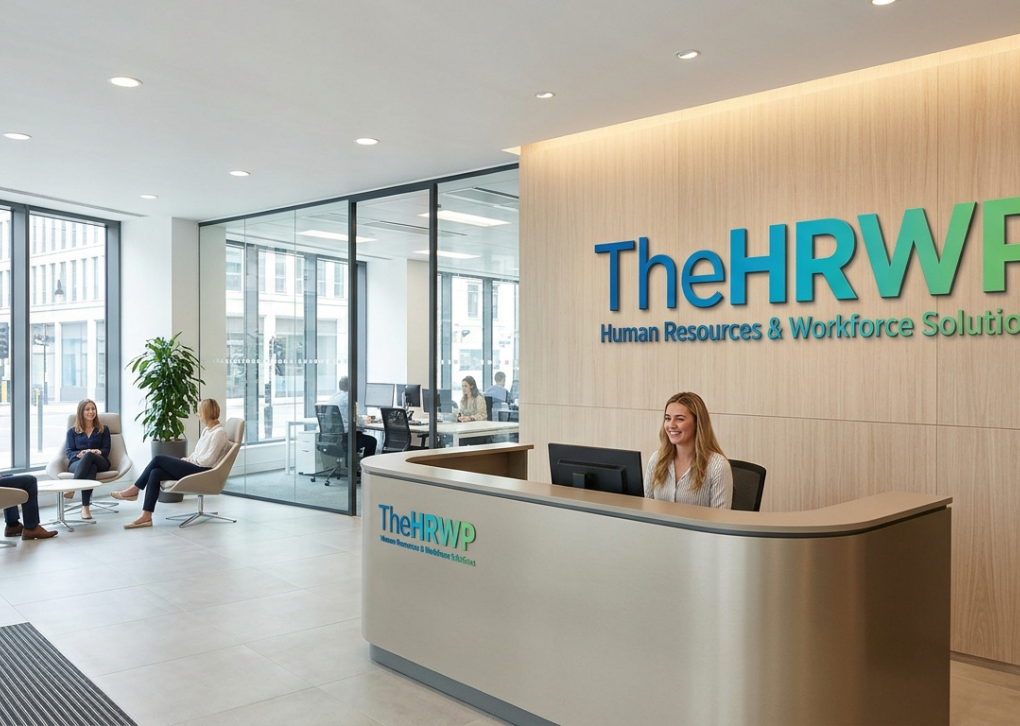
TheHRWP is appearing more often in searches about human resources technology, HR workflow automation, employee management, and the future of work. Yet there is an important detail many articles skip: the public record does not present one completely consistent definition of the term, which means buyers and HR leaders should separate the concept from any specific product claims before making decisions.
That distinction matters. A modern HR platform can create real value by connecting recruitment, onboarding, employee records, performance management, workforce analytics, compliance, and employee experience. But a credible evaluation starts with evidence, not a feature list copied from one website to another.
What Is TheHRWP?
It is generally described online as an HR-focused work or workflow platform designed to streamline people operations. The linked AfterBreak article calls it a “Human Resources Work Platform” and attributes capabilities such as recruitment support, employee engagement, analytics, automation, compliance tracking, and self-service tools to it.
There is, however, a second layer to the story. A website currently using the “thehrwp” name describes itself as a modern HR and workplace solutions platform offering policy development, recruitment support, performance management systems, employee engagement work, HR advisory, and compliance support, with particular familiarity with Pakistani workplace practices.
Other recent pages explicitly note that public descriptions remain inconsistent and that a single standardized product identity, pricing model, customer base, or feature set is difficult to independently verify. The safest, most useful definition is therefore this: TheHRWP is best understood as an emerging HR/workplace concept or brand associated with structured people operations, workflow modernization, and digital HR management. Any specific software capability should be verified directly before it is treated as a confirmed product feature.
Why TheHRWP Is Getting Attention
HR teams are under pressure from both sides. Employees expect faster service, clearer communication, flexible work, fair performance systems, and meaningful development. Leadership expects HR to control costs, improve workforce productivity, fill skill gaps, reduce risk, and make better decisions with data.
That is exactly the gap a unified HR operating model is meant to close. Whether delivered through a dedicated HRIS, HCM suite, consulting framework, or hybrid service model, the value comes from linking fragmented people processes into one coherent system.
The broader labor-market context makes that integration more urgent. The World Economic Forum’s Future of Jobs Report 2025, based on more than 1,000 employers representing over 14 million workers across 55 economies, projects major job and skill disruption through 2030. It estimates 170 million roles could be created while 92 million are displaced, with technology, demographic change, economic pressure, and the green transition reshaping workforce demand.
That means HR cannot operate as a paperwork function. Workforce planning, skills intelligence, talent mobility, learning, and organizational design are becoming core business infrastructure.
TheHRWP and the Shift From HR Administration to HR Operations
The most useful way to assess it is not to ask whether it has a long checklist of modules. Ask whether it can support the employee lifecycle as an operating system.
A strong HR operating model connects candidate data to onboarding, onboarding to employee records, employee records to goals and development, and performance data to workforce planning. It also creates clear ownership, standardized approvals, audit trails, and measurable service levels.
Recruitment and Talent Acquisition
Modern recruitment is more than posting vacancies. HR teams need consistent job architecture, structured interviews, candidate communication, approval workflows, onboarding handoffs, and measurable time-to-hire.
If the platform is used for recruitment support, the practical value should be judged by workflow quality. Can recruiters see where candidates are stuck? Can hiring managers complete scorecards consistently? Can job descriptions, interview criteria, and offer approvals be standardized?
The point is not automation for its own sake. The goal is fewer handoff failures and better hiring evidence.
Onboarding and Employee Records
Onboarding is one of the clearest areas for HR workflow automation because it contains predictable dependencies: signed documents, payroll data, access requests, equipment, policy acknowledgements, manager tasks, orientation, and probation milestones. A well-designed system should reduce duplicate data entry while giving employees a clear starting path. It should also apply data minimization, role-based access, retention rules, and audit logging because employee files often contain sensitive personal information.
Good onboarding also has a human dimension. A completed checklist does not automatically produce belonging, role clarity, or manager support, so operational efficiency should be paired with structured conversations and measurable early-stage employee experience.
Performance Management and Development
Performance management often fails because companies digitize an annual form instead of improving the management process. Effective systems connect business goals, role expectations, feedback, coaching, development plans, and promotion evidence.
This is where the system should be evaluated carefully. A platform may make reviews faster, but speed does not guarantee quality. The higher-value question is whether managers receive better information and whether employees understand what good performance looks like.
Deloitte’s 2025 Global Human Capital Trends research found that 73% of organizations recognize the importance of reinventing the manager role, while only 7% report making strong progress. That gap suggests HR technology should support managers as people leaders rather than simply automate administrative reviews.
Employee Engagement and Workplace Culture
Engagement cannot be reduced to a pulse survey dashboard. Useful employee experience systems help leaders detect friction, close feedback loops, recognize contributions, improve communication, and identify patterns across teams.
The site using the TheHRWP name emphasizes communication, trust, recognition, respectful work environments, and customized HR systems rather than a one-size-fits-all model. That people-centered framing is important. Technology can make signals visible, but leadership behavior determines whether those signals lead to change.
What a Credible TheHRWP Implementation Should Include
Before adopting any HR platform or external HR operating model, decision-makers should define the business problem first. Buying software before mapping the process usually digitizes confusion.
Key due-diligence questions include:
- Product identity: Who legally owns and operates the platform or service, and where are its official documentation, terms, privacy notice, support channels, and customer references?
- Data governance: Where is employee data stored, who can access it, how long is it retained, how are backups handled, and what happens to data after termination?
- Security: Does the solution support multi-factor authentication, role-based access control, encryption, audit logs, incident response, and independent security assurance?
- Integrations: Can it connect reliably with payroll, accounting, identity management, communication tools, time tracking, job boards, learning systems, and business intelligence?
- Workflow design: Can approvals, notifications, exceptions, and escalations be configured without creating brittle processes?
- Reporting: Are metrics defined consistently, exportable, and traceable to source data?
- Compliance: Which labor-law, privacy, payroll, recordkeeping, and employment requirements are actually supported in each jurisdiction?
- Implementation: Who cleans historical data, maps roles, trains managers, tests workflows, manages change, and owns post-launch support?
- AI controls: If AI is used, what data trains or informs the system, how are outputs reviewed, and what decisions require human oversight?
- Commercial terms: Are pricing, renewal rules, service levels, implementation costs, customization fees, and exit provisions documented before purchase?
This checklist is more valuable than a generic “features and benefits” comparison because HR systems become infrastructure. Once employee data, approval chains, payroll dependencies, and management processes are embedded, switching costs can rise quickly.
TheHRWP, AI, and the Next Generation of HR Workflows
The next wave of HR transformation is not simply adding a chatbot to an HR portal. It is redesigning work around a mix of human judgment, automation, and increasingly capable AI agents.
Microsoft’s 2026 Work Trend Index surveyed 20,000 AI-using knowledge workers across 10 markets and found that organizational factors such as culture, manager support, and talent practices were more strongly associated with reported AI impact than individual factors alone. The report argues that organizations need to redesign systems around human-AI collaboration rather than expect tools to create value automatically.
That lesson applies directly here. If AI is added to recruitment, performance, workforce planning, employee support, or policy interpretation, governance has to be built into the workflow.
CIPD’s 2026 guidance goes further: people professionals should participate in AI governance across the organization, not only inside HR systems. It frames governance around ethical, legal, and sustainable deployment and emphasizes controls over systems that affect people.
For HR leaders, that means defining where AI may recommend, where it may automate, and where a human must remain accountable. High-impact employment decisions should never become a black box.
How to Measure the ROI of TheHRWP
The easiest ROI calculation focuses on administrative time: hours saved on onboarding, approvals, reports, leave requests, policy questions, or data entry. Those savings matter, but they are only the first layer.
A more mature value model should track operational and human outcomes together. Deloitte argues that the value case for workforce technology now needs to consider not only cost and speed, but also human-machine collaboration, new value creation, worker well-being, innovation, and changes in how work gets done.
Useful metrics could include time-to-fill, onboarding completion time, HR request resolution time, manager completion rates, regrettable turnover, internal mobility, absenteeism, employee relations cases, learning completion, payroll corrections, audit exceptions, and employee experience indicators. The crucial step is establishing a baseline before implementation. Without a baseline, almost any improvement claim becomes anecdotal.
A disciplined HR team should also distinguish between activity and outcome metrics. Sending 500 automated reminders is activity; cutting overdue onboarding tasks by 40% is an outcome. That difference is where credible ROI analysis begins.
Common Mistakes When Evaluating TheHRWP
The first mistake is treating repeated online claims as independent evidence. When multiple pages use similar language about features, pricing, implementation speed, or customer outcomes, repetition does not prove the underlying claim.
The second mistake is confusing a polished feature inventory with implementation readiness. Even an excellent HR platform will struggle if job roles are unclear, employee records are inconsistent, approval authority is undefined, or managers resist the new process.
The third mistake is automating high-friction workflows before fixing them. Automation scales process quality, but it also scales process defects. A broken approval chain becomes a faster broken approval chain.
The fourth is ignoring ownership after launch. HR technology requires data stewardship, workflow administration, permission reviews, reporting governance, employee support, and periodic redesign. “Go live” is the start of operations, not the end of the project.
TheHRWP Versus a Traditional HRIS or HCM Suite
A traditional HRIS typically acts as the system of record for employee information, while broader human capital management (HCM) platforms may add recruiting, talent management, compensation, learning, analytics, workforce planning, and employee experience features. TheHRWP is harder to classify cleanly because public descriptions vary between software-style platform claims and HR/workplace service offerings. That is not automatically a weakness, but it changes the buying process. Buyers should first establish whether they are evaluating software, managed HR services, consulting support, a configurable workflow layer, or some combination of these.
That distinction affects procurement, security review, implementation responsibility, data ownership, service levels, and total cost. It also prevents an apples-to-oranges comparison with enterprise HCM vendors.
An HR advisory service, for example, may deliver stronger policy design and hands-on support than a self-service software platform. A mature HRIS may offer deeper integrations, data controls, APIs, and enterprise reporting. The correct comparison depends on the operational problem being solved.
Who Could Benefit Most From TheHRWP?
The concept is most relevant to organizations that have outgrown informal people processes but do not yet have a consistent HR operating model. Startups, SMEs, NGOs, distributed teams, and growing companies often reach a point where spreadsheets, email approvals, shared folders, and manager memory no longer scale.
A structured framework can also help companies without a mature internal HR department. The site using the TheHRWP name explicitly says it works with startups, SMEs, corporate organizations, NGOs, remote teams, and organizations that may need an external HR partner.
Large enterprises have a different threshold. They should expect deeper evidence around integrations, identity management, auditability, segregation of duties, data residency, localization, APIs, uptime, support, and large-scale reference customers before treating any system as enterprise-ready.
Frequently Asked Questions About TheHRWP
1. What does TheHRWP stand for?
There is no single expansion used consistently across public sources. The linked AfterBreak article uses “Human Resources Work Platform,” while other sites use variations such as “Human Resource Workflow Platform” or “Human Resources Workplace Platform.” Because the terminology is inconsistent, readers should avoid assuming one expansion is officially standardized.
For search intent, the common thread matters more than the acronym itself: the term is overwhelmingly associated with human resources, people management, workplace systems, and HR workflow technology. That is the semantic context readers are usually trying to understand.
2. Is TheHRWP a real HR software platform?
Public information is mixed. Some articles describe a cloud-style HR software product with modules and automation, while a site using the name presents HR and workplace solutions such as policy development, recruitment support, performance management, employee engagement, and advisory services. Before buying anything, verify the specific provider, legal entity, product documentation, security model, pricing, customer references, and service terms.
The key principle is simple: do not turn a descriptive article into procurement evidence. Product capabilities should ultimately be supported by demonstrations, contracts, technical documentation, and references that can be independently checked.
3. What HR processes could TheHRWP support?
At a conceptual level, it is associated with recruitment, onboarding, employee records, performance management, engagement, HR policies, workforce analytics, compliance, and workflow automation. The exact scope depends on the actual service or product being evaluated, so these should be treated as potential use cases rather than universally confirmed features.
The strongest implementation candidates are usually repetitive, rules-based processes with clear ownership. Onboarding tasks, leave approvals, policy acknowledgements, document routing, manager reminders, employee service requests, and standard reporting often fit that profile.
4. How is TheHRWP different from an HRIS?
An HRIS is typically a defined software category centered on employee data and core HR administration. TheHRWP appears to be a broader and less standardized term that may refer to workplace services, HR workflow modernization, or a digital platform concept. The practical difference can only be established after reviewing the actual provider’s architecture, modules, integrations, and operating model.
An HR buyer should therefore compare capabilities rather than labels. Determine which system will hold the authoritative employee record, which processes are automated, how payroll and identity systems connect, who owns data quality, and what happens when information moves between applications.
5. What should a company verify before adopting TheHRWP?
Start with identity, documentation, data protection, security controls, integration capability, legal compliance, support arrangements, pricing, implementation responsibilities, and exit terms. Then run a limited pilot using a real workflow, measure the baseline and post-pilot results, interview users, and test edge cases before expanding organization-wide.
Do not restrict the pilot to the easiest scenario. Test rejected approvals, changed managers, duplicate employee records, terminated users, missing documents, unusual leave requests, reporting corrections, and permission changes. Real systems reveal their quality at the edges.
Conclusion: Treat TheHRWP as an HR Operating Decision, Not a Buzzword
TheHRWP is interesting because it sits at the intersection of several forces reshaping human resources: workflow automation, people analytics, employee experience, AI governance, skills planning, and the shift from administrative HR toward strategic workforce operations. The opportunity is real, but due diligence matters more than hype.
Public descriptions are still inconsistent, so organizations should not assume that every feature, customer story, integration, security claim, or implementation timeline found online belongs to one verified product. Credible HR transformation depends on clear processes, trustworthy data, accountable managers, secure systems, measurable outcomes, and responsible automation.
The next step is practical: document your three highest-friction HR workflows, establish baseline metrics, define your security and compliance requirements, and ask any provider using the TheHRWP name to demonstrate those workflows with real documentation. If the evidence is strong, pilot it. If the evidence is vague, keep evaluating. That is how HR technology creates durable value—by improving the way work actually happens.