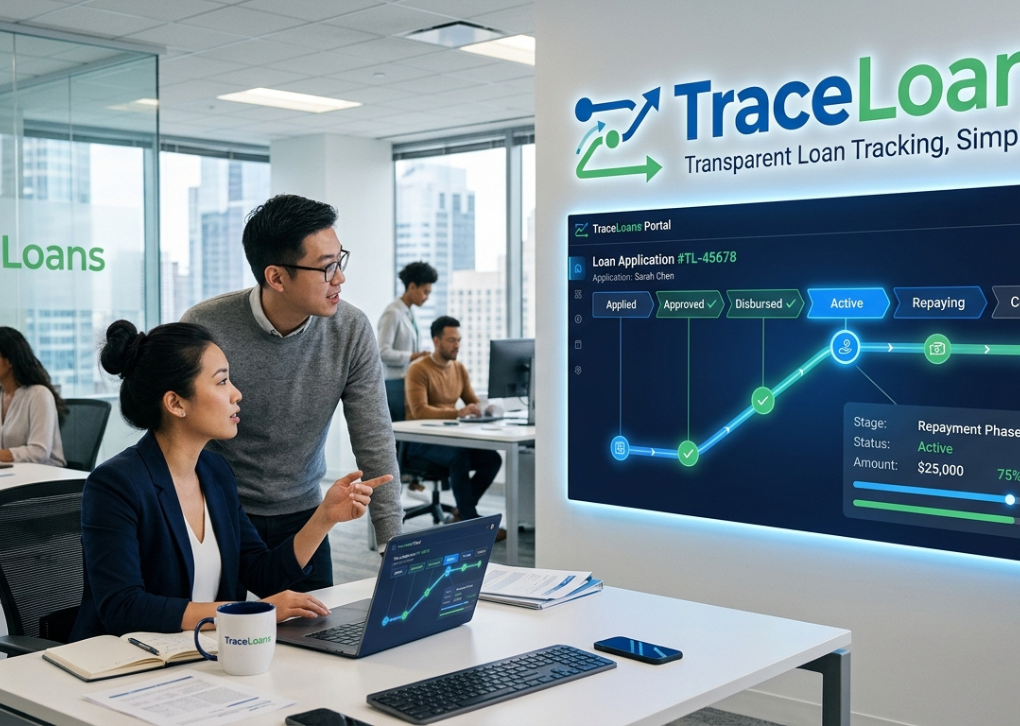
TraceLoans is best understood as a financial education website focused on helping consumers make sense of borrowing, credit scores, debt management, and personal loans. That matters because a search for loan help can easily blur two very different activities: learning how credit works and actually applying for money. The current website says it belongs in the first category—a free educational resource rather than a lender that issues loans. As of September 2026, its own overview and contact pages make that distinction explicitly.
For borrowers, that distinction is useful. An educational site can help you understand annual percentage rates, loan terms, unsecured borrowing, credit reports, debt consolidation, and lender red flags before you hand over sensitive information or sign a contract. But education is only one part of a safe borrowing process. You still need to verify the actual lender, compare disclosures, calculate the total cost, and decide whether the debt fits your budget.
What Is TraceLoans?
The website presents itself as a consumer-focused information resource covering credit scores, debt management, personal and consumer loans, unsecured personal loans, and broader borrowing topics. Its own overview page says the site is free to read and is designed to explain financial concepts without requiring an account or subscription.
That makes its role closer to a loan education hub than a bank, credit union, loan broker, or direct lender. The site’s contact page reinforces this point: it states that it does not issue loans and cannot access or discuss individual credit or loan accounts.
This distinction affects how you should use the site. Read it to build financial literacy and create a comparison framework. Do not assume that reading an article, seeing a sample rate, or learning about a loan category means you have received a lending offer.
What Topics Does TraceLoans Cover?
The site structure follows several stages of a typical borrowing decision. Its publicly listed categories include credit scores, debt management, personal and consumer loans, unsecured personal loans, and general material.
Credit Scores and Credit Reports
Credit affects approval decisions, pricing, and the range of products a borrower may qualify for. TraceLoans publishes material about credit-score mechanics, improving credit, and reading credit information before applying.
A useful next step is to verify the underlying data in your credit files. AnnualCreditReport.com says consumers can access reports from Equifax, Experian, and TransUnion and that free reports are currently available weekly. Reviewing those reports can help you spot inaccurate balances, unfamiliar accounts, or other issues before a lender evaluates your application.
Your credit report and credit score are related, but they are not the same thing. The report contains the underlying account history and other credit information, while scoring models use information from those reports to calculate a numerical risk score.
For borrowers, that means checking only a score can leave important gaps. An incorrect balance, unfamiliar account, or wrongly reported late payment may be more important than the headline number itself.
Debt Management and Consolidation
TraceLoans also covers debt management, including the debt snowball, debt avalanche, and debt consolidation. These strategies solve different problems.
The debt avalanche prioritizes balances with the highest interest rates, generally minimizing interest expense if you stay consistent. The debt snowball targets the smallest balances first, which may provide faster psychological wins. Debt consolidation, meanwhile, replaces multiple debts with a new credit product; it can simplify repayment, but only creates real savings when the new loan’s total cost and terms are genuinely better.
That last point is where borrowers often make mistakes. A smaller monthly payment can look attractive while hiding a longer term and more total interest.
Suppose three credit cards are replaced with one installment loan. The new payment may be easier to manage, but consolidation is not automatically a financial win. You need to compare the new APR, origination fee, repayment period, total interest, and what happens if you start using the paid-off cards again.
Personal and Consumer Loans
Its personal-loan material discusses concepts such as APR, term length, fees, secured versus unsecured borrowing, and common uses of installment credit. These are the variables consumers should compare across real loan offers.
The Consumer Financial Protection Bureau explains that an interest rate is the price charged for borrowing, while APR incorporates the interest rate plus certain additional loan fees. That is why APR is usually the more useful headline number when comparing similarly structured offers.
Still, APR should not be viewed in isolation. A loan can have a competitive APR yet remain unsuitable because the repayment period is too long, the payment strains your budget, or the amount borrowed is larger than you actually need.
The objective is not simply to qualify. It is to borrow on terms you can realistically sustain.
Unsecured Personal Loans
An unsecured loan does not require a specific asset, such as a vehicle or savings account, to serve as collateral. Because the lender does not have that collateral as a direct fallback, underwriting tends to place more weight on factors such as credit history, income, existing debt, and repayment capacity.
TraceLoans treats unsecured lending as a separate topic, which is sensible because borrowers need to understand the trade-off: no pledged collateral does not mean no risk. Missing payments can still trigger late fees, collections, credit damage, and potentially legal action.
Secured borrowing works differently. An auto loan, for example, generally gives the lender a security interest in the vehicle. That can reduce part of the lender’s risk, but it introduces an obvious consequence for the borrower: serious default can put the collateral at risk.
How to Use TraceLoans Without Confusing Education With Approval
A productive way to use TraceLoans is to divide your borrowing journey into two stages: education first, transaction second.
During the education stage, learn the vocabulary and calculate what you can afford. During the transaction stage, move away from general articles and inspect the exact lender, disclosures, licensing information, privacy practices, and contractual terms attached to the offer in front of you.
A practical workflow looks like this:
- Check your credit reports and correct material errors before shopping.
- Define the borrowing purpose and the smallest amount that solves the problem.
- Set a maximum affordable monthly payment based on your real budget, not the lender’s maximum approval.
- Learn the difference between interest rate and APR, and identify every fee.
- Collect multiple offers from legitimate lenders within an appropriate shopping window.
- Verify the lender or broker through relevant state regulators and, where applicable, NMLS Consumer Access.
- Compare total repayment, not just the monthly payment.
- Read the final disclosure and agreement before accepting funds.
This process turns financial content into a decision system. That is more valuable than simply searching “best loan” and clicking the first result.
TraceLoans and the Numbers That Actually Matter
Borrowers often over-focus on the advertised interest rate. A better comparison uses several numbers together.
APR
APR helps capture the annualized borrowing cost after incorporating certain fees. The CFPB specifically notes that APR and interest rate are not the same and recommends shopping around and comparing rates across lenders.
That makes APR particularly useful when comparing loans with different origination charges. A lower nominal interest rate does not automatically mean a lower overall borrowing cost.
Loan Term
A longer term can reduce the required monthly payment but increase total interest. If two loans have the same principal and similar APRs, the longer loan can still cost substantially more over time.
This creates a common borrowing trap: consumers optimize for the payment they see every month while ignoring the number of months they will make it.
Affordability matters. So does duration.
Origination and Other Fees
Personal installment loans may include origination fees, documentation charges, late fees, and optional insurance products. The CFPB advises consumers to review required disclosures and compare offers from multiple lenders rather than judging a loan on one number.
An origination fee deserves special attention because it can affect the amount of cash you actually receive.
Imagine being approved for $10,000 with a 5% origination fee deducted from the proceeds. You may receive only $9,500 while still taking responsibility for a loan based on the contractual amount. That difference matters when you are borrowing for a fixed expense.
Total Repayment
This is the number many comparison pages underemphasize. Ask: How many dollars will leave my pocket from the first payment through the last?
For a fixed-rate installment loan, estimate the total scheduled payments and add any upfront costs that are not already financed. If a consolidation loan lowers your payment but increases total repayment by thousands of dollars, you should know that before signing.
Net Proceeds
Another useful metric is net proceeds: the amount you actually receive after applicable upfront deductions.
This is especially important when you need a precise amount for a repair, medical bill, home project, or other expense. Being “approved for $15,000” does not necessarily mean $15,000 will land in your bank account.
A Simple Loan Comparison Example
Suppose you need to borrow $10,000. Offer A has a somewhat higher monthly payment but a three-year term; Offer B stretches repayment over five years.
The five-year option may feel easier because the payment is lower. Yet the borrower remains in debt longer and may pay materially more interest. The correct choice is not automatically the smallest payment or even the shortest term—it is the structure that balances affordability, total cost, risk, and your ability to repay without missing other obligations.
That is the lens readers should bring to any financial education resource. Payment size is a cash-flow metric; total repayment is a cost metric. You need both.
There is also a third metric: opportunity cost. Money committed to a loan payment cannot simultaneously fund savings, an emergency reserve, retirement contributions, or another priority.
That does not make borrowing inherently bad. It simply means the real cost of debt is broader than the interest charge printed on the statement.
Is TraceLoans a Lender?
No, based on the current public statements on TraceLoans.com. The site says it is an educational resource, not a lender, and that it does not issue loans.
That means there is an important boundary around what the site can do for a reader. It can explain borrowing concepts and help you prepare questions. It cannot approve your application, set your final APR, verify your income, fund a loan, change an existing account, or resolve a dispute with your lender.
This also means you should separately identify the company that would actually provide the money. The legal name on the loan agreement, the license or registration information, the disclosure package, and the payment instructions matter more than the name of the article or educational website that introduced you to a concept.
That distinction becomes especially important when search results contain similarly named websites, third-party reviews, advertisements, or lead-generation pages. Always confirm which organization you are interacting with before providing personal data.
How to Evaluate a Real Lender After Reading TraceLoans
Once you move from research into an actual application, your due diligence should become stricter. Financial products are a high-stakes category, and a polished website is not proof that an offer is suitable or legitimate.
Use this checklist before submitting sensitive information:
- Confirm the legal business name of the lender or broker.
- Check licensing or registration with the appropriate state financial regulator and, when relevant, NMLS Consumer Access; CFPB materials point consumers to state regulators and note that NMLS Consumer Access may show certain disciplinary information.
- Make sure the offer clearly identifies the APR, loan amount, repayment term, payment schedule, and fees.
- Read the privacy notice before providing Social Security, banking, or identity information.
- Search for complaints, enforcement actions, or regulatory history using authoritative sources.
- Be skeptical of “guaranteed approval” language, especially when paired with demands for money in advance.
- Never send payment by gift card, cryptocurrency, wire transfer, or another difficult-to-reverse method merely to “unlock” a promised loan.
The Federal Trade Commission warns that advance-fee loan scams often promise access to credit regardless of credit history and then demand payment before the promised loan appears. Legitimate lenders may have disclosed application-related costs in some circumstances, but paying a fee does not legitimately guarantee approval.
The phrase “guaranteed loan regardless of credit” deserves particular scrutiny. Real underwriting usually involves evaluating information about the borrower and the proposed transaction. A promise that approval is certain before that evaluation takes place should trigger additional verification.
What Makes TraceLoans Useful for Borrowers?
The strongest use case is not finding a magical low rate. It is reducing information asymmetry.
Lenders and experienced finance professionals already understand terms such as APR, debt-to-income ratio, amortization, origination fee, collateral, prepayment penalty, and underwriting. First-time borrowers often do not. A clear educational resource can narrow that knowledge gap before a consumer enters a binding agreement.
TraceLoans may be especially useful when you are:
- preparing to apply for a personal loan for the first time;
- trying to understand why credit affects loan pricing;
- comparing secured and unsecured borrowing;
- deciding whether debt consolidation changes your total cost;
- reviewing terminology before speaking with a bank, credit union, or online lender; or
- building a checklist of questions to ask before signing.
The value is highest when you use the content as a starting point and verify time-sensitive facts—rates, laws, lender requirements, tax rules, and program eligibility—against primary sources.
This is an important E-E-A-T principle for financial content. A well-written explanation is helpful, but primary documentation should win whenever the two conflict.
If an article says one thing but your official loan disclosure says another, the contractual document requires your attention. If an article describes a government program, verify the current program rules on the responsible government agency’s website.
Where Borrowers Should Be More Careful
No educational website should replace the actual loan disclosure, regulatory databases, or personalized financial advice when the stakes are high. Articles can explain a concept correctly while becoming outdated on specific thresholds, programs, rates, or legal requirements.
That is particularly important with mortgages, student loans, tax-related debt issues, and government forgiveness programs. Rules can change. Your eligibility can depend on facts an article does not know.
There is another subtle risk: example numbers feel more authoritative than they are. A sample APR range, credit-score tier, closing-cost estimate, or “typical” fee can help explain a concept, but it is not your quote.
Treat examples as illustrations until a verified lender gives you written terms based on your application.
Readers should also distinguish editorial information from individualized financial advice. A general article cannot know your income stability, emergency savings, tax position, family obligations, existing debt, upcoming expenses, or tolerance for repayment risk.
Those variables can change whether borrowing makes sense.
TraceLoans vs. a Loan Marketplace vs. a Direct Lender
These three categories serve different functions.
Based on its current description, this site primarily provides education. A loan marketplace generally gathers borrower information and may match or route users to participating lenders. A direct lender evaluates the application under its own underwriting rules and, if approved, provides the credit.
Knowing which category you are dealing with determines what questions to ask. With an educational publisher, ask whether the information is accurate, current, sourced, and clearly explained.
With a marketplace, also ask who receives your data and how many partners may contact you. With a direct lender, scrutinize licensing, disclosures, APR, fees, repayment terms, servicing, and hardship policies.
That distinction also helps protect your privacy. Entering an email address to read a newsletter is very different from providing a Social Security number, bank-account details, income documents, or employer information to apply for credit.
The more sensitive the information requested, the more important identity verification and privacy due diligence become.
How to Get More Value From TraceLoans Content
Do not read loan education passively. Turn each article into a set of numbers and questions that apply to your situation.
For example, after reading about personal loans, write down your required loan amount, target payoff date, maximum payment, current monthly debt obligations, and the fees you are unwilling to accept. After reading about credit, pull your actual credit reports instead of guessing where you stand.
Then build a one-page comparison sheet for every real offer. Include:
- lender name;
- APR;
- amount financed;
- origination fee;
- net proceeds;
- loan term;
- monthly payment;
- total scheduled repayment;
- late-payment fee;
- prepayment conditions;
- collateral requirements; and
- whether the rate is fixed or variable.
That worksheet is where education becomes leverage.
It also helps prevent emotional borrowing. When money is needed urgently, consumers naturally focus on speed and approval. A standardized comparison sheet forces every lender to compete on the same variables.
Suddenly, “fast approval” is not the only feature you see.
Build a Personal Borrowing Rule Before You Apply
One of the most useful steps borrowers can take is to establish rules before receiving offers.
Why? Because approval can create psychological momentum. Once a lender says yes, it becomes easier to rationalize unfavorable terms.
Create boundaries in advance. For example:
- I will not borrow more than the amount required.
- I will compare at least three credible options where practical.
- I will not judge affordability solely by the monthly payment.
- I will calculate total repayment.
- I will not accept unclear fees.
- I will not pay anyone merely to guarantee approval.
- I will not submit sensitive information until I know who will receive it.
Those rules transform research into consumer protection.
FAQ About TraceLoans
Is TraceLoans legitimate?
TraceLoans.com is currently accessible as a financial education website and explicitly says it is not a lender. That statement should not be interpreted as a blanket endorsement of every fact on the site or of any third-party company a reader may encounter elsewhere.
The better question is what can be independently verified. Check current financial claims against authoritative sources and evaluate any actual lender on its own licensing, disclosures, privacy practices, reputation, and contractual terms.
Does TraceLoans Give Personal Loans?
No. The current TraceLoans.com contact page states that the site does not issue loans and cannot access or discuss individual loan or credit accounts.
If you need funding, you will need to apply with an actual lender or another regulated credit provider. Make sure you know the legal identity of that provider before submitting personal information.
Can TraceLoans Help People With Bad Credit?
TraceLoans can help a reader understand topics related to bad credit, credit reports, loan terms, and borrowing options. It cannot guarantee approval or determine the rate a lender will offer.
Before applying, review your credit reports, check them for errors, calculate an affordable payment, and compare multiple legitimate offers. Borrowers with weaker credit should pay especially close attention to APR, origination fees, loan duration, and total repayment because expensive pricing can dramatically increase the cost of borrowing.
Is TraceLoans Free to Use?
The site states that its educational content is free to read and does not require an account or subscription for access.
Always check the current site terms if that model changes. More importantly, distinguish free educational content from fees that may be charged by a separate lender, broker, marketplace, or financial service provider.
What Should I Check Before Applying for a Loan After Reading TraceLoans?
Verify the lender’s identity and regulatory status, review the APR and all fees, compare the total repayment across multiple offers, read the privacy notice, and make sure the payment fits your budget.
Also confirm how much money you will actually receive after upfront deductions. If someone promises guaranteed credit in exchange for an upfront payment, treat that as a serious warning sign; the FTC specifically cautions consumers about advance-fee loan scams.
Final Takeaway: Use TraceLoans as a Research Layer, Not a Substitute for Due Diligence
This resource can be useful when your real problem is not “Where can I borrow immediately?” but “How do I understand what I am about to sign?” That is a much stronger starting point.
Learn the terminology. Understand your credit and existing debt. Determine the minimum amount you need, calculate an affordable payment, compare APR with total repayment, and create a shortlist of questions before you approach a lender.
Then switch modes.
Verify the lender. Collect written offers. Inspect fees and privacy terms. Compare the cash you actually receive with the amount you must repay. Walk away from pressure tactics, unclear costs, or guaranteed-approval promises.
The smartest next step is simple: use TraceLoans to strengthen your financial knowledge, then use primary documents and regulatory sources to validate the actual loan before committing to it.