Search interest in Peter Orszag hair is unusually persistent for someone known primarily as an economist, former White House budget director, and Wall Street executive. The curiosity usually comes down to three questions: What kind of hairstyle does he wear, why has his hairline attracted so much attention, and is there any reliable evidence behind claims that he wears a wig or toupee?
The evidence supports a careful answer. Public photographs show a short, conservative hairstyle that has remained broadly consistent while changing from dark brown to gray over the course of his public career, but there is no reliable public confirmation that Orszag wears a wig, toupee, hair system, or has undergone a hair transplant.
Peter Orszag Hair: Quick Facts
- Current look: Short, neat, business-oriented cut with a side-directed top and closely controlled sides.
- Color change: Darker in older government-era photographs; predominantly gray or salt-and-pepper in recent appearances.
- Wig or toupee: No reliable public confirmation.
- Hair transplant: No reliable public confirmation.
- Why people notice it: The style has often looked dense, structured, and consistent in highly photographed public settings.
- What can be verified: The visual evolution of the haircut and hair color, plus the documented history of media speculation.
Those distinctions matter. A hairstyle can reasonably be described from photographs, while a private grooming method, hairpiece, medical treatment, or cosmetic procedure cannot be established from appearance alone.
Who Is Peter Orszag?
Peter R. Orszag is CEO and Chairman of Lazard. According to Lazard, he joined the firm in 2016 after a career spanning finance, public policy, government, and academia, and he previously served as CEO of Lazard’s Financial Advisory business. https://www.lazard.com
Before moving into senior finance roles, Orszag served as Director of the Office of Management and Budget during the Obama administration and earlier as Director of the Congressional Budget Office. Brookings also documents his earlier work in economic policy, including positions in the Clinton administration and research leadership roles at the institution. Brookings
His career explains why Peter Orszag hair became such a visible search topic in the first place. Years of congressional hearings, White House briefings, television interviews, economic-policy conferences, and corporate appearances created a long photographic record in which even subtle changes in his appearance are easy for internet users to compare.
Unlike an entertainer whose hairstyle might deliberately form part of a celebrity image, Orszag became highly photographed because of his work in economics and finance. The interest in his appearance developed alongside that professional visibility rather than being central to his career.
What Does Peter Orszag Hair Actually Look Like?
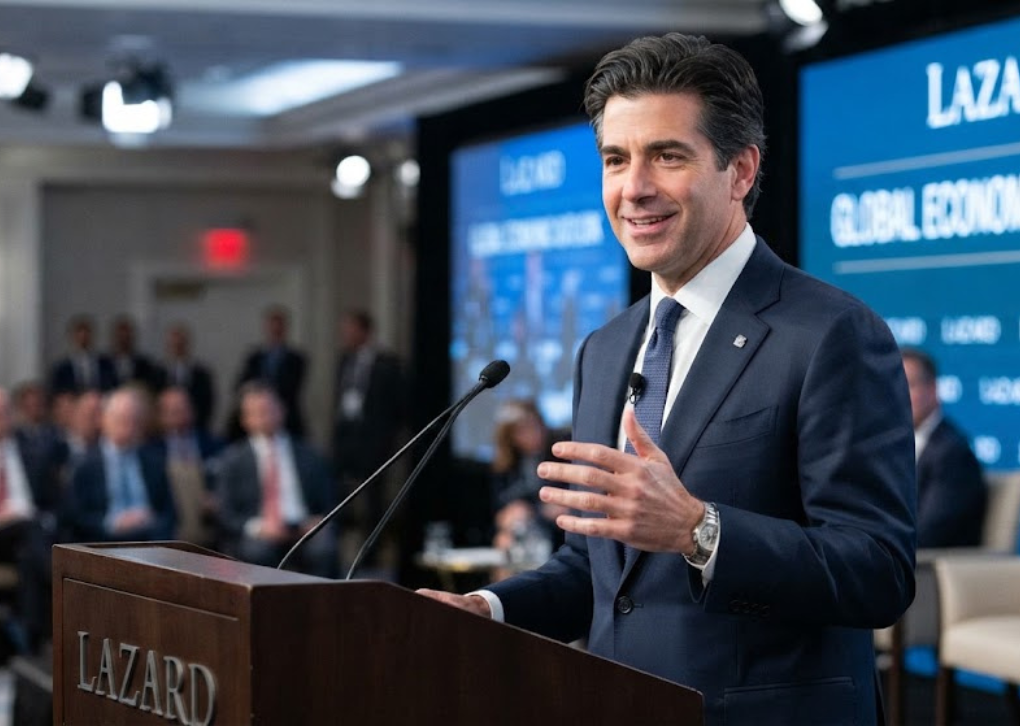
Across public images, Peter Orszag hair is best described as a short, formal executive haircut. The top generally carries more length and visual weight than the sides, while the front tends to be directed sideways rather than worn forward as a fringe.
Older photographs from his government years show dark hair with a clean outline and substantial visible coverage across the top. More recent public appearances show a similar conservative silhouette but with significantly more gray, giving the overall look a softer appearance.
The haircut is comparable to a classic short side-part or Ivy League-style cut rather than a skin fade, undercut, textured crop, or longer swept-back hairstyle. That description refers to the visible shape of the haircut, not to any confirmed instructions from Orszag or his barber.
The Hairline
Much of the fascination with Peter Orszag hair centers on the front hairline. In some older photographs, the front appears particularly defined and dense, which helped create the conditions for years of online discussion.
That visual impression is not diagnostic evidence of a hairpiece. Hairline visibility changes considerably with haircut length, comb direction, camera height, lighting, contrast, hair color, photographic sharpening, and the exact moment at which an image is taken.
The Apparent Density
Another feature people notice is the hairstyle’s apparent density. A compact haircut with relatively short sides and more visual weight on top can naturally make hair look fuller because the styling minimizes visible separation between strands.
Gray hair can also photograph quite differently from dark hair. Silver strands catch light differently, so scalp visibility and texture may look dramatically different depending on whether a photograph was taken outdoors, under studio lights, or under harsh overhead lighting.
How Peter Orszag Hair Changed Over Time
The most defensible way to discuss Peter Orszag hair is chronologically. Rather than attempting to diagnose what happened between photographs, it is more useful to document the changes that are actually visible.
Government-Era Photos: Dark, Dense, and Structured
Photographs from 2009 and 2010 show Orszag with short, dark hair, a distinct side direction, and a dense-looking top. At the time, his public profile was especially high because of his role at the Office of Management and Budget, where he was involved in major economic and budget policy during the Obama administration. Brookings
The overall hairstyle was traditional rather than trend-driven. It was tidy around the sides, controlled on top, and suited to congressional testimony, government briefings, television appearances, and formal professional settings.
Recent Photos: Gray, Short, and Still Conservative
By 2026, public photographs show Orszag with predominantly gray hair. The general haircut remains restrained and professional, but the lighter color significantly changes how the hairline, texture, and scalp contrast appear on camera.
This is one reason comparisons across 15 or more years require caution. Even when someone maintains roughly the same haircut, aging, graying, lighting technology, image resolution, and grooming differences can make two photographs look much more different than the underlying hairstyle actually is.
Does Peter Orszag Wear a Wig or Toupee?
This is the central search intent behind many Peter Orszag hair queries. The most accurate answer is straightforward: there is no reliable public evidence confirming that Peter Orszag wears a wig, toupee, hair system, or other hairpiece.
The rumor itself, however, is real and historically documented. In January 2010, the New York Observer published a feature about New York hairpiece specialist Joseph Paris and showed him photographs of Orszag, who was then serving as White House budget director. Observer
Paris reacted strongly to Orszag’s appearance, but an important limitation often disappears when that story is repeated online: he had not personally measured or examined Orszag. His comments were therefore an opinion formed from photographs, not firsthand confirmation that Orszag used a toupee.
That distinction is essential. The Observer article proves that hairpiece speculation existed in 2010; it does not establish that the underlying claim was true.
Where Did the Peter Orszag Hair Rumor Come From?
The Peter Orszag hair rumor became highly visible during his Washington years, when his expanding media profile meant that photographs of him appeared frequently in newspapers, blogs, televised interviews, and political coverage. By January 2010, the subject had reached the Observer, demonstrating that the speculation had moved beyond isolated comments. Observer
Why did it stick? One likely reason is the combination of a dense-looking top, a sharply defined front in some images, and unusually consistent styling across formal appearances.
Internet repetition then did the rest. Once a question becomes indexed around phrases such as Peter Orszag wig, Peter Orszag toupee, Peter Orszag hairpiece, or Peter Orszag bald, later websites can repeat the same speculation without contributing new evidence.
That creates an important distinction for readers doing genuine research. The number of webpages repeating a claim does not increase the quality of the underlying evidence.
Has Peter Orszag Had a Hair Transplant?
There is also no reliable public confirmation that Orszag underwent a hair transplant. No credible source reviewed for this article documents an FUE, FUT, or another surgical hair-restoration procedure involving him.
That does not establish that he has or has not privately used any treatment. It simply means a responsible article cannot present such a procedure as fact without a reliable statement, medical disclosure, firsthand account, or comparable evidence.
For the same reason, claims that Peter Orszag hair proves a transplant because of hairline shape, temple coverage, or apparent density go beyond what photographs can support. Numerous variables can change those features without surgical intervention.
Why Photos Cannot Prove a Wig, Toupee, or Transplant
Side-by-side photographs can be useful for documenting hairstyle changes, but they are poor evidence for diagnosing hair restoration. Two pictures may have been taken under completely different photographic conditions.
Variables that can significantly alter the appearance of hair include:
- Lighting direction: Overhead lighting can expose more scalp, while frontal lighting often makes hair appear denser.
- Hair color: Dark hair against lighter scalp creates stronger contrast than gray or silver hair.
- Length: Even a small difference in top length can noticeably change volume.
- Styling products: Cream, paste, gel, pomade, or hairspray can either separate or bind individual strands.
- Camera angle: An elevated photograph reveals more of the crown and part than an eye-level shot.
- Image processing: Sharpness, contrast, compression, and exposure adjustments can change edge definition.
- Humidity and movement: Hair may sit differently between an indoor television studio and an outdoor event.
- Timing after a haircut: Freshly shortened sides can make the top appear considerably fuller.
That is why responsible analysis of Peter Orszag hair should describe what the images visibly demonstrate rather than turn photographic impressions into medical or cosmetic conclusions.
How to Ask a Barber for a Similar Hairstyle
If the reason you searched Peter Orszag hair is practical rather than speculative, the visible haircut is relatively straightforward to translate into barbering language. Ask for a short classic business haircut with a soft side part, leaving noticeably more length on top than around the sides.
The sides should remain conservatively tapered rather than taken down to an aggressive skin fade. The front needs enough length to move sideways while still looking structured rather than becoming a long comb-over.
A practical barber brief could include:
- Keep approximately 5–7 cm (2–2.75 inches) on top, adjusted to your own hair type.
- Ask for a scissor taper or longer clipper length through the sides.
- Keep the temples and sideburns neatly blended.
- Maintain a clean but natural-looking neckline.
- Create a soft side part, not a shaved hard part.
- Remove excess bulk while preserving enough weight for a smooth silhouette.
- Avoid excessive disconnection between the sides and top.
These measurements are an approximation for reproducing the visible style, not a claim about Orszag’s actual haircut specifications. Your barber should modify them according to face shape, density, hairline, crown pattern, curl, and individual growth direction.
How to Style a Similar Look
For fine or medium hair, apply a lightweight volumizing product to damp hair and blow-dry it in the direction of the part. Finish with a small amount of matte paste or low-shine styling cream so the hair remains controlled without looking heavily coated.
Someone with thicker or coarser hair may benefit from a smoothing cream to stop the sides from expanding outward. A high-shine pomade can create a more traditional finish, although recent versions of this type of executive haircut generally look more natural with limited shine.
The key lesson from the Peter Orszag hair look is control rather than stiffness. The shape looks polished because the top, part, and sides form a balanced silhouette rather than because every strand appears locked into place.
Why the Hairstyle Works in Executive Settings
The haircut’s consistency is part of its appeal. It avoids trend-heavy details, works naturally with formal clothing and glasses, and can be maintained without an elaborate visible styling routine.
That makes Peter Orszag hair a useful reference for men seeking a professional haircut that feels established without looking deliberately old-fashioned. The silhouette is recognizable, yet understated enough that it does not dominate a business appearance.
There is also a practical photographic advantage. A compact side-part haircut usually retains its general shape across boardroom meetings, television interviews, conference stages, and formal portrait photography.
Peter Orszag Hair: Facts vs. Rumors
| Claim | What the evidence supports |
|---|---|
| Orszag has worn short, neatly styled hair for years | Supported by public photographs |
| His hair appeared darker during his government career | Supported by older photographs |
| His recent hair appears substantially grayer | Supported by recent photographs |
| He wears a wig | Unverified |
| He wears a toupee | Unverified |
| He uses a modern hair system | Unverified |
| He underwent a hair transplant | Unverified |
| A specialist confirmed his toupee after examining him | No. The widely cited 2010 assessment was based on photographs |
The last point is particularly important because the 2010 Observer story is repeatedly cited as supposed proof. The original article establishes that Joseph Paris commented on photographs of Orszag, not that he personally examined him. Observer
What Most Articles Get Wrong About Peter Orszag Hair
Many pages targeting Peter Orszag hair frame the issue as a binary mystery: either it is entirely natural or it must be a toupee. That framing creates far more certainty than the public evidence allows.
A stronger analysis separates the subject into three categories. First are observable facts, including color, visible length, direction, and general hairstyle; second is documented media history, such as the 2010 Observer discussion; third are unverified private details, including supposed wigs, hair systems, transplants, medications, or treatments.
This approach also produces more useful content for readers. Someone searching because they want the hairstyle gets practical information, while someone researching the old rumor receives the historical source and its limitations rather than another recycled assertion.
Why the Career Timeline Matters
Understanding Orszag’s career gives the photo comparisons useful context. Brookings records his move from its Economic Studies program to leadership of the Congressional Budget Office, followed by his tenure at OMB during the Obama administration; Lazard now identifies him as its CEO and Chairman. Brookings
That means widely circulated photographs span very different eras, professional settings, cameras, lighting systems, and stages of aging. Comparing a government photo from around 2009 with a corporate conference image from 2026 is not the equivalent of comparing controlled before-and-after clinical photographs.
FAQ About Peter Orszag Hair
1. Does Peter Orszag wear a wig?
There is no reliable public confirmation that Peter Orszag wears a wig. Historical media coverage discussed his appearance, but the best-known specialist commentary was based on photographs instead of a personal examination. Observer
For that reason, stating definitively that he wears a wig would go beyond the available evidence. The appropriate classification is unverified.
2. Does Peter Orszag wear a toupee?
The toupee claim also remains unverified. The 2010 New York Observer article is important because it demonstrates that the rumor existed, but it does not document firsthand evidence that Orszag wore a toupee. Observer
Later internet articles frequently reference that older discussion. Repeating the claim, however, does not turn speculation into confirmation.
3. Has Peter Orszag had a hair transplant?
No credible public source reviewed for this article confirms a hair transplant. Photographs alone cannot reliably determine whether a person has undergone FUE, FUT, or another restoration procedure.
Hairline position, density, coverage, and texture can appear different because of age, styling, lighting, hair length, graying, and photographic conditions. Without reliable evidence, a transplant claim should therefore remain unverified.
4. What hairstyle does Peter Orszag have?
The Peter Orszag hair style can reasonably be described as a short, conservative side-part or Ivy League-like business cut. It keeps more visual weight on top, uses tidy sides, and avoids extreme fades or heavily disconnected sections.
Someone trying to reproduce it should show a barber a reference photograph rather than relying exclusively on a haircut name. Barbers may use slightly different terminology for similar shapes.
5. Why does Peter Orszag’s hair look different now than in older photos?
The clearest visible change is hair color. Older government-era photographs show substantially darker hair, while recent appearances show gray or salt-and-pepper hair.
Differences in lighting, camera angle, haircut length, grooming, image resolution, and contrast can also change the apparent hairline and density. That makes uncontrolled photographs useful for observing overall appearance, but unreliable for diagnosing what caused it.
Conclusion
The most useful answer to the Peter Orszag hair question is also the most evidence-based one. Public photographs show a long-running preference for a short, polished side-part hairstyle, with the most obvious visual evolution being the change from dark hair during his government years to predominantly gray hair in recent appearances.
Claims involving a wig, toupee, hair system, or hair transplant remain unverified. The famous 2010 media episode genuinely occurred, but the specialist involved was commenting on photographs rather than reporting the result of an in-person examination. Observer
For readers interested in recreating the look, the useful details are much simpler: choose a conservative taper, extra length on top, a soft side part, controlled volume, and a low-shine finish. Bring a clear reference image to your barber and have the proportions adapted to your own hair density, growth pattern, and face shape rather than trying to reproduce another person’s hairline exactly.