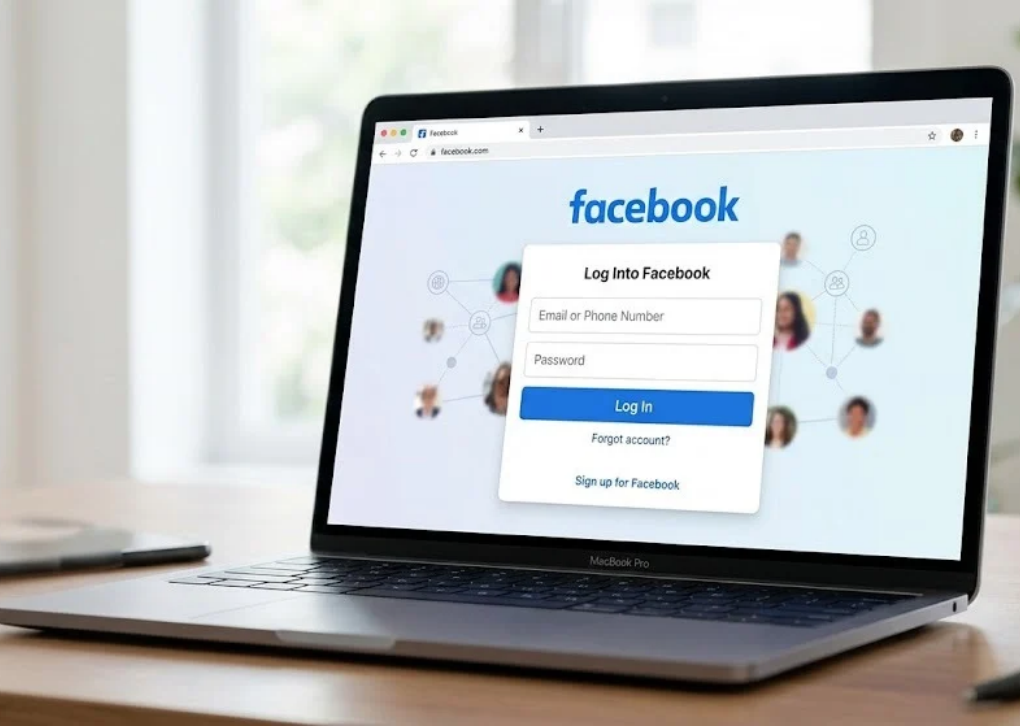
Accessing Facebook should be simple, but unfamiliar web addresses, forgotten passwords, verification requests, and unexpected login errors can make the process confusing. People searching for Facebooklogin.com login often want a quick way to access their accounts, understand whether a particular website is legitimate, or resolve a problem preventing them from signing in.
The important distinction is between a domain name associated with Facebook and a login page that Facebook officially recommends using. Knowing how to verify an address, recognize suspicious requests, and recover account access can help you avoid unnecessary security risks while getting back to your profile, messages, and connected services.
This guide examines the domain’s publicly available registration information, explains the official Facebook sign-in process, and covers practical solutions to common authentication problems. It also explores recent changes to Meta’s account management system and the security features that matter most in 2026.
What Is Facebooklogin.com Login, and Is the Domain Official?
The phrase Facebooklogin.com login generally refers to users attempting to find a Facebook sign-in page through a specific web address rather than visiting Facebook’s familiar homepage. Because the domain contains the recognizable Facebook name, it can easily be mistaken for an alternative account access portal.
There is an important detail worth understanding. A publicly indexed WHOIS record for facebooklogin.com lists Meta Platforms, Inc. as the registrant and identifies name servers associated with Facebook, including a.ns.facebook.com.
That historical registration information suggests an association with Meta, but it does not establish whether the domain currently provides a functioning login service. A direct live-page verification was not successful, so its present behavior cannot be confirmed from that check.
For anyone researching Facebooklogin.com login, the safest practical recommendation is to access Facebook through https://www.facebook.com/ or the official Facebook mobile application. These provide established routes to the platform’s authentication and recovery features without depending on an unfamiliar web address.
Why Domain Ownership and Login Safety Are Different
A company may register multiple domain names for brand protection, historical services, marketing campaigns, or redirects. That does not mean every registered address is intended to accept account passwords or function as a public login portal.
A domain can also behave differently over time. Redirects, inactive services, certificate changes, and outdated search results can all affect what visitors encounter.
This is why assessing Facebooklogin.com login requires more than checking whether the name contains the word Facebook. Users should consider the actual destination, the address displayed in their browser, and whether the authentication process comes through Facebook’s established services.
How to Access Facebook Safely Instead of Using an Unverified Login Page
If your goal is simply to access your account, you do not need an alternative website or specialized login tool. The standard Facebook sign-in process works through supported desktop browsers and mobile applications.
When searches for Facebooklogin.com login produce unfamiliar results, follow these steps to reach the standard account access page:
- Open a trusted browser. Launch an updated version of Chrome, Safari, Firefox, Edge, or another supported browser on your device.
- Enter the official address directly. Type
https://www.facebook.com/into the address bar rather than following an unfamiliar advertisement or message link. - Locate the login form. Enter the email address or mobile number associated with your Facebook account, followed by your password.
- Complete any required verification. Depending on your account settings, Facebook may ask for an authentication code, passkey confirmation, or another security check.
- Confirm successful account access. Once signed in, verify that your profile, messages, and account information appear as expected.
- Review your security settings. If you recently encountered an unexpected login page, check active sessions, authentication methods, and recent account activity.
The official Facebook login page is available at facebook.com/login. You can also access the login process through the regular Facebook homepage without needing a separate sign-in website.
Understanding the Standard Facebook Login Process
Facebook uses account credentials and additional security signals to determine whether someone should be allowed access. Depending on the user’s settings, these may include passwords, trusted devices, two-factor authentication, or passkeys.
The experience is not necessarily identical for every user. Someone logging in from a familiar phone may encounter fewer verification prompts than a person accessing the same account from a new device or unusual location.
People looking for Facebooklogin.com login should understand that an additional domain is not needed to activate these protections. Authentication controls are integrated into Facebook’s existing account system.
Facebooklogin.com Login vs. the Official Facebook Sign-In Page
The main difference is whether the address represents an established authentication destination or an alternative domain whose current login functionality has not been confirmed. Similar-looking website names should never be treated as interchangeable simply because they contain the same brand name.
The following comparison helps explain the distinction.
| Access Method | Purpose | Recommended Action |
|---|---|---|
| facebook.com | Official Facebook website | Use for normal account access |
| facebook.com/login | Established Facebook login page | Use for direct sign-in |
| Official Facebook app | Mobile account access | Install from a trusted app store |
| facebook.com/login/identify | Account identification and recovery | Use when recovering a forgotten password |
| facebook.com/hacked | Compromised account recovery | Use when unauthorized access is suspected |
| facebooklogin.com | Separately registered domain associated with Meta in historical WHOIS data | Do not assume it is a supported login endpoint |
This distinction matters because search engines sometimes display archived pages, unrelated results, and domain names that resemble official services. A convincing-looking result is not proof that a site is appropriate for entering sensitive information.
When evaluating Facebooklogin.com login, focus on the confirmed authentication destination rather than the attractiveness of the search result. A trusted bookmark to Facebook’s official website is a practical way to avoid confusion.
How Facebooklogin.com Login Searches Can Create Security Confusion
Search terms containing a brand name and the word “login” have a straightforward purpose: users want access to an account. Unfortunately, that urgency can make people less attentive to the precise addresses appearing in search results.
Fraudulent websites sometimes imitate familiar login forms, color schemes, and verification messages. These pages may attempt to collect passwords, one-time authentication codes, or other information that could be used to access an account without permission.
That does not mean the specific domain discussed here has been established as fraudulent. The general security risk comes from treating any recognizable-looking address as sufficient proof of authenticity.
How to Recognize a Suspicious Facebook Login Page
A suspicious page may display unusually urgent instructions, unexpected identity verification demands, or requests to submit information unrelated to the normal sign-in process. Messages claiming that an account will be permanently deleted unless the user acts immediately should receive particular scrutiny.
Examine the full website address before entering credentials. For example, facebook.com.example.net is hosted under example.net, not facebook.com, even though the recognizable brand name appears near the beginning.
An HTTPS padlock is useful because it indicates an encrypted connection, but it does not prove that a website belongs to Facebook. Phishing websites can also use valid HTTPS certificates, making domain verification essential.
Facebooklogin.com Login on Android and iPhone
Mobile users sometimes reach unfamiliar login pages after tapping links inside messages, email applications, or social media advertisements. The smaller screen can make it more difficult to inspect the entire website address.
If you are researching Facebooklogin.com login on a smartphone, the more straightforward option is to use the official Facebook application. Android users can obtain it through Google Play, while iPhone users can use Apple’s App Store.
Signing In Through the Official Facebook App
After opening the Facebook app, users can generally enter their registered email address or phone number and provide the required authentication information. Depending on the device and account configuration, the app may also offer saved credentials or passkey-based access.
If the application is already installed but login is unsuccessful, updating it can resolve some compatibility problems. Restarting the device and confirming that the internet connection is working may also help.
Avoid downloading installation packages from unfamiliar websites claiming to provide an improved Facebook login experience. Modified applications can introduce privacy risks, collect authentication data, or interfere with normal security features.
Accessing Facebook Through a Mobile Browser
Users who prefer not to install an application can access Facebook through their mobile browser. The browser-based experience supports standard account authentication without requiring an unofficial login application.
For additional convenience, bookmark the official website after verifying its address. This reduces the chance of repeatedly relying on search results or accidental links when accessing your account.
Facebooklogin.com Login Not Working? Common Problems Explained
A failed sign-in attempt does not automatically indicate that an account has been compromised. Authentication errors can result from incorrect credentials, temporary network problems, outdated applications, or additional security requirements.
If Facebooklogin.com login appears in your search because a particular address is inaccessible, first determine whether the issue concerns that domain or your Facebook account itself. Try the official Facebook website directly before making changes to your password or browser settings.
Incorrect Email Address or Password
An incorrect password is among the most common explanations for unsuccessful account access. Saved credentials may also become outdated after a password change on another device.
Carefully verify the email address or mobile number entered into the login form. If the password is no longer remembered, use Facebook’s official recovery process rather than repeatedly entering guesses.
Verification Code Not Arriving
Authentication codes may be delayed by mobile connectivity issues, email filtering, or temporary delivery problems. In some cases, the selected verification method may no longer be accessible.
Check the appropriate email folder or phone messaging application, and confirm that the contact details belong to your account. If another previously configured authentication method is available, Facebook may allow you to use it.
Avoid requesting many codes in rapid succession. Multiple attempts can create confusion about which code is current and may trigger temporary security restrictions.
Browser Problems and Login Loops
A browser that repeatedly returns to the login screen may have problems with session cookies, browser extensions, or stored authentication information. An outdated browser can also affect the behavior of certain account features.
Try updating the browser or opening Facebook in a private browsing window to determine whether the issue is related to stored browser data. If the problem disappears, review site-specific cookies and extensions before clearing unrelated information.
Only change browser settings while visiting the verified official Facebook website. Disabling security protections merely to make an unfamiliar login page work is not recommended.
Temporary Account Security Restrictions
Facebook may temporarily limit access when its systems detect activity that requires additional verification. New devices, unusual authentication behavior, or repeated unsuccessful login attempts can result in security challenges.
Some restrictions have a defined waiting period. Facebook’s Help Center explains that a particular security check may require a 24-hour wait before account access becomes available again.
Attempting to bypass these controls through third-party login services is not a reliable solution. Follow the instructions supplied through Facebook’s official recovery interface.
How to Recover a Forgotten Facebook Password
Password recovery is often the real reason people search for Facebooklogin.com login. Fortunately, Facebook provides a dedicated account identification process for users who cannot remember their existing credentials.
Open facebook.com/login/identify and follow the account search instructions. Depending on the information available, Facebook may help identify your account through an associated email address or mobile number.
If Facebook recognizes your account, it may present available verification methods and password reset instructions. The precise options depend on your recovery information, recognized devices, and security settings.
What If You No Longer Have Access to Your Email?
Losing access to the email address associated with an account can complicate recovery. The challenge is proving account ownership when the usual verification destination is unavailable.
Start the recovery process from a device or browser previously used with the account, where possible. Facebook may provide alternative verification steps based on the account’s circumstances, although no particular recovery method is guaranteed.
Recovering an old email account through its legitimate provider can also be useful. Restoring access to a registered recovery address may make Facebook’s normal verification process more straightforward.
Recovering a Hacked Facebook Account
A hacked account requires a different approach from a forgotten password. Warning signs may include unfamiliar messages, unexpected password changes, new contact information, or login activity from unknown devices.
Facebook directs users who suspect unauthorized account access to facebook.com/hacked. Its guidance recommends beginning the process on a device previously used to access the account.
Once recovery is successful, review your password, recovery contact details, connected accounts, and active sessions. If the compromised Facebook password was reused elsewhere, change it on those services as well.
Facebooklogin.com Login and Two-Factor Authentication
Two-factor authentication adds another verification requirement beyond the password. Even if someone obtains a password, an additional security step can make unauthorized account access more difficult.
Users researching Facebooklogin.com login should know that these protections are configured within Facebook’s account security settings, not through an unrelated login portal. Depending on the account interface, settings may appear under Accounts Center, Meta Account, or Password and security.
Choosing the Right Authentication Method
Authentication applications generate time-sensitive codes that can provide an additional layer of protection. Security keys offer another option by requiring possession of a compatible physical authentication device.
Facebook also supports passkey-related login features, making use of device authentication such as a fingerprint, facial recognition, or device unlock method. Availability and configuration can vary by account, device, and rollout stage.
The strongest practical setup combines an appropriate authentication method with secure account recovery information. Users should also protect their email accounts, since email access can play an important role in password recovery.
Why Backup Access Matters
Strong authentication is valuable, but losing the only authentication device can complicate account recovery. Users should review any available backup or recovery options before replacing their phones or changing authentication applications.
Store recovery codes securely if Facebook provides them for your account. Do not send authentication codes or recovery information to individuals claiming to offer emergency account restoration.
How Meta Account Changes Facebook Login in 2026
An important development in Facebook authentication is Meta’s move toward a more unified account experience. In April 2026, Meta announced an expanded Meta Account system designed to simplify access and management across its applications and devices.
According to Meta’s official announcement, Accounts Center is being updated gradually to support this broader account management experience. The changes are intended to bring important settings, security controls, and connected experiences into a more centralized system.
This is particularly relevant to Facebooklogin.com login searches because authentication terminology and settings menus may change as the rollout progresses. Older tutorials may refer only to Accounts Center, while updated interfaces may display Meta Account.
A More Connected Authentication Experience
Meta Account is designed to support experiences across Facebook, Instagram, Messenger, and other Meta technologies. Certain connected login capabilities and a shared password can be configured where supported, but users are not required to combine every account.
The company has also highlighted passkeys, personalized security recommendations, and centralized account settings. These developments can reduce friction when managing multiple services while retaining important authentication controls.
Not every user receives interface changes simultaneously. If a guide displays settings that differ from those on your device, follow the options available in your official application rather than seeking a separate website that promises access to the newer system.
Protecting Your Account After Visiting an Unfamiliar Login Website
Sometimes users recognize a questionable page only after clicking a link or submitting information. The appropriate response depends on whether they merely viewed the page or entered sensitive credentials.
If you opened an unfamiliar address without entering information or downloading anything, close the page and use the official Facebook website. If you submitted your password, treat that password as potentially exposed and change it through the legitimate service.
What to Do After Entering Your Password on a Suspicious Page
Use a trusted device to sign in directly to Facebook and update the account password. Choose a unique password that has not been reused for email, banking, or other important services.
Next, review recent login activity and remove sessions you do not recognize. Enable or review two-factor authentication, confirm your recovery details, and inspect connected applications for anything unexpected.
If an authentication code was also disclosed, take the situation seriously because time-sensitive codes may be used to complete an unauthorized login. Start the compromised-account recovery process if you see unfamiliar activity or lose account access.
For users who reached an unknown site while searching for Facebooklogin.com login, this response is more useful than attempting to determine legitimacy solely from the page’s appearance. Security actions should be based on what information was exposed and whether unauthorized activity occurred.
Facebook Login for Business Pages and Professional Accounts
Facebook authentication is especially important for people managing business Pages, advertisements, customer messages, or professional accounts. Unauthorized access can affect both personal information and business operations.
In most cases, Page management begins with a personal Facebook account that has been granted the appropriate permissions. Having access to a business Page does not automatically mean that the person has ownership or full administrative control over every connected asset.
Why Business Account Security Requires Extra Attention
Business accounts may be targeted through fraudulent copyright notices, advertising warnings, fake policy violations, or messages claiming that a Page will be suspended. These approaches encourage users to click external links and submit account credentials.
Someone looking for Facebooklogin.com login to manage business activities should access their tools through established Facebook or Meta services. Use the official account interface to review Page permissions, business settings, and access requests.
Administrators should periodically examine who can manage important assets. Removing unnecessary access, securing administrator accounts, and reviewing unfamiliar changes can help reduce operational risk.
Practical Ways to Make Facebook Login More Reliable
Convenience and account security do not have to work against each other. A few consistent habits can make signing in easier while reducing exposure to misleading login pages.
Start by bookmarking Facebook’s official website and keeping your application updated. A reputable password manager can help create and store a unique password, reducing the temptation to reuse credentials across unrelated websites.
Enable supported account protections, maintain a current recovery email address, and periodically review authentication settings. These precautions are particularly useful when switching phones, traveling, or accessing an account from multiple devices.
A reliable Facebooklogin.com login search strategy is not to collect as many alternative login links as possible. It is to identify one trusted authentication destination and use Facebook’s own support resources whenever something goes wrong.
Frequently Asked Questions About Facebooklogin.com Login
1. Is Facebooklogin.com Login an Official Facebook Login Service?
Publicly indexed domain registration information has listed Meta Platforms, Inc. as the registrant of facebooklogin.com. However, this alone does not confirm that the domain currently hosts an active or officially recommended sign-in page.
The established Facebook login destinations are facebook.com and facebook.com/login. Users should rely on those addresses or the official Facebook application when entering account credentials.
2. Why Is Facebooklogin.com Login Not Opening on My Device?
A domain may fail to load because of DNS problems, connection issues, redirects, server configuration, or an inactive web service. Without a successful live verification, the exact reason this particular address may not work cannot be confirmed.
If your goal is to access Facebook, visit the official website directly and determine whether your account works there. This helps distinguish problems with an unfamiliar web address from problems with your actual Facebook account.
3. Can I Recover My Facebook Password Without Accessing Facebooklogin.com Login?
Yes. Facebook provides a standard account recovery process at facebook.com/login/identify, which does not require the alternative domain.
Enter the account information requested and follow the verification steps offered. Recovery options depend on the information linked to your account and the security checks available for your situation.
4. Is It Safe to Enter My Facebook Password on Another Website?
Entering your password on an unfamiliar website can expose your account to credential theft. Even if the page resembles Facebook, you should verify its exact destination before submitting sensitive information.
Some legitimate third-party services support official Facebook authentication flows, but they should not simply ask you to disclose your Facebook password in their own forms. When uncertain, close the page and access Facebook through its established website or application.
5. How Can I Secure My Facebook Account Against Unauthorized Logins?
Begin with a unique password, supported multi-factor authentication, and up-to-date recovery information. Review active sessions periodically and remove unfamiliar devices when appropriate.
Be cautious with unexpected verification messages, never share login codes with strangers, and avoid downloading unverified applications. Facebook’s official account security resources provide additional guidance on account protection, phishing, and authentication features.
Conclusion: Choose the Safest Route to Your Facebook Account
Understanding Facebooklogin.com login starts with separating a recognizable domain name from a verified, recommended authentication service. Historical registration information can provide useful context, but successful and secure account access should rely on Facebook’s established website, official application, and supported recovery tools.
If you need to sign in, open https://www.facebook.com/login/ directly. If you have forgotten your password, use the official account recovery process; if you suspect unauthorized access, visit https://www.facebook.com/hacked and follow the security instructions.
Finally, strengthen your account with appropriate authentication protections, reliable recovery details, and regular security reviews. These steps offer a dependable foundation for accessing Facebook without relying on unfamiliar sign-in pages or potentially misleading search results.