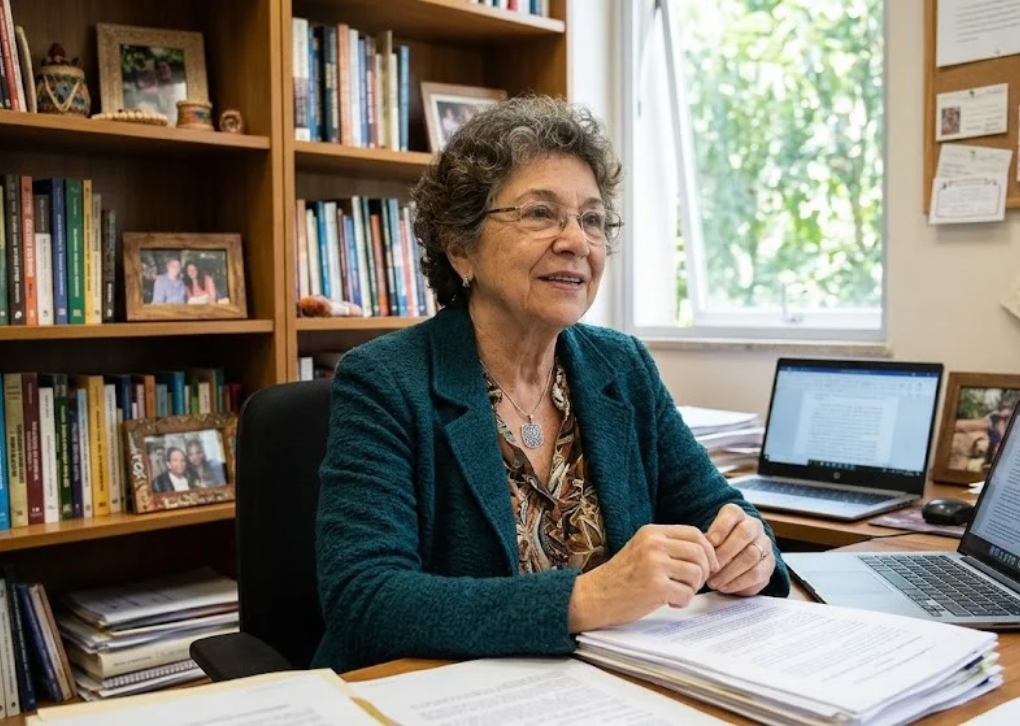
Eliane Cavalleiro is a Brazilian educator, researcher, author, and influential voice in the study of racial discrimination, childhood development, and educational inequality. Her academic work has helped educators understand how racism operates inside classrooms, shapes children’s identities, and sometimes persists through the silence of the very institutions responsible for protecting them.
Best known for her research on racism in early childhood education, she has explored the connections between family socialization, racial identity, teacher behavior, and institutional discrimination. Her publications have become important references for discussions about inclusive education, particularly in Brazil, where racial inequality remains a central concern in educational policy.
What makes her work especially significant is its attention to everyday experiences. Rather than studying discrimination only through legislation or broad social statistics, she examined what happens when children interact with teachers, classmates, and families.
Her professional journey includes academic research at the University of São Paulo, work with UNESCO, leadership in Brazil’s Ministry of Education, and involvement with universities and organizations promoting racial equality. Her contributions continue to influence conversations about anti-racist teaching, educational inclusion, and Afro-Brazilian identity.

Who Is Eliane Cavalleiro?
Eliane Cavalleiro, whose full academic name is Eliane dos Santos Cavalleiro, is a Brazilian scholar specializing in education, ethnic-racial relations, socialization, and the experiences of Black children in educational institutions. She is particularly recognized for investigating the often-overlooked relationship between racial prejudice and the everyday practices of early childhood education.
Her research challenges the assumption that schools automatically provide equal treatment simply because children share the same classroom. Instead, she examines how differences in attention, emotional support, language, and classroom interactions can affect students’ sense of belonging.
Her professional contributions extend beyond academic publishing. She has participated in educational administration, research organizations, international discussions, and initiatives intended to strengthen racial diversity in teaching and learning.
Eliane Cavalleiro: Quick Biography and Career Facts
| Category | Verified information |
|---|---|
| Full name | Eliane dos Santos Cavalleiro |
| Nationality | Brazilian |
| Profession | Educator, academic researcher, author |
| Academic qualifications | Master’s and PhD in Education |
| University | University of São Paulo (USP) |
| Master’s degree | 1998 |
| Doctorate | 2003 |
| Primary research interests | Racism, discrimination, childhood education, racial identity |
| Notable publication | Do Silêncio do Lar ao Silêncio Escolar |
| Academic experience | University of Brasília and Stanford University |
| Public-sector experience | Brazilian Ministry of Education |
| International experience | UNESCO consultancy |
| Professional leadership | Former president, Brazilian Association of Black Researchers (2008–2010) |
Information cross-checked against USP’s thesis repository, Stanford University, and the author’s publisher biography.
Early Life and Educational Background of Eliane Cavalleiro
Although Eliane Cavalleiro is widely recognized for her academic achievements, publicly available institutional biographies provide limited details about her childhood, birth date, parents, or private family life. Her documented professional history offers a much clearer picture of how she developed her expertise in education and racial relations.
Her academic background includes studies in Letters and Pedagogy, along with specialization in preschool education. This combination helped establish her understanding of language, childhood learning, and the social relationships that influence educational development.
Academic Studies at the University of São Paulo
The University of São Paulo played a defining role in her academic career. Eliane Cavalleiro completed her master’s degree in Education in 1998 and earned her doctorate from the same institution in 2003.
Her master’s dissertation examined racism, prejudice, and discrimination in preschool education. Her doctoral research broadened that investigation to explore how Black families across successive generations develop racial identity and respond to discrimination.
These two projects established interconnected areas of inquiry: the experiences of children inside educational institutions and the influence of family relationships on racial socialization.
The university’s institutional repository records both dissertations, providing primary-source documentation of her academic qualifications.
Eliane Cavalleiro and Her Groundbreaking Research on Racism in Schools
One of the most important aspects of Eliane Cavalleiro’s scholarship is her investigation of how racial discrimination appears in ordinary educational interactions.
Racism in schools is not always expressed through obvious insults or openly discriminatory regulations. It can also emerge through unequal expectations, selective attention, patterns of exclusion, and the failure to intervene when children experience racial hostility.
Her research encouraged educators to examine these less visible behaviors rather than assuming that the absence of reported incidents proves the absence of prejudice.
Understanding Racism in Early Childhood Education
Early childhood is an important period for developing social awareness, personal identity, and feelings of belonging. Children begin recognizing differences in appearance, language, and social treatment long before they can fully explain the wider structures influencing those experiences.
Eliane Cavalleiro investigated these processes through observations of preschool environments and interviews with educators, children, and families. Her research examined interactions between teachers and students, as well as relationships among children themselves.
The findings identified differences in how Black and white children experienced certain forms of teacher attention and physical interaction. They also highlighted situations in which discriminatory behavior remained unchallenged or was treated as unimportant.
The original study, documented in her 1998 master’s dissertation, offered evidence that seemingly ordinary classroom practices deserve closer examination when evaluating educational equality.
Why Silence Can Reinforce Discrimination
A central theme in her scholarship is silence as a social and educational response to racism. When discriminatory incidents occur without meaningful intervention, children may receive the message that such behavior is acceptable or that discussing racial inequality is inappropriate.
For students experiencing prejudice, this silence can create additional obstacles to developing confidence and belonging. For other students, it may leave harmful assumptions unchallenged.
Eliane Cavalleiro explored this issue in her 1999 article O Processo de Socialização na Educação Infantil: A Construção do Silêncio e da Submissão.
The article describes how the failure to acknowledge racism in preschool settings can contribute to unequal socialization. Its argument remains relevant to discussions about teacher preparation, safeguarding students, and creating respectful learning environments.
Most Influential Books by Eliane Cavalleiro
Her publications connect theoretical discussions of racial discrimination with the realities experienced by children, families, and educators. Three works are especially important for understanding her intellectual contributions.
Racismo, Preconceito e Discriminação na Educação Infantil
Based on her master’s research, this book investigates racial relationships in preschool settings and the ways families and schools influence children’s understanding of racial identity.
This edited collection brings together contributions from educators and researchers examining racism in educational materials, teacher preparation, school culture, and classroom practice.
Socialização e Pertencimento Racial em Gerações Sucessivas de Famílias Negras
This work explores how racial experiences, identity, and strategies for responding to discrimination develop across generations of Black families.
What Makes Do Silêncio do Lar ao Silêncio Escolar Important?
The book focuses on relationships that adults may dismiss as ordinary childhood interactions. Its significance lies in demonstrating why educational equality requires attention to everyday treatment, not simply formal classroom rules.
Eliane Cavalleiro explores the connection between racial identity, family experiences, and school environments. The book also provides a foundation for considering how adults can unintentionally sustain discriminatory patterns through inaction.
For teachers and education researchers, it offers an opportunity to reassess the assumption that young children are unaffected by racial hierarchies.
The work originated from research completed in 1998 and was published as a book in 2000.
The Significance of the Revised 2024 Edition
The 2024 edition of Racismo e Antirracismo na Educação provides an important example of the continuing relevance of her scholarship. Published by Selo Negro Edições, this revised seventh edition contains 176 pages and addresses themes including teacher education, Afro-Brazilian identity, Black children’s self-esteem, and strategies for confronting racism.
Eliane Cavalleiro serves as the volume’s editor and is among its contributors, alongside scholars such as Nilma Lino Gomes and Elisa Larkin Nascimento. This distinction matters because it is a collaborative academic collection rather than a book written entirely by one author.
Its republication also reflects the continued demand for resources that help educators move from general support for diversity toward meaningful institutional change.
Eliane Cavalleiro’s Contributions to Educational Policy and Public Institutions
Academic research is only one part of her professional history. Eliane Cavalleiro has also worked with organizations responsible for educational programs, racial equality initiatives, and international research.
Work With Geledés – Black Women’s Institute
Between 2000 and 2004, she served as executive coordinator of Geledés – Instituto da Mulher Negra, a Brazilian organization associated with advocacy for Black women’s rights and racial equality.
This experience connected educational research with broader struggles against discrimination. It also placed her professional work within an organizational setting where social inequality could be addressed through advocacy, public discussion, and institutional initiatives.
Her tenure is documented in Stanford University’s academic biography.
Role in Brazil’s Ministry of Education
From 2004 to 2006, Eliane Cavalleiro served as General Coordinator of Diversity and Educational Inclusion within the Brazilian Ministry of Education.
The role was situated within the Secretariat of Continuing Education, Literacy and Diversity, commonly identified by its Portuguese acronym SECAD.
Her participation in this governmental structure represents an important connection between academic research and educational administration. It demonstrates the wider relevance of scholarship concerned with racial equity, diversity, and access to education.
International Experience With UNESCO
Her international professional experience also includes consultancy work with UNESCO’s Regional Bureau for Education in Latin America and the Caribbean, known as OREALC.
In 2005, her work was associated with research on discrimination and cultural pluralism in schools. This expanded the institutional context of her educational interests beyond Brazil’s national education system.
Questions about exclusion, representation, and unequal treatment are not limited to any single country. Her work contributes to a wider discussion about how educators and educational systems can recognize discrimination and develop more inclusive practices.
Connection to Brazil’s Anti-Racist Education Laws
The relevance of Eliane Cavalleiro’s research becomes clearer when considered alongside Brazilian legislation concerning the teaching of Afro-Brazilian history and culture.
Law 10.639/2003, enacted on January 9, 2003, introduced mandatory teaching of Afro-Brazilian history and culture in elementary and secondary education. It addressed subjects including African history, Black people’s struggles in Brazil, and their contributions to Brazilian society.
In 2008, Law 11.645/2008 expanded the curricular requirement to include Indigenous history and culture. These laws established important obligations for Brazilian schools, although legal requirements alone do not guarantee meaningful implementation.
Why Educational Legislation Needs Classroom Action
Legislation establishes standards, but teachers and administrators must translate those standards into educational practice. This requires more than mentioning African history during occasional celebrations or adding a single multicultural activity to the school calendar.
The research of Eliane Cavalleiro helps explain why daily classroom relationships matter alongside formal curriculum content. A school may teach the required topics while still failing to identify discriminatory treatment within its own environment.
This distinction is particularly important for administrators evaluating the effectiveness of diversity initiatives. Reviewing curriculum content without examining student experiences provides only a partial understanding of whether an institution is inclusive.
Her work should be understood as part of the wider intellectual and policy conversation surrounding anti-racist education, not as evidence that she personally authored these laws.
Eliane Cavalleiro’s Academic Leadership and International Career
Her career includes teaching, research, and leadership positions connected to prominent educational institutions.
At the University of Brasília (UnB), she worked in the Faculty of Education and participated in the Tutorial Education Program. She also served as president of the Brazilian Association of Black Researchers, known as ABPN, from 2008 to 2010.
She subsequently developed academic connections in the United States, including visiting research work at San Francisco State University and the César E. Chávez Institute.
Stanford University’s Center for Latin American Studies lists Eliane Cavalleiro as a lecturer. Publisher biographies also identify her as an associated researcher connected with Stanford’s Latin American studies community, although these institutional descriptions use different appointment terminology.
Continued Academic Engagement in 2025
Her influence is not confined to publications from the early 2000s. In 2025, the Federal University of Recôncavo da Bahia announced her participation in educational events addressing racism, discrimination, and diversity.
A July 2025 lecture was scheduled to focus on racism and prejudice in basic education. The university also announced a September 2025 teacher-training event featuring her as a speaker on anti-racism and diversity in schools.
These announcements provide recent evidence of her continued involvement in educational discussions and teacher development. They also demonstrate how her research themes remain relevant to contemporary institutional priorities.
Key Ideas Behind Eliane Cavalleiro’s Educational Philosophy
Several connected concepts emerge from her publications. Together, they provide a framework for understanding why genuine educational inclusion requires attention to both institutional structures and interpersonal relationships.
Racial Identity Begins Developing Early
Children acquire ideas about belonging and social status through repeated interactions. Their observations of how adults treat people, represent communities, and respond to differences can influence their developing self-image.
Eliane Cavalleiro’s research emphasizes that these processes are already significant during early childhood. Educational institutions therefore have an important responsibility to provide environments where Black children receive recognition, respect, and positive representation.
Neutrality Is Not Always Enough
A school may claim to treat everyone equally while failing to notice unequal outcomes or discriminatory incidents. Equal written rules do not automatically produce equal daily experiences.
An anti-racist educational approach requires active attention to harmful behavior, unfair expectations, and patterns of exclusion. It also requires schools to examine whether existing practices genuinely support the students they serve.
Families and Schools Shape Identity Together
Family relationships influence how children understand social differences and respond to discrimination. Schools reinforce, challenge, or complicate those lessons through daily interactions.
Her research on successive generations of Black families examined how experiences of racism may affect the conversations adults have with children. This work suggests why schools should engage families thoughtfully rather than assuming all children arrive with identical social experiences.
Teacher Training Must Address Everyday Conduct
Professional development should help educators recognize how discrimination appears in routine decisions and relationships. Attention to expectations, language, emotional support, teaching materials, and conflict resolution is essential.
Training is more meaningful when teachers can connect broad principles of racial equality with situations they may actually encounter in classrooms.
How Schools Can Apply Eliane Cavalleiro’s Research Today
The value of educational research becomes clearer when it informs concrete practices. The following framework translates themes from her scholarship into practical recommendations for teachers and school leaders; it is not presented as a checklist authored by Cavalleiro herself.
Review classroom interactions: Observe whether different groups of students receive comparable attention, encouragement, opportunities, and support.
Respond directly to racial discrimination: Establish clear procedures for investigating and addressing racist remarks or exclusion rather than dismissing incidents as harmless jokes.
Improve representation in learning materials: Include books, images, biographies, historical narratives, and cultural examples that reflect diverse communities.
Strengthen teacher preparation: Provide training on racial bias, culturally responsive teaching, and constructive responses to classroom conflict.
Include families in educational discussions: Create respectful opportunities for parents and caregivers to communicate concerns about belonging, representation, and discrimination.
Evaluate progress regularly: Examine student feedback, reported incidents, staff practices, and curriculum implementation to identify areas requiring improvement.
These recommendations reflect a central lesson associated with Eliane Cavalleiro’s scholarship: educational inclusion should be assessed through lived experiences, not institutional promises alone.
A school could begin with a classroom climate assessment, followed by staff training and a review of its teaching resources. Repeating the assessment over time would help administrators determine whether their interventions are improving student experiences.
Why Eliane Cavalleiro’s Research Remains Relevant
The continuing relevance of her research comes from the distinction between formal educational access and equitable educational experience. Children may attend the same schools and receive the same curriculum while experiencing different levels of acceptance, attention, or protection.
Research into classroom interactions encourages educators to examine those differences systematically. It also supports a broader understanding of educational quality that considers dignity and belonging alongside academic achievement.
A 2023 article in Revista Com Censo revisited her earlier work while discussing the persistence of challenges facing anti-racist education. This provides a documented example of later researchers engaging with the ideas she developed decades earlier.
What Her Research Does—and Does Not—Establish
An important distinction is that individual qualitative studies should not automatically be interpreted as nationwide statistical measurements. Observations from particular schools and families can reveal mechanisms of discrimination without determining how frequently those mechanisms occur across an entire country.
Eliane Cavalleiro’s early fieldwork is valuable precisely because it provides detailed insight into relationships that large administrative datasets may overlook. Its findings can inform questions for further research, teacher education, and institutional assessment.
However, evaluating the current prevalence of discrimination requires contemporary evidence, appropriately designed studies, and consideration of differences between educational settings.
This distinction strengthens rather than diminishes the significance of her scholarship. It helps readers use her findings responsibly instead of treating historical research as a substitute for present-day measurements.
Frequently Asked Questions About Eliane Cavalleiro
1. Who is Eliane Cavalleiro, and why is she famous?
Eliane Cavalleiro is a Brazilian educator, researcher, and author recognized for her scholarship on racism, discrimination, and racial identity in educational environments. She is particularly known for studying how Black children experience school and family socialization.
Her professional influence also includes work with Brazil’s Ministry of Education, UNESCO, the University of Brasília, and the Brazilian Association of Black Researchers. Her publications remain relevant to the study of anti-racist education and ethnic-racial relations.
2. What is Eliane Cavalleiro’s most famous book?
Her best-known individual publication is Do Silêncio do Lar ao Silêncio Escolar: Racismo, Preconceito e Discriminação na Educação Infantil, published in 2000.
The book examines how racism and racial prejudice influence young children’s educational experiences. Based on her master’s research, it investigates classroom interactions, family relationships, and institutional silence surrounding discriminatory behavior.
3. Where did Eliane Cavalleiro study?
Eliane Cavalleiro earned her master’s degree in Education in 1998 and her doctorate in Education in 2003 at the University of São Paulo, Brazil.
Both academic works are recorded in the university’s official repository. Her doctoral research focused on racial socialization and belonging among successive generations of Black families.
One useful bibliographic clarification is that Stanford’s biography lists 1988 for her master’s qualification, while USP’s original dissertation record confirms 1998. The primary university record provides the stronger evidence for that date.
4. What are Eliane Cavalleiro’s main contributions to anti-racist education?
Her contributions include examining racism in early childhood education, analyzing racial socialization, and highlighting how teacher behavior and institutional responses affect children’s experiences.
Eliane Cavalleiro also contributed to discussions about teacher education and institutional diversity through academic publishing, public-sector administration, and professional leadership. Her work encourages schools to treat racial equality as an ongoing educational responsibility rather than a purely theoretical commitment.
5. Is Eliane Cavalleiro still involved in educational research and academic activities?
Publicly available institutional information continues to associate her with academic research and educational discussions. Stanford’s academic directory lists her within the Center for Latin American Studies, while publisher biographies identify research affiliations.
Her scheduled appearances at Federal University of Recôncavo da Bahia events in July and September 2025 also demonstrate recent professional activity. Her exact current appointment and responsibilities should be confirmed through the relevant institution, since academic profiles may not be updated simultaneously.
Conclusion: The Lasting Educational Legacy of Eliane Cavalleiro
The career of Eliane Cavalleiro illustrates why understanding educational inequality requires more than examining policies, curriculum requirements, or enrollment figures. Her research draws attention to the human relationships that shape children’s confidence, identities, and sense of belonging.
Through influential publications, academic research, educational administration, and international engagement, she has contributed to discussions about how schools can recognize and challenge racial discrimination.
Her scholarship is particularly valuable for educators seeking to understand the relationship between early childhood socialization, institutional silence, and racial identity. It also provides a foundation for evaluating whether schools’ everyday practices reflect their stated commitments to equality.