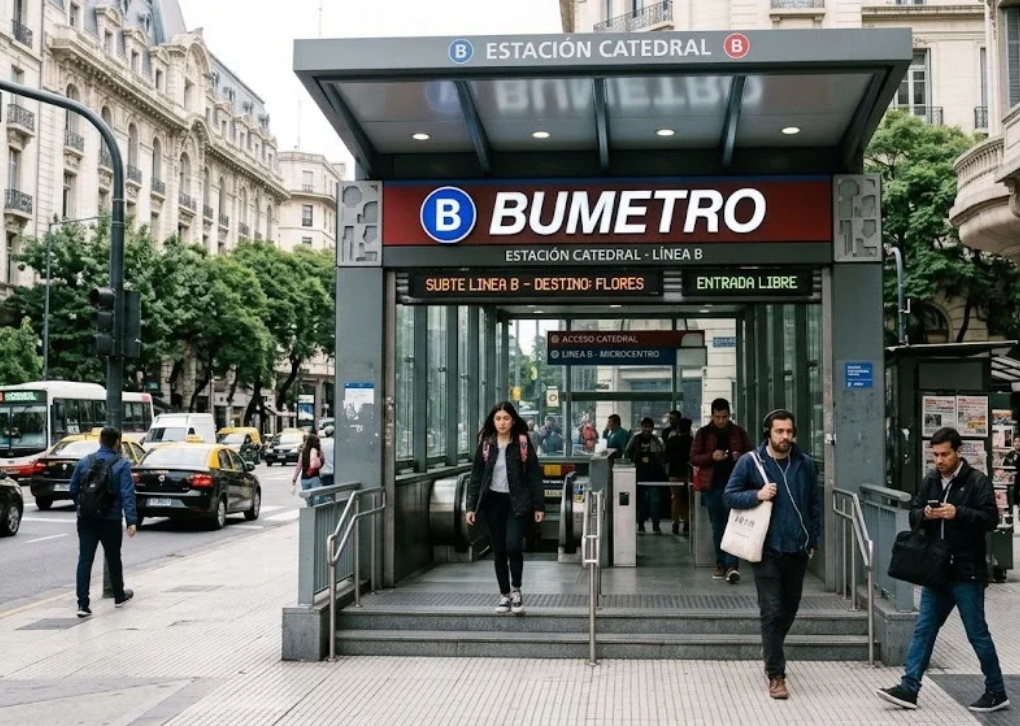
Bumetro is an increasingly visible online search term associated with smart transportation, urban mobility, digital journey planning, and several unrelated products and technologies. Although some websites describe it as an innovative platform connecting buses, trains, bicycles, and ride-sharing services, there is an important distinction between what is being promoted and what can actually be verified.
The idea behind an integrated transportation system is compelling. Imagine planning an entire journey, comparing fares, checking delays, and identifying convenient connections without opening several different applications. That is the experience often associated with the name, but the available evidence does not establish a widely operating service with verified ownership, official app listings, and documented transport partnerships.

Understanding Bumetro requires separating documented facts, technological possibilities, and unconfirmed marketing claims. This guide explains the term’s different meanings, the technology behind modern mobility platforms, its potential benefits, safety considerations, and the alternatives consumers can use today.
What Is Bumetro?
Bumetro does not currently have one universally established definition. Recent online articles predominantly describe it as a smart urban transportation concept, although earlier records connect the same spelling to audio electronics and a commercial furniture product identifier.
In its transportation-related interpretation, the name is associated with a digital platform designed to simplify travel across multiple modes. Instead of treating buses, rail networks, cycling, walking, and ride-hailing as separate systems, the concept brings their information together to support more convenient journeys.
The distinction matters because a description of a technology is not proof that a particular company has implemented it. A name may appear across numerous websites without being supported by an identifiable operator, functioning application, or independently documented service.
Understanding the Different Meanings of Bumetro
The search term can refer to different subjects depending on its context.
| Context | Meaning or association | Evidence |
|---|---|---|
| Smart transportation | Integrated public transport and journey planning | Discussed online; specific platform remains unverified |
| Urban mobility technology | Multimodal travel and Mobility as a Service | Established industry concepts |
| Audio electronics | Informal or mistaken spelling of vúmetro, meaning VU meter | Documented in Arduino discussions |
| Office furniture | Product SKU for a Buro Metro ergonomic chair | Confirmed commercial listing |
| Music | A title appearing in online music references | Separate from transportation |
The electronics and furniture examples can be traced to identifiable sources, including the Arduino Forum and a furniture retailer’s product listing.
For anyone researching the keyword, the surrounding words provide the first clue. References to buses, stations, routes, and smart cities suggest transportation, while mentions of LEDs, sound levels, microphones, or amplifiers point toward electronics.
Is Bumetro a Real App or Company?
One of the most important questions is whether Bumetro is an operational transportation service or simply a name used to explain emerging mobility technology.
As of October 2026, publicly available reporting does not establish an official application with a clearly identified operator, verified launch history, published pricing structure, and confirmed transportation network. Several independent articles investigating the name have reached similar conclusions, although the absence of discoverable documentation does not definitively prove that no privately developed product exists.
What Evidence Would Confirm an Official Bumetro Platform?
A legitimate digital transportation business should provide information that users can independently check. Its official website would ordinarily identify the organization, describe its operational locations, explain supported services, and provide customer assistance.
An established mobility application should also have an attributable developer profile, current software documentation, and clear details about how its transportation information is obtained. Without these elements, claims about actual service availability remain difficult to substantiate.
The key takeaway is simple: treat the transportation interpretation as a concept rather than a confirmed operational platform until credible primary evidence becomes available.
How Bumetro Connects to Smart Mobility and MaaS
The transportation vision associated with Bumetro closely resembles Mobility as a Service (MaaS), an established approach to integrating transportation options through digital technology.
According to the UK Department for Transport, MaaS brings different travel modes, information, and payment functions together into a unified service. These platforms may combine railway journeys, buses, taxis, bicycle rentals, and other travel options to make trip planning easier.
How Integrated Journey Planning Works
Consider someone traveling from home to an office across a busy metropolitan area. Their journey might involve walking to a bus stop, taking a bus to a railway station, boarding a train, and completing the final distance on foot.
A well-designed multimodal platform could compare that journey with alternatives involving cycling or a taxi. Instead of evaluating each segment independently, the system could calculate total journey duration, approximate cost, transfer requirements, and walking distance.
The Bumetro smart mobility concept reflects this type of connected travel experience. However, these capabilities describe the wider transportation technology category and should not be interpreted as verified features of a particular application.
Why Mobility Integration Matters
Transportation networks frequently operate through separate ticketing systems, schedules, and customer interfaces. That fragmentation creates uncertainty, particularly when travelers need to change between operators.
Integrated journey planning attempts to reduce that complexity through coordinated information. Its ultimate value is not simply displaying more transport options, but helping passengers make better decisions when time, cost, accessibility, and reliability compete.
Key Features Commonly Associated With Bumetro
Online descriptions of Bumetro frequently mention convenient features found in modern journey-planning applications. The following comparison separates those proposed capabilities from their verified status.
| Proposed feature | How it would help travelers | Bumetro-specific verification |
|---|---|---|
| Multimodal route planning | Combines buses, trains, walking, and cycling | Not confirmed |
| Live vehicle tracking | Shows estimated arrivals and delays | Not confirmed |
| Fare comparison | Helps compare total journey costs | Not confirmed |
| Digital ticketing | Simplifies ticket purchases | Not confirmed |
| Personalized routes | Adjusts journeys to travel preferences | Not confirmed |
| Service notifications | Warns passengers about disruptions | Not confirmed |
| Accessibility settings | Helps identify suitable routes | Not confirmed |
| Unified payments | Reduces separate payment transactions | Not confirmed |
These are technically plausible capabilities, not a confirmed product specification. The distinction is especially important when users encounter websites that describe proposed functionality as though it were already available.
Real-Time Tracking and Journey Predictions
Reliable arrival information requires more than a digital map. Transportation providers must supply accurate schedules, vehicle locations, and service updates for a travel application to produce meaningful predictions.
A commonly used industry standard is the General Transit Feed Specification (GTFS). Its real-time component supports vehicle positions, trip updates, and service alerts, helping compatible applications communicate changing transportation conditions.
Even then, a displayed arrival time is a prediction rather than a guarantee. Delayed GPS updates, incomplete agency data, traffic incidents, or unexpected service changes can affect accuracy.
Digital Payments and Ticket Integration
Another commonly discussed benefit of the Bumetro concept is integrated payment.
A passenger might theoretically purchase tickets across multiple travel providers through one interface. However, true payment integration requires agreements between operators, transaction processing, refund procedures, and secure handling of customer information.
The International Transport Forum distinguishes fully integrated MaaS offerings from simpler journey-planning tools. Combining schedules into one screen does not automatically mean that a service supports unified ticket purchases.
The Technology Behind a Modern Urban Mobility Platform
To understand whether future services could deliver the experience attributed to Bumetro, it helps to examine the infrastructure behind connected transportation.
A functional system needs several interacting components. These typically include route databases, geographic mapping, scheduling information, travel-time calculations, transport-provider connections, and customer-facing software.
Transportation Data and APIs
An application programming interface (API) allows different systems to exchange information. For example, a bus operator might provide departure data while a mapping provider supplies walking directions between nearby stations.
This information must remain current to be useful. A beautiful application with outdated schedules can create a worse passenger experience than a simple, accurate timetable.
Route Optimization and Personalization
Advanced route planners may evaluate several factors simultaneously, including travel duration, transfer count, walking distance, and expected fares.
The shortest geographical route is not always the most practical. A slightly longer journey with fewer transfers may be preferable for passengers carrying luggage, traveling with children, or seeking a more predictable commute.
Accessibility and Inclusive Design
Accessibility should be fundamental rather than an optional enhancement. Useful capabilities include step-free routing, elevator-status information, accessible boarding points, readable interfaces, and alternatives to lengthy walking connections.
These features depend on accurate local information and thoughtful interface design. They also highlight why verifying actual service coverage is more meaningful than accepting broad promotional claims.
Who Could Benefit From the Bumetro Mobility Concept?
The wider idea behind Bumetro has potential relevance for several categories of travelers, provided that a real service offers reliable local coverage.
Daily commuters could benefit from comparing transportation options before leaving home, particularly when their usual routes experience delays. A single interface showing alternative connections may reduce the inconvenience of unexpected changes.
Tourists and occasional visitors often face a different challenge: unfamiliar stations, ticketing rules, and transport operators. Integrated directions could help them understand the complete journey rather than navigating each connection separately.
Students and budget-conscious passengers may value fare comparisons and affordable combinations of walking, cycling, and public transportation. Meanwhile, travelers with mobility limitations would benefit most from detailed accessibility information that reflects actual station and vehicle conditions.
These advantages depend on implementation quality. A platform only becomes useful when its information is dependable and relevant to the cities where people travel.
Bumetro in Audio Electronics: A Different Meaning
Not every search for Bumetro concerns transportation. An older, independently documented use appears in Spanish-language electronics discussions.
In this context, the spelling is connected to vúmetro, the Spanish term for a VU meter. A VU meter visually indicates an audio signal’s level and is commonly associated with recording equipment, amplifiers, and sound-monitoring systems.
A 2012 Arduino Forum project contains the phrase “BUMETRO CON 6 LEDs” in its code and explains how an LED-based voltmeter could be adapted into an audio-level indicator. A separate 2016 discussion explicitly corrects the spelling to “Vumetro.”
How an Audio VU Meter Works
A typical LED audio-level display responds to an electrical signal representing sound intensity. As the measured signal increases, additional indicator lights may illuminate according to the circuit’s design.
Traditional analog VU meters use moving needles, while electronic implementations can use LEDs or digital displays. Their purpose is to help users monitor signal levels, although average-reading VU meters do not replace dedicated peak meters for identifying brief transients.
This electronics meaning is unrelated to metro trains or urban transportation. Readers looking for circuit diagrams should search for VU meter circuits, Arduino audio meters, LED sound-level indicators, or vúmetro projects.
Bumetro as a Furniture Product Identifier
There is also a confirmed commercial use of the exact lowercase spelling.
Systems Commercial lists an ergonomic Buro Metro Chair with the SKU bumetro. Its published specifications describe an adjustable seat, breathable mesh back, adjustable lumbar positioning, independent seat and back tilt controls, and a stated 180 kg weight rating.
Here, the word is simply a stock-keeping unit used to identify merchandise. It does not indicate a separate transportation company, digital service, or mobility application.
This example demonstrates why keyword research cannot rely on spelling alone. Search engines may return multiple unrelated subjects that happen to share the same identifier.
Why Is Bumetro Appearing Across So Many Websites?
The growing number of articles about Bumetro creates an interesting search problem. When a distinctive term appears in several publications, readers may naturally assume it refers to an established company or widely used service.
However, repeated descriptions do not necessarily represent independent verification. Multiple websites can discuss the same hypothetical technology without identifying a working product, credible operator, or official announcement.
The Difference Between Search Visibility and Credibility
Search visibility measures how readily information can be discovered, not whether its claims have been established.
For an unfamiliar product name, the most useful evidence comes from primary documentation: official websites, developer profiles, regulatory records where applicable, transport-authority announcements, and functioning services.
A well-written article can explain an emerging idea without proving that the named product exists. Recognizing that difference helps readers avoid mistaking attractive descriptions for confirmed business information.
Is Bumetro Safe to Use? A Practical Verification Checklist
The name itself is neither inherently safe nor unsafe. The relevant question is whether a particular application or website using that name can be linked to a legitimate organization.
Transportation applications may request sensitive information, including device location, stored travel destinations, account credentials, or payment details. The US Federal Trade Commission advises consumers to review app permissions and consider removing unnecessary access to personal information.
Before downloading an unfamiliar mobility application, use this checklist:
Verify the developer: Identify the organization responsible for the application and confirm that it has a legitimate official presence.
Check the official app listing: Search established app marketplaces directly rather than relying on unfamiliar download links.
Confirm operating locations: Look for specific supported cities, transport networks, and named service providers.
Review permissions: Determine whether access to precise location, contacts, or other information is necessary.
Examine payment policies: Check ticket sellers, payment handling, cancellations, refunds, and customer support.
Research independent evidence: Look for credible reviews, transport-operator confirmations, and a consistent software update history.
A marketplace listing alone is not sufficient proof of trustworthiness. Consumers should also evaluate whether the application delivers real services and provides understandable privacy and support information.
Until an official Bumetro transport application can be confidently identified, avoid entering payment information into websites claiming to offer subscriptions or tickets under that name.
Verified Alternatives to the Bumetro Transportation Concept
People interested in the features attributed to Bumetro do not need to rely on an unconfirmed service. Several established applications already provide transportation planning and related tools.
| Platform | Main strengths | Important limitation |
|---|---|---|
| Google Maps | Driving, transit, walking, and cycling directions | Transit information varies by location |
| Citymapper | Multimodal journeys, route comparison, accessibility options | Features and geographic coverage vary |
| Transit | Nearby departures, real-time predictions, journey guidance | Depends partly on agency data availability |
| Apple Maps | Transit directions, station details, supported payment integrations | Availability differs across regions |
Official documentation confirms these applications provide different forms of transport planning. For example, Google Maps supports multiple travel modes, Citymapper describes mixed-mode and accessibility routing, and Transit offers live departures and journey navigation in supported areas.
The best choice depends on local transportation coverage rather than brand recognition alone. Before relying on any planner, compare one familiar journey against information published by the actual transport operator.
What Would Make Bumetro a Credible Future Mobility Service?
For Bumetro to become a trustworthy transportation brand, it would need more than a compelling product description.
An identifiable operator would need to establish where the service functions, which transportation providers participate, and how users obtain accurate information. Publicly accessible documentation would also need to explain privacy, accessibility, customer support, and any financial transactions.
A useful measure of quality would be end-to-end journey reliability. That involves accurate directions to the first stop, realistic transfer windows, clear disruption notices, and dependable guidance through the final part of the journey.
Environmental claims would require similar care. A travel application should not promise measurable emissions reductions merely because it displays cycling or public transport options; any such results would need supporting evidence about actual changes in travel behavior.
These requirements provide a practical standard for evaluating future product announcements.
Frequently Asked Questions About Bumetro
1. What is Bumetro, and what does the term mean?
Bumetro is an ambiguous keyword associated with several different subjects, most notably smart urban transportation, audio-level electronics, and an office-chair product identifier. Recent articles frequently use the term to discuss integrated digital mobility and multimodal journey planning.
There is currently insufficient primary documentation to establish one official transportation company or widely operating application under this name. The correct interpretation depends on where the term appears and what surrounding information supports it.
2. Is Bumetro a real transportation app available for download?
Available public evidence does not reliably establish an official transportation application with a confirmed developer, documented launch, and supported-city network. Articles describing its proposed features should therefore not be treated as proof that a downloadable service exists.
If you encounter an app using the name, independently verify its developer, official website, user reviews, permissions, and operating locations before installing it. Avoid third-party installation files or payment requests that cannot be connected to a credible operator.
3. How would Bumetro work if it became a smart mobility platform?
A hypothetical service could integrate transport-provider data, mapping systems, journey-planning algorithms, and possibly digital payments into one interface. Passengers could compare different journeys based on their preferred departure times, travel costs, transfer requirements, and accessibility needs.
Its practical performance would depend on accurate data and agreements with transportation providers. Features such as real-time arrival predictions or combined ticket purchases cannot be assumed without evidence of those technical and commercial connections.
4. Is Bumetro the same as a metro train system or a VU meter?
No confirmed major metro or subway network has been established under the exact name in the sources reviewed. The similarity to the word metro may encourage a transportation interpretation, but a name alone does not establish an operating railway service.
Separately, the spelling has appeared in Arduino discussions associated with vúmetro, or VU meter, an electronic audio-level indicator. This older documented usage is entirely different from digital transportation and mobility planning.
5. What are the best alternatives to Bumetro for planning city travel?
Google Maps, Citymapper, Transit, and Apple Maps are established choices for journey planning, although their capabilities differ by country and city. Depending on the application and local data availability, travelers may access public transport routes, journey comparisons, arrival predictions, walking directions, and service alerts.
For the most dependable results, compare the application’s suggested journey with information from the relevant local transportation authority. Check ticket prices, transfer times, operating hours, and accessibility requirements before beginning a journey.
Conclusion: What Should You Know Before Using Bumetro?
Bumetro represents a useful case study in the difference between a promising digital concept and a verified product. Its transportation-related descriptions reflect genuine developments in smart mobility, integrated journey planning, real-time data, and Mobility as a Service.
However, the existence of those technologies does not establish that a specific service bearing this name currently provides them. The term also has documented uses in electronics and commercial product identification, making contextual research essential.