Dominican yaroa is one of the Dominican Republic’s most satisfying street foods: a hot, layered combination of potatoes or mashed ripe plantains, seasoned meat, melted cheese, and creamy sauces. It looks indulgent—and it is—but its appeal comes from more than sheer excess. A well-made serving balances crispness, softness, salt, sweetness, acidity, richness, and heat in nearly every bite.
The dish is strongly associated with Santiago de los Caballeros, where food-cart vendors helped turn it into a modern Dominican classic. Dominican culinary sources consistently describe it as a Santiago creation, while Dominican media now treats it as an iconic street food that has spread across the country.
This guide explains what makes the dish distinctive, how to prepare it properly at home, which variations are most authentic, and how to avoid the soggy, greasy results that weaken many online recipes.
What Is Dominican Yaroa?
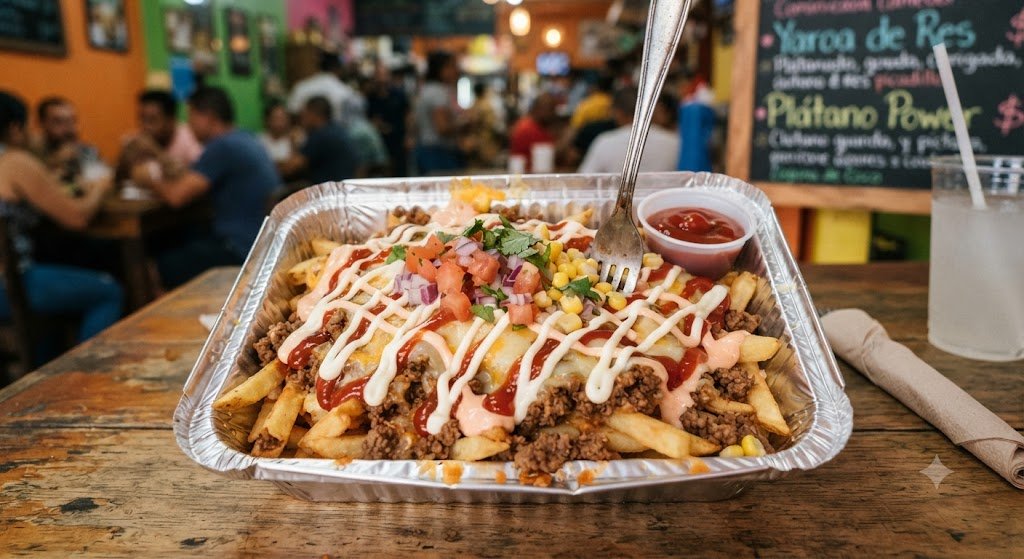
At its core, Dominican yaroa is a layered fast-food dish built on one of two common bases: French fries or mashed ripe plantains. The base is covered with seasoned beef, chicken, pork, or a mixture of meats, then topped with cheese and sauces such as ketchup and mayonnaise.
It is commonly assembled in a takeout container and eaten with a fork. The layered format is important. Instead of serving meat beside potatoes, the cook stacks the ingredients so the sauces, melted cheese, and meat juices reach the base without completely dissolving its texture.
The standard flavor structure includes:
- A starchy base for body and comfort
- Well-seasoned meat for savory depth
- Melted cheese for richness and cohesion
- Ketchup for sweetness and acidity
- Mayonnaise for creaminess
- Optional hot sauce, mustard, herbs, or peppers for contrast
Some people compare the dish to loaded fries, chili-cheese fries, salchipapas, or Canadian poutine. Those comparisons help first-time readers understand the format, but Dominican yaroa has its own identity. The use of ripe plantain, Dominican seasoning, mixed meats, and the classic mayonnaise-ketchup finish separates it from those dishes.
The Santiago Origins of Dominican Yaroa
The most reliable accounts place the origin of the dish in Santiago, the major city of the Cibao region. It emerged through the city’s food-cart and late-night eating culture rather than through formal restaurant cuisine.
That background matters. Dominican yaroa was designed for speed, portability, strong flavor, and hungry customers. It could be assembled from ingredients already common in fast-food kitchens: fries, cooked meat, grated cheese, ketchup, and mayonnaise. The result was inexpensive, filling, customizable, and easy to serve after dark.
Some online sources attach a precise inventor, neighborhood, or year to the dish. Those claims are not consistently documented, so they should be treated cautiously. What is well supported is the broader story: it became popular through Santiago street vendors and then spread nationally. Dominican publications now describe it as a Santiago-born dish and a recognized part of the country’s street-food culture.
The dish also illustrates how food traditions continue to evolve. It is not an ancient colonial recipe. It is a relatively modern urban creation that became “traditional” because Dominicans adopted it, adapted it, and connected it with nightlife, friendship, convenience, and regional pride.
Why Dominican Yaroa Tastes So Good
The best version works because of deliberate contrast. Every layer solves a different sensory need.
Crisp, Soft, and Melty Textures
French fries provide crisp edges and fluffy centers. Mashed ripe plantains create a softer, sweeter base. The meat adds chew and moisture, while melted cheese binds the layers together.
When all components are cooked correctly, Dominican yaroa feels substantial without becoming a uniform paste. The fries should retain some structure, the plantain should remain creamy rather than watery, and the cheese should melt without turning oily.
Sweet, Salty, Tangy, and Savory Flavors
Ripe plantain brings natural sweetness. Seasoned meat adds salt, garlic, onion, herbs, and umami. Ketchup contributes sugar and acidity, while mayonnaise softens sharper flavors.
This is also why sauce quantity matters. Too little sauce makes the dish dry. Too much overwhelms the seasoning and turns the lower layers soggy.
Built-In Customization
Customers can choose the base, protein, cheese, and level of heat. That flexibility helped the dish travel beyond Santiago because vendors could adapt it to local preferences without changing its recognizable structure.
Authentic Dominican Yaroa Ingredients
There is no single legally protected formula, but most recognizable versions use the same essential components.
Choose the Base
For a yaroa de papa, use straight-cut French fries with enough thickness to remain firm under the toppings. Very thin shoestring fries soften too quickly.
For a yaroa de plátano maduro, boil ripe yellow plantains and mash them with a small amount of butter or oil and salt. The plantains should be ripe enough to taste sweet but not so black and soft that the mash becomes watery.
A mixed version can combine fries and plantain. This gives both crispness and sweetness, although it is heavier and requires careful portioning.
Choose the Meat
Ground beef is one of the most common choices because it distributes easily across the base. Shredded or finely chopped chicken is also popular, and some vendors offer pork or yaroa mixta, which combines more than one protein.
Dominican-style seasoning often includes:
- Garlic
- Onion
- Cubanelle pepper or sweet pepper
- Oregano
- Black pepper
- Tomato sauce or tomato paste
- Cilantro or culantro
- A small amount of soy-style seasoning or Worcestershire sauce, depending on the cook
The objective is moist, concentrated meat—not a loose, watery sauce. Excess liquid quickly ruins the texture of Dominican yaroa.
Choose a Good Melting Cheese
Mozzarella is practical because it melts evenly and has a mild flavor. Muenster, mild cheddar, American-style cheese, or a blend can also work.
Avoid relying only on hard, aged cheeses. Parmesan or cotija can add flavor, but they do not create the smooth blanket of melted cheese expected in the dish.
Finish With the Classic Sauces
The standard finish is mayonnaise and ketchup, sometimes mixed into a pink sauce. Mustard, hot sauce, chimi sauce, jalapeños, cilantro, or pickled onions may be added, but they should support the main layers rather than dominate them.
Authentic Dominican Yaroa Recipe at Home
This recipe makes four generous servings. It uses fries and seasoned beef, the version most familiar to readers searching for an easy starting point.
Ingredients
For the beef
- 1 pound ground beef
- 1 tablespoon neutral cooking oil
- 1 small onion, finely diced
- ½ Cubanelle pepper or mild green pepper, diced
- 2 garlic cloves, minced
- 1 teaspoon dried oregano
- ½ teaspoon black pepper
- ½ teaspoon salt, plus more as needed
- 2 tablespoons tomato sauce
- 1 teaspoon Worcestershire or soy-style seasoning
- 2 tablespoons water, only if needed
For assembly
- 1½ pounds frozen or homemade French fries
- 2 cups shredded mozzarella or another melting cheese
- ⅓ cup mayonnaise
- ⅓ cup ketchup
- Hot sauce, mustard, or chopped cilantro, optional
Step 1: Cook the Meat Until Flavorful, Not Watery
Heat the oil in a large skillet over medium-high heat. Add the onion and pepper, then cook until softened. Stir in the garlic, oregano, black pepper, and salt.
Add the ground beef and break it into small pieces. Cook until browned, then add the tomato sauce and Worcestershire seasoning. Continue cooking until the mixture is moist but no visible liquid pools at the bottom.
Ground beef should reach 160°F or 71°C internally. Chicken versions should reach 165°F or 74°C, according to USDA food-safety guidance.
Step 2: Make the Fries Extra Crisp
Cook the fries according to the package directions, using an oven, air fryer, or deep fryer. Extend the cooking slightly if needed so they are golden and crisp enough to support the toppings.
Season immediately after cooking. Do not cover hot fries before assembly because trapped steam softens them.
Step 3: Layer the Dominican Yaroa Correctly
Place the hot fries in four oven-safe dishes or one medium baking dish. Spread the beef evenly across the fries, keeping the meat layer relatively thin.
Add the shredded cheese from edge to edge. Melt it under a broiler for one to three minutes, watching closely, or cover briefly until the residual heat softens the cheese.
Step 4: Add Sauces at the Last Moment
Drizzle mayonnaise and ketchup over the melted cheese just before serving. Add hot sauce or herbs if desired.
Serve immediately. The ideal bite contains a little base, meat, cheese, and sauce together.
Potato, Plantain, and Mixed Variations
Yaroa de Papa
The potato version is crisp, salty, and closest to loaded fries. It is usually the easiest variation for beginners because fries provide a neutral base that works with almost any meat.
For better texture, cook the fries in a single layer and assemble only when every other component is ready.
Yaroa de Plátano Maduro
The plantain version is sweeter, softer, and more distinctly Caribbean. Dominican recipe sources commonly identify mashed ripe plantain as one of the two principal bases.
To make it, boil peeled ripe plantains until tender, drain thoroughly, and mash with salt plus a small amount of butter or oil. Spread the mash in the serving dish, then add meat, cheese, and sauces.
This Dominican yaroa variation benefits from a slightly spicier or more savory meat mixture because the seasoning must balance the plantain’s sweetness.
Yaroa Mixta
A mixed version may combine beef and chicken, or sometimes multiple bases. It delivers more flavor variety but can become unnecessarily heavy.
The best approach is restraint: use smaller amounts of each component rather than doubling every layer.
Common Mistakes That Ruin Dominican Yaroa
Using Wet Meat
A soupy meat mixture penetrates the fries and creates a greasy, soft base. Reduce the meat until it is moist enough to spoon but dry enough to stay in place.
Choosing the Wrong Plantains
Green plantains are too starchy for the classic sweet mash. Extremely overripe plantains can release too much moisture. Yellow plantains with dark patches usually provide the best balance of sweetness and structure.
Adding Cold Cheese to Lukewarm Layers
Cheese melts properly when the base and meat are hot. If the components have cooled, use the broiler briefly rather than serving partially melted shreds.
Applying Sauce Too Early
Ketchup and mayonnaise should be the final garnish. Adding them before baking can separate the mayonnaise and make the fries softer.
Building Oversized Portions
A massive container may look impressive but becomes difficult to eat before it cools. Moderate layers produce a better ratio and more consistent texture.
How to Make Dominican Yaroa Lighter Without Losing Its Identity
This is naturally a rich comfort food, so “light” should not mean stripping away every defining ingredient. Better results come from controlling technique and portion size.
Use air-fried or oven-baked potatoes, choose lean ground beef or seasoned chicken, reduce the cheese slightly, and thin the mayonnaise with lime juice. You can also add pickled red onions, chopped cabbage, or a fresh tomato relish for acidity and crunch.
For plantain-based Dominican yaroa, mash the fruit with a small amount of olive oil instead of a large quantity of butter. Keep the meat strongly seasoned so the reduced fat does not make the dish taste flat.
The goal is not to turn it into a salad. Preserve the layered base, savory protein, melted cheese, and signature sauce profile.
Serving, Storage, and Reheating Tips
Serve the dish as soon as it is assembled. Fries lose crispness quickly once covered with meat, cheese, and sauce.
For meal preparation, store the base, meat, cheese, and sauces separately. Refrigerated cooked meat is generally best used within three to four days, while raw ground meats are typically recommended for only one to two refrigerated days.
Reheat meat until steaming hot and crisp the fries separately in an oven or air fryer. Assemble a fresh portion after reheating instead of microwaving the fully dressed dish.
Plantain-based leftovers tolerate reheating better than fries because their intended texture is already soft. Even so, add fresh sauce after heating.
Dominican Yaroa vs. Poutine and Loaded Fries
Poutine traditionally centers on fries, cheese curds, and gravy. American loaded fries often use cheddar sauce, bacon, chili, sour cream, or scallions.
Yaroa uses a different flavor system: Dominican-seasoned meat, melted cheese, ketchup, mayonnaise, and frequently a ripe-plantain base. Sources discussing the dish sometimes use poutine or chili-cheese fries as simple comparisons, but they also recognize yaroa as a distinct Dominican creation.
That difference is not cosmetic. Dominican yaroa reflects local street-food habits, pantry ingredients, seasoning preferences, and the Dominican use of ripe plantain. Calling it “Dominican poutine” may provide a quick analogy, but it should not replace the dish’s real name or cultural origin.
Frequently Asked Questions
What does yaroa mean?
The word is primarily recognized today as the name of the dish. Some accounts link the name to a place or neighborhood, but precise etymological claims are inconsistently sourced.
It is more accurate to say that the food name became strongly associated with Santiago street culture than to present one disputed origin story as settled fact.
Is Dominican yaroa made with fries or plantains?
Both are accepted. Fries create yaroa de papa, while mashed ripe plantains create yaroa de plátano maduro.
Many vendors also offer mixed combinations, so there is no need to treat one base as the only authentic version.
What meat is traditionally used in Dominican yaroa?
Ground beef and chicken are among the most common choices. Pork and mixed-meat versions are also sold.
The most important characteristic is strong seasoning and a relatively dry texture that will not soak the base.
What cheese is best for yaroa?
Use a mild cheese that melts smoothly, such as mozzarella, Muenster, mild cheddar, or a blend.
A small amount of sharper cheese can add complexity, but the top layer should remain creamy and cohesive.
Can Dominican yaroa be made ahead?
The components can be prepared ahead, but the completed dish should not be assembled early.
Store the meat, base, cheese, and sauces separately, then reheat and layer them immediately before serving. This protects the contrast between crisp fries, hot meat, melted cheese, and cool sauce.
Conclusion: Make Your First Dominican Yaroa
Dominican yaroa deserves attention not merely because it is large, cheesy, or photogenic. It represents a modern Dominican food tradition created through Santiago’s street-vendor culture and strengthened by decades of adaptation across the country.
For the best homemade result, focus on four controls: keep the base properly textured, cook the meat until flavorful but not wet, melt the cheese over hot layers, and add sauces only at the end.
Start with the potato-and-beef recipe. Once you understand the basic layering technique, prepare the ripe-plantain version and adjust the meat, cheese, and sauce ratios to your taste. That direct comparison is the best way to understand why this Santiago street-food favorite has become a Dominican icon.