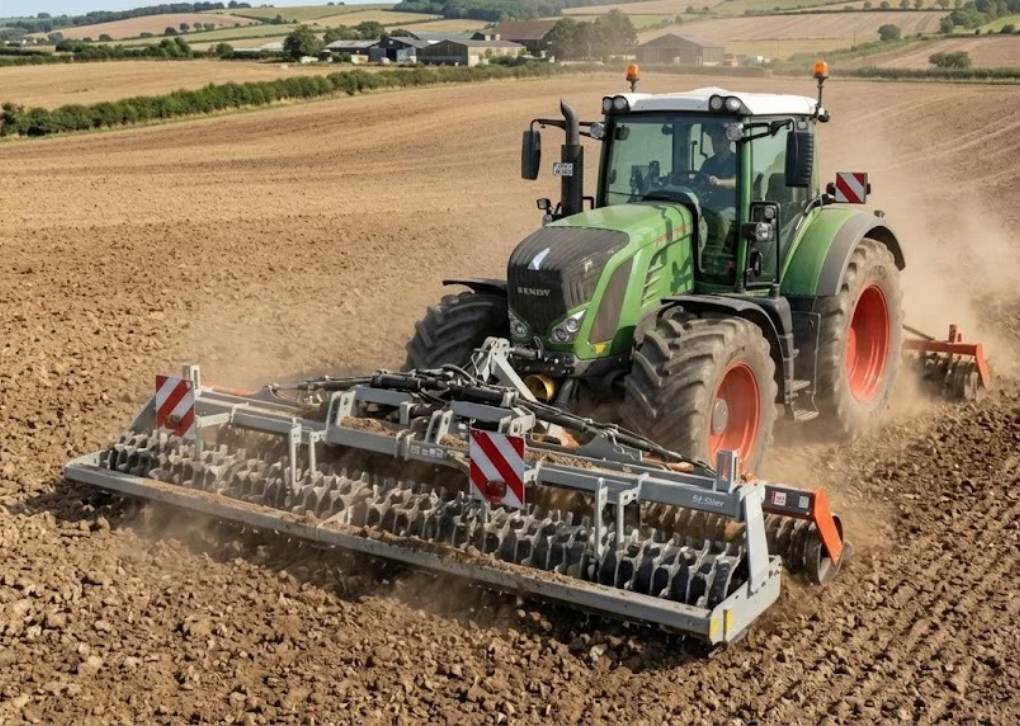
Messeregge is an uncommon German agricultural term that may seem unfamiliar to English-speaking readers, yet it has a practical connection to soil preparation and farming machinery. The term is especially relevant to people researching agricultural implements, shallow cultivation, seedbed preparation, and the equipment farmers use to maintain productive fields.
The most reliable starting point is its agricultural meaning. German-English dictionary provider Langenscheidt translates Messeregge as “scarifier” in an agricultural context, placing the word within the broader category of soil-working equipment.

The word is also commonly explained through its German components, Messer (knife) and Egge (harrow).
Understanding Messeregge requires more than translating a single word. It helps to explore how harrows work, why different soil-working tools exist, what farmers should consider before choosing an implement, and how to distinguish established agricultural terminology from less-supported claims circulating online.
This guide examines those questions in practical detail, giving readers a clear foundation for understanding the term and its place in modern agriculture.
What Is Messeregge?
Messeregge is an agricultural term associated with a scarifier or knife-style soil-working implement. In practical discussions, it is connected with equipment designed to work the soil surface, assist field preparation, and support cultivation operations.
A harrow generally helps loosen or crumble the upper layer of soil, break down smaller clods, level uneven surfaces, or prepare a suitable seedbed. The precise function depends on the implement’s construction, the working elements it uses, and the conditions in which it operates.
It is important to distinguish the general meaning from the specifications of an individual machine. Not every implement described as a Messeregge necessarily has identical blades, working widths, mounting arrangements, or cultivation capabilities.
Understanding the German word
The word becomes easier to understand when divided into its component parts:
Messer: The German word for a knife.
Egge: The German word for a harrow, an agricultural implement used for working soil.
Messeregge: An agricultural compound term translated by Langenscheidt as scarifier.
The English word scarifier can refer to different kinds of equipment depending on the industry. In agriculture, it generally describes a tool that works or penetrates the soil surface, although the design varies across machines and manufacturers.
This linguistic distinction matters because an accurate explanation should connect the term to its agricultural context instead of inventing a broader definition.
Is Messeregge a machine, an attachment, or a general term?
The answer depends on the specific documentation in which the word appears. It may identify a type of agricultural implement or a particular configuration within a manufacturer’s equipment range.
For example, agricultural machinery documentation can use separate terms for an attachment, a supporting frame, individual working components, and the complete machine. These details help buyers identify replacement parts and understand how equipment fits into a larger cultivation system.
When researching a particular Messeregge, check the manufacturer’s model name, technical specification sheet, parts diagram, and intended application. These sources are more useful for determining the capabilities of a specific machine than a generic online definition.
How Messeregge Works in Agricultural Soil Preparation
The purpose of soil-working equipment is not simply to disturb the ground. It is to create conditions appropriate for the next farming operation, whether that involves sowing seed, managing weeds, preparing a field after harvest, or improving surface uniformity.
A Messeregge should therefore be evaluated according to its actual working mechanism. Where a model uses knife-like or cutting elements, those components influence how it interacts with the soil and surface residue.
1. Working the upper soil layer
Shallow cultivation can help break a surface crust, disturb small weeds, and improve the condition of the soil immediately beneath the surface. This can be useful when a field requires relatively light treatment rather than aggressive, deep cultivation.
However, the appropriate working depth depends on soil moisture, texture, crop requirements, and the implement’s design. Operators should follow the manufacturer’s instructions rather than assume that every Messeregge works at the same depth.
2. Preparing a more uniform seedbed
A suitable seedbed gives seeds a reasonably consistent environment for germination and early root development. Large clods, uneven surfaces, and inconsistent seed placement can complicate establishment, particularly when conditions are already challenging.
Depending on its configuration, a Messeregge may contribute to surface preparation before sowing. It should not be treated as a guarantee of improved germination, though. Seed quality, moisture availability, soil temperature, sowing depth, and subsequent weather remain important.
3. Managing surface residue
Crop residue is another consideration in field preparation. Stems, leaves, and other plant material left after harvest can affect the movement of machinery, soil coverage, and seed placement.
The ability of a particular Messeregge to handle residue depends on blade spacing, clearance, frame design, and the amount and condition of material present. Heavy residue may require a different setup or another type of implement.
4. Supporting mechanical weed control
Shallow mechanical cultivation can disturb young weeds before they become established. This can form part of an integrated weed-management strategy, especially when operations are timed to match weed growth.
Results are not automatic. Established perennial weeds, wet soil, uneven ground, and weeds that can regrow from roots may require different approaches. A Messeregge should be considered one possible component of a broader management plan, not a universal substitute for other weed-control methods.
Main Agricultural Uses of Messeregge
The most useful way to understand Messeregge is to consider the field operations in which a suitable knife-style harrow or scarifier may be relevant
Seedbed preparation
A suitable implement can help refine the soil surface before planting, depending on the crop and the condition of the field. The goal is a reasonably even, workable surface rather than unnecessary soil disturbance.
Early weed management
Shallow cultivation can disturb small weeds and reduce competition during the early stages of crop establishment. Timing and soil conditions strongly influence the result.
Depending on the working components, an implement may help break smaller clods and produce a more uniform surface for subsequent field operations.
Some soil-working configurations can help manage surface conditions after harvest. Suitability depends on residue volume, moisture, soil type, and the next crop in the rotation.
These are potential applications of the broader equipment category, not a claim that every machine called Messeregge can perform all four tasks equally well. Always confirm the capabilities of the actual model.
Messeregge Compared With Other Agricultural Implements
Farmers have several ways to prepare soil. Choosing the right one depends on the job, and similar-looking equipment can behave quite differently in the field.
Implement | Typical working mechanism | Common purpose |
|---|---|---|
Messeregge or scarifier | Depends on the specific blade or working-element configuration | Soil surface preparation and related cultivation tasks |
Disc harrow | Rotating concave or shaped discs | Cutting and mixing soil, incorporating residue, and breaking clods |
Tine harrow | Fixed or flexible tines | Shallow soil disturbance, light leveling, and mechanical weed control |
Field cultivator | Shanks, sweeps, or other soil-engaging tools | Cultivation, weed control, and seedbed preparation, depending on setup |
Power harrow | Mechanically driven rotating tines | Intensive soil refinement and seedbed preparation |
The distinctions in this table are general. Equipment designs overlap, and some machines combine several working elements.
Messeregge versus a disc harrow
A disc harrow uses rotating discs that cut into and move soil. Depending on disc angle, working depth, and operating speed, it can mix soil and incorporate plant residue.
A knife-style scarifier may perform a different cutting or surface-working action. Neither design is automatically superior: the right choice depends on the amount of residue, soil condition, desired cultivation intensity, and the next field operation.
Messeregge versus a tine harrow
A tine harrow relies on projecting metal tines to disturb the surface. Tine arrangements vary in flexibility, spacing, shape, and penetration.
A knife-based configuration may interact with soil differently, particularly when cutting or slicing action is important. However, the names alone do not establish which implement will perform better in a specific field.
Messeregge versus a field cultivator
Field cultivators commonly use shanks or sweeps to work the soil, and some are designed to operate deeper than equipment intended for light surface treatment.
The most useful comparison is therefore functional. If the field needs deeper loosening, a suitable cultivator may be more appropriate. If the objective is limited surface work, a shallower implement may better match the job.
Potential Benefits of Using Messeregge
When a suitable implement is matched to the field, it may offer practical advantages. These benefits should be evaluated against operating costs, soil conditions, and the results of alternative methods.
More controlled soil disturbance
One advantage of selecting equipment for shallow cultivation is the opportunity to avoid unnecessary deep working. Reducing excessive passes and matching the implement to the task can help preserve soil structure and limit fuel use.
The outcome depends on correct adjustment. An implement operated too deeply, too quickly, or under unsuitable moisture conditions can still damage soil structure.
Efficient field operations
An appropriately sized implement may cover ground efficiently and fit into an existing tractor-and-equipment setup. This matters when farmers need to prepare large areas within a narrow planting window.
Actual productivity depends on working width, field shape, turning time, tractor capacity, operating speed, and maintenance. Manufacturer figures should be checked against realistic field conditions rather than treated as guaranteed results.
Flexible use in a cultivation system
Agricultural equipment is most effective when it supports a clear production plan. A Messeregge may be considered alongside other implements for different stages of soil preparation, provided its specifications suit the intended work.
It is not necessary to use the same tool for every field operation. Combining suitable equipment with careful scheduling can be more effective than expecting one machine to solve every soil-management problem.
Potential support for soil conservation
Reduced or shallow tillage can contribute to soil-conservation goals when it is part of a well-designed system. Less intensive soil disturbance may help preserve structure and reduce the disruption of soil organisms compared with repeated aggressive cultivation.
Yet shallow cultivation alone does not guarantee better soil health. Residue cover, crop rotation, traffic management, organic matter, erosion risk, and soil moisture all affect long-term outcomes.
Limitations and Challenges to Consider
Understanding the limitations of Messeregge is just as important as understanding its possible benefits. The wrong tool can waste time, increase operating costs, and leave a field in worse condition than expected.
Soil moisture is critical. Working very wet soil can cause smearing and compaction, while extremely dry or hard soil may require more power than expected. Farmers should assess field conditions before entering.
Residue can cause problems. High volumes of straw, tangled plant material, or unevenly distributed residue may interfere with certain implement designs. Check the manufacturer’s guidance on residue handling and clearance.
Results depend on setup. Working depth, blade condition, alignment, forward speed, and tractor compatibility can all influence field performance. A machine that works well in one soil type may perform differently in another.
It is not a universal solution. A shallow scarifier cannot automatically replace deep loosening, primary tillage, specialized weed control, or other operations that address different problems.
These limitations are not reasons to dismiss the equipment category. They are reasons to select machinery carefully and judge performance in the field.
How to Choose the Right Messeregge
If you are considering purchasing or using a Messeregge, start with the task rather than the name. A product description may identify the equipment category, but the technical details determine whether it suits your operation.
1. Identify the primary job
Write down exactly what you need to accomplish. Is the objective shallow cultivation, seedbed preparation, early weed control, residue management, or a combination of tasks?
This single decision narrows the field of suitable machines. It also makes comparisons between manufacturers more meaningful because you can assess equipment against the same practical requirements.
2. Examine the technical specifications
Review the manufacturer’s documentation and confirm the following:
Working width: Does the implement suit the size and layout of your fields?
Working depth: Is the available adjustment appropriate for your intended operation?
Working elements: Are the blades, knives, tines, or other components suitable for your soil and residue conditions?
Tractor requirements: Can your tractor safely handle the implement’s weight, power demand, and mounting arrangement?
Transport dimensions: Can the equipment move safely between fields and along the roads you use?
Maintenance requirements: Are replacement components and service instructions available?
Do not assume that specifications for one model apply to another merely because both are called Messeregge.
3. Match the implement to the soil
Soil texture affects how cultivation equipment behaves. Sandy soils, clay-rich soils, and loamy soils differ in their moisture response, resistance, and tendency to form clods.
Consider the field’s drainage, compaction history, slope, and current moisture. Where possible, inspect a small test area and assess the result before treating the entire field.
4. Calculate the total cost of ownership
The purchase price is only one part of the investment. Fuel consumption, wearing parts, servicing, transport, downtime, and the tractor needed to operate the machine all contribute to its lifetime cost.
For a realistic comparison, estimate the annual area you expect to cultivate and the number of passes required. Then compare the cost per hectare with the alternatives available to you.
5. Confirm spare parts and service support
A machine becomes expensive when a small damaged component prevents an entire operation from proceeding. Before buying, ask the supplier about replacement blades, fasteners, wear parts, repair documentation, and delivery times.
If the implement is imported, also check shipping costs, local service availability, warranty conditions, and whether compatible replacement parts can be sourced reliably.
Operating and Maintaining Messeregge Safely
Good operation begins before the tractor enters the field. A pre-use inspection can identify loose fasteners, worn components, damaged blades, and other problems that might otherwise cause downtime or injury.
Follow the manufacturer’s operating and maintenance instructions, including any requirements for lubrication, adjustment, transport, and storage.
A practical maintenance routine includes:
Inspect before use. Look for visible damage, loose connections, excessive wear, and missing fasteners.
Check working elements. Confirm that blades or other soil-engaging components are secure and in serviceable condition.
Adjust appropriately. Use the recommended setup for the soil, residue, and intended working depth.
Monitor field performance. Watch for uneven results, clogging, excessive draft, or changes in tractor behavior.
Clean after operation. Remove accumulated soil and plant material according to the manufacturer’s instructions.
Store securely. Keep the equipment stable, protect exposed components where appropriate, and follow guidance for off-season storage.
Safety deserves special attention. Stop the tractor, disengage the power source where applicable, lower or securely support the implement, and follow the specified lockout procedures before clearing blockages or servicing equipment. Never work beneath machinery supported only by a hydraulic system.
Messeregge and Sustainable Farming
Soil management is about balancing immediate crop needs with long-term field productivity. The most effective cultivation strategy depends on the soil, climate, cropping system, available machinery, and the farmer’s broader management objectives.
A Messeregge may have a place in a reduced-tillage system when the chosen configuration can perform the required operation without unnecessary disturbance. However, sustainable farming is not defined by a single implement.
Protecting soil structure
Repeated traffic and poorly timed cultivation can contribute to compaction. Minimizing unnecessary passes, using suitable tire pressures and axle loads, and avoiding work in excessively wet conditions can help reduce these risks.
Equipment selection should support those practices. Even an implement designed for relatively shallow work can produce poor results when operated under unsuitable conditions.
Managing erosion and moisture
Keeping soil covered with living plants or crop residue can help protect it from erosion and reduce direct exposure to wind and rainfall. The interaction between cultivation equipment and surface cover should therefore be considered before a field operation begins.
If residue protection is a priority, evaluate how the specific implement distributes, cuts, or moves plant material. A machine that leaves the surface too bare may conflict with the farm’s erosion-control objectives.
Supporting an integrated management plan
A well-designed system combines equipment choice with crop rotation, weed monitoring, soil testing, organic-matter management, and appropriate planting practices.
The best approach is to measure results rather than rely on assumptions. Compare seedling establishment, weed pressure, fuel consumption, field capacity, and soil condition over several seasons to determine whether the chosen system is delivering real benefits.
Why Messeregge Has Conflicting Meanings Online
Anyone researching Messeregge may encounter websites describing it as an agricultural implement, an exhibition-design concept, a digital tool, or a branding idea. Those descriptions should not automatically be treated as equally reliable.
The agricultural interpretation has a concrete basis in German-English terminology: Langenscheidt lists Messeregge under agriculture and translates it as scarifier.
Other meanings may arise from creative branding, loose word associations, or articles that repeat earlier claims without establishing a clear source.
One common linguistic trap is confusing Messer, meaning knife, with Messe, which can mean a trade fair or exhibition. The words are different, and a trade-show interpretation should not be substituted for the agricultural definition without specific supporting evidence.
How to verify information about Messeregge
Use a simple verification process whenever you encounter a claim about the term:
Check a reputable dictionary: Confirm how the word is translated and which industry it belongs to.
Look for manufacturer documentation: Technical manuals and official parts catalogs can establish whether a real implement or component uses the term.
Separate general claims from specifications: A broad definition does not prove a particular working depth, horsepower requirement, or productivity figure.
Check dates and authorship: Recent publication does not automatically mean reliable information.
Look for independent confirmation: Technical claims are stronger when supported by more than one credible source.
This method is useful beyond agriculture. Uncommon technical words often appear in online articles without enough context to distinguish established meanings from speculation.
Frequently Asked Questions About Messeregge
1. What does Messeregge mean in English?
Messeregge is a German agricultural term that Langenscheidt translates as scarifier. It is associated with soil-working equipment used in agricultural cultivation. The word is commonly explained through Messer, meaning knife, and Egge, meaning harrow. The precise English description may depend on the machine or technical document in which the term appears.
2. What is a Messeregge used for?
A Messeregge is associated with agricultural soil preparation and cultivation. Depending on the specific implement, its potential applications may include shallow soil working, surface conditioning, seedbed preparation, and certain weed-management operations. The machine’s actual capabilities depend on its design, working elements, and operating conditions. Always consult the manufacturer’s specifications before selecting it for a particular job.
3. Is Messeregge the same as a disc harrow?
No. A disc harrow uses rotating discs to cut and move soil, while a scarifier or knife-style implement may use a different arrangement of working elements. Their effects on soil structure, residue distribution, and cultivation depth can differ. The right choice depends on the field’s condition, the amount of crop residue, the desired working depth, and the next farming operation.
4. What are the main benefits of using Messeregge in farming?
A suitable implement may help prepare a more uniform soil surface, support shallow cultivation, and reduce the need for more intensive operations in appropriate conditions. It may also fit into a wider soil-conservation strategy when used with careful traffic management and suitable cultivation practices. However, these benefits are not guaranteed. Soil moisture, machine adjustment, tractor capacity, and operator experience all affect the outcome.
5. How can farmers choose the right Messeregge?
Start by identifying the field operation you need to perform. Then compare working width, depth adjustment, implement weight, tractor requirements, residue-handling ability, maintenance needs, and spare-parts availability. Ask the manufacturer or supplier for technical documentation and confirm that the equipment suits your soil conditions. If possible, test it on a small section of the field before committing to a full-scale operation.
Conclusion: Understanding Messeregge Before Choosing Agricultural Equipment
Messeregge is best understood through its established agricultural context. The German-English dictionary translation identifies it as a scarifier, connecting the term with soil-working equipment rather than automatically assigning it a modern digital or exhibition-related meaning.
For farmers, machinery buyers, and agricultural researchers, the important question is how a specific implement performs in real field conditions. Soil type, moisture, working depth, crop residue, tractor compatibility, and maintenance requirements matter far more than the name alone.
If you are researching Messeregge for a practical purchase, take these next steps:
Confirm the term in a reputable agricultural dictionary or manufacturer’s catalog.
Identify the exact machine or model you are considering.
Compare its technical specifications with your field requirements.
Calculate the expected operating and maintenance costs.
Verify spare-parts availability and test performance where possible.
The key takeaway: choose agricultural machinery according to the job it must perform, not just the terminology used to describe it. That approach leads to more informed purchasing decisions, more efficient field operations, and better long-term soil management.