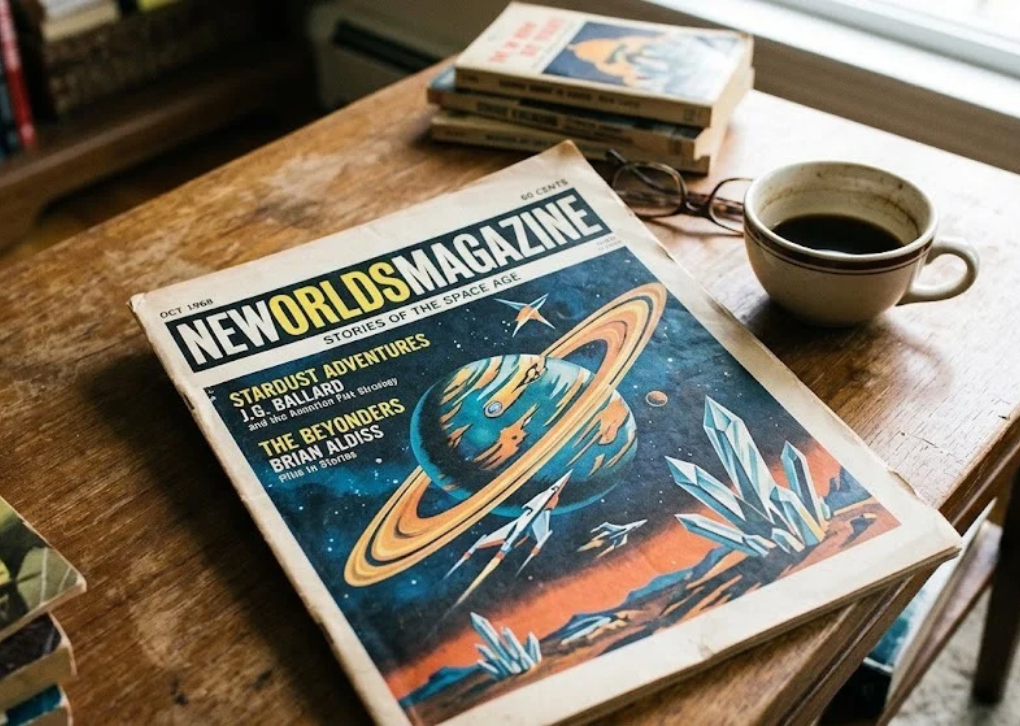
The internet offers countless digital publications covering lifestyle, culture, technology, entertainment, business, and emerging trends. Neworldsmagazine.com is a name that may attract readers looking for online magazine content, fresh perspectives, and accessible information. Before relying on any digital publication, however, it is worth understanding what it offers, how its content should be evaluated, and whether it meets the standards of a trustworthy information source.
This guide examines Neworldsmagazine.com from a reader-focused perspective. It explains how to assess its editorial approach, identify useful content, evaluate credibility, and make informed decisions when browsing unfamiliar magazine websites. Because a website’s ownership, publishing schedule, and current features should be verified directly, this article distinguishes general evaluation principles from details that require independent confirmation.
What Is Neworldsmagazine.com?
Neworldsmagazine.com is a website name that suggests an online magazine or digital publishing platform. The name itself does not establish the site’s exact subject areas, editorial mission, ownership, or publishing model. Those details should be confirmed through the website’s current pages rather than assumed from its branding.
Digital magazines generally publish articles designed to inform, entertain, explain, or inspire readers. Depending on their editorial focus, they may feature news commentary, lifestyle advice, cultural discussions, product explainers, interviews, opinion pieces, or practical guides.
When exploring Neworldsmagazine.com, start by identifying the subjects it actually covers. Look at the homepage, navigation menu, article categories, author biographies, and publication dates. These details provide a more reliable understanding of the website than its domain name alone.
How Digital Magazine Websites Work
Online magazines combine editorial content with the convenience of web publishing. Unlike traditional print publications, they can update articles, link to external resources, embed multimedia, and distribute new material without waiting for a print cycle.
A typical digital magazine may include:
- Editorial articles: Features that explore a subject in greater depth.
- Informational guides: Explanations designed to answer specific reader questions.
- Opinion pieces: Commentary that presents an author’s interpretation of an issue.
- Interviews and profiles: Accounts featuring people, organizations, or professional experiences.
- Lifestyle content: Material related to everyday interests, personal development, culture, or consumer choices.
- Sponsored material: Paid promotional content that should be distinguishable from independent editorial coverage.
These are common digital publishing formats, not a verified inventory of Neworldsmagazine.com. Reviewing its live pages is necessary to establish which formats it actually uses.
Why Are Readers Interested in Neworldsmagazine.com?
Readers often discover unfamiliar magazine websites through search engines, social media posts, online recommendations, or links shared in discussion forums. They may want to learn what a publication covers, determine whether its articles are useful, or establish whether it deserves a place in their regular reading routine.
Neworldsmagazine.com can be evaluated using the same practical questions that apply to any unfamiliar publication.
First, consider relevance. Does the website publish material related to your interests? A publication can have a professional design yet provide little value if its articles do not answer the questions you came to investigate.
Next, assess usefulness. Strong content offers more than a surface-level definition. It provides meaningful explanations, examples, context, practical steps, or evidence that helps readers understand a topic.
Finally, consider trust. A useful article should make it possible to identify who created it, what evidence supports its claims, and when the information was published or updated.
What Readers Should Look For
When reviewing Neworldsmagazine.com, pay attention to these indicators:
- Clear article titles that accurately describe the material.
- Logical categories that make related topics easy to find.
- Readable formatting on desktop and mobile devices.
- Author information and relevant editorial credentials.
- Publication or update dates where appropriate.
- Sources for factual, technical, medical, financial, or otherwise consequential claims.
- Transparent disclosures for advertisements, affiliate links, or sponsored articles.
No single feature proves that a publication is reliable. A well-designed website can publish weak information, while a simple website can host excellent research. The strongest assessment considers content quality, transparency, evidence, and consistency together.
Exploring the Content and Editorial Scope of Neworldsmagazine.com
The most effective way to understand Neworldsmagazine.com is to examine its actual article collection rather than infer its editorial scope from its name. A magazine’s categories, recurring themes, and most recent posts can reveal whether it specializes in a particular subject or covers a broad range of interests.
Identify the Main Content Categories
Begin with the website’s navigation menu and homepage. If category pages are available, open several of them and compare their articles. This helps establish whether the publication has a coherent editorial focus or simply brings together unrelated subjects.
For each category, ask three questions:
- Does it contain multiple relevant articles?
- Do those articles provide original information or meaningful analysis?
- Are the claims supported by identifiable evidence where evidence is needed?
A collection of pages with similar topics may indicate an editorial specialty. However, a large number of articles does not automatically establish authority or expertise.
Examine Article Depth and Originality
Useful magazine content typically answers a reader’s main question early, then develops the subject with additional context. It may explain competing viewpoints, discuss limitations, provide practical examples, or point readers toward authoritative resources.
When reviewing Neworldsmagazine.com, look for signs of substantive coverage, such as:
- Specific examples rather than vague generalizations.
- Explanations of why a recommendation works.
- Relevant statistics with identifiable sources.
- Original interviews, reporting, or firsthand observations.
- Clear distinctions between established facts and personal opinions.
- Updates when important information changes.
These elements help readers distinguish genuinely useful editorial work from content that merely repeats common statements. If an article makes a surprising claim without explaining its evidence, treat that claim as something to investigate rather than accept automatically.
Check Whether Articles Are Current
Timeliness matters differently across subjects. A historical feature may remain useful for years, whereas an article about software, regulations, market conditions, or breaking news can become outdated quickly.
Check the publication date and any visible update date. Then determine whether the information is still accurate by comparing important claims with current primary sources.
An old article is not necessarily unreliable. The key question is whether its age affects the accuracy of the information being presented.
How to Evaluate the Credibility of Neworldsmagazine.com
Credibility should be established through observable evidence, not branding, search visibility, or confident writing. Readers evaluating Neworldsmagazine.com should apply a consistent process that examines authorship, sourcing, editorial transparency, and factual accuracy.
1. Investigate the Author
Look for a byline and an author profile. A meaningful biography may explain the writer’s professional experience, subject knowledge, reporting background, or relevant qualifications.
For specialist topics, expertise matters. An author discussing cybersecurity should demonstrate an appropriate understanding of digital security, while a writer covering medical research should rely on credible scientific evidence and qualified expertise.
If an article has no identifiable author, that does not automatically make it false. It does, however, leave readers with less information for judging the writer’s knowledge and accountability.
2. Follow the Sources
A credible article should provide enough information for readers to verify important claims. Depending on the subject, useful references may include government publications, original research, academic journals, official company announcements, court documents, or direct interviews.
Do not judge sourcing solely by the number of links. Ten weak references do not necessarily outweigh one authoritative primary source.
When reviewing a claim on Neworldsmagazine.com, open the cited material and confirm that it supports the statement being made. A link that merely mentions the same topic is not sufficient evidence for every conclusion in the article.
3. Read the About and Contact Pages
An About page can explain the publication’s mission, editorial focus, and background. A Contact page may provide a professional email address, contact form, or other legitimate communication channel.
Look for a corrections policy, editorial standards, ownership disclosures, and information about sponsored content. Their presence can help readers understand how the publication handles errors and potential conflicts of interest.
These pages should be evaluated for substance, not simply existence. Generic statements about delivering quality content are less informative than clear policies explaining editorial decisions and accountability.
4. Distinguish Reporting From Opinion
News reporting, analysis, reviews, and opinion writing serve different purposes. A factual report should represent evidence accurately, while an opinion article may interpret events or argue for a particular position.
Reliable publications make these distinctions understandable. Readers should also watch for headlines that make stronger claims than the article itself supports.
If Neworldsmagazine.com publishes commentary, assess its reasoning and evidence separately from its viewpoint. Disagreement with an author’s opinion is not proof of inaccuracy, just as agreement is not proof of reliability.
5. Look for Corrections and Updates
Responsible publishing recognizes that mistakes can happen. A visible correction or update note can show that a publisher has taken steps to address an error or reflect new evidence.
Consider how an article responds to conflicting information. Does it acknowledge uncertainty, clarify the scope of its claims, and explain meaningful revisions? Or does it present every statement as unquestionably true?
Editorial accountability is an important part of evaluating any online magazine, particularly when its content may influence significant decisions.
Understanding Neworldsmagazine.com Through Google’s E-E-A-T Principles
Google uses the concepts of Experience, Expertise, Authoritativeness, and Trustworthiness (E-E-A-T) in its quality evaluation guidance. E-E-A-T is not a single score that readers can look up for a website, nor is it a guarantee that a page will rank highly in search results.
Nevertheless, the framework provides a useful way to think about content quality when evaluating Neworldsmagazine.com.
Experience: Does the Content Reflect Real-World Knowledge?
Experience concerns whether the content demonstrates relevant firsthand involvement. A product review might explain how a product performed during actual use, while a travel feature could include observations from a real visit.
Readers should look for specific, credible details that make an account useful. Generic praise, vague descriptions, or claims of firsthand experience without supporting context deserve closer scrutiny.
Expertise: Is the Subject Explained Correctly?
Expertise involves understanding the subject well enough to communicate accurate information. Specialist articles should reflect the knowledge and care appropriate to their topic.
A strong article explains technical terms, distinguishes established findings from speculation, and acknowledges limitations. It does not rely on complicated language merely to sound authoritative.
Authoritativeness: Is the Source Recognized for Its Subject?
Authority develops through demonstrated knowledge, credible work, and recognition from relevant sources. It cannot be established by a domain name or a large quantity of published pages alone.
When assessing Neworldsmagazine.com, consider whether its articles provide original contributions, whether relevant experts or institutions support important claims, and whether other reliable sources independently corroborate its reporting.
Trustworthiness: Can Readers Verify What They Read?
Trustworthiness is central to the entire evaluation. Readers should be able to understand who is responsible for a page, what evidence supports its claims, and whether the publisher is transparent about commercial interests.
For consequential information, cross-check the article against primary sources. If important claims cannot be verified, avoid relying on them until stronger evidence is available.