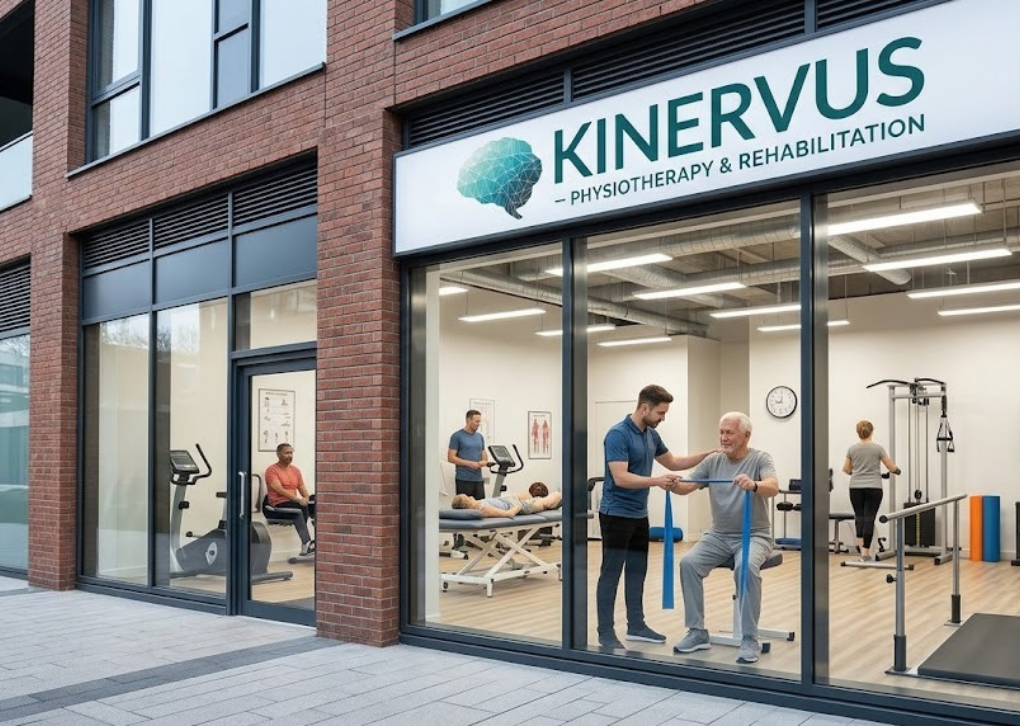
Kinervus is an unusual name that has started attracting attention in online searches. People encountering it may wonder whether it represents a medical treatment, a neurological concept, a digital platform, or an established healthcare organization. The answer depends on the context, but there is a real organization behind the name that deserves a closer look.
Kinervus is the name of a physiotherapy and rehabilitation practice located in Alken, Limburg, Belgium. Its services include neurological rehabilitation, pediatric rehabilitation, kinesitherapy, and manual lymphatic drainage. These services address different physical needs, from improving mobility after neurological conditions to supporting children’s motor development and managing certain types of swelling.
Inforegio.be+2
Understanding Kinervus requires looking beyond the name itself. Its healthcare services, rehabilitation principles, professional approach, and the distinction between verified information and online interpretations all help explain why people might be searching for it.
This guide explores what is publicly known, how its services fit into modern physiotherapy, who may benefit from different rehabilitation approaches, and what prospective patients should consider before arranging treatment.
What Is Kinervus?
Kinervus is a Belgian physiotherapy practice offering specialized rehabilitation and movement-related healthcare services. The practice is associated with physiotherapist Stefanie Ver Eecken and operates in Alken, a municipality in the province of Limburg.
According to the practice’s public information, its work focuses on helping individuals improve physical function, manage movement difficulties, and work toward greater independence through personalized physiotherapy.
Unlike a software application or a standardized medical treatment, Kinervus is an organization providing professional healthcare services.
Understanding the Organization Behind Kinervus
The practice identifies several areas of specialization:
Neurological rehabilitation: Supporting people experiencing movement and functional difficulties associated with neurological conditions.
Pediatric rehabilitation: Helping children develop physical abilities, coordination, and motor skills.
Manual lymphatic drainage: A specialized hands-on technique used in appropriate cases to support lymphatic fluid movement.
Kinesitherapy: Therapeutic movement and exercise designed to improve physical function.
Pelvic floor therapy: Specialized rehabilitation addressing certain pelvic floor problems.
These services demonstrate that the organization works across different stages of life and a variety of rehabilitation needs.
Inforegio.be+1
Where Is Kinervus Located?
The publicly listed practice address is:
Steenweg 121 Z/C, 3570 Alken, Belgium.
The location is also included in Belgian business and regional directories. People interested in treatment should confirm the latest appointment arrangements directly with the practice before visiting.
Alken (Belgique)+1
Official website: Kinervus official website
The History and Background of Kinervus
Understanding the background of a healthcare organization helps establish its identity and provides context for its professional development.
The Kinervus website identifies Stefanie Ver Eecken as the founder and states that the practice started in 2019. Some Belgian business directories, however, record February 22, 2022, as the company’s establishment date.
Novra Magazine+2
These dates should not automatically be considered contradictory. The beginning of a professional practice and the formal establishment of its registered legal company can occur at different times.
Who Founded Kinervus?
Stefanie Ver Eecken is identified as the founder of the practice. Her publicly described professional interests include neurological rehabilitation, manual lymphatic drainage, and additional physiotherapy techniques.
Her background is relevant because specialized rehabilitation often requires therapists to understand how different body systems interact, particularly when working with patients experiencing neurological or movement-related difficulties.
Novra Magazine+1
Why the History Matters
The development of a physiotherapy practice is not simply about establishing a treatment location. It also involves building professional expertise, developing patient relationships, and providing services for different rehabilitation requirements.
The history published by Kinervus provides a starting point for understanding its identity, although detailed historical information about patient numbers, organizational growth, and clinical outcomes is not independently established in the sources reviewed.
Main Services Offered by Kinervus
One of the most important aspects of Kinervus is its range of rehabilitation services. Rather than focusing exclusively on one type of physical problem, the practice provides different approaches depending on the patient’s condition, abilities, and treatment objectives.
1. Neurological Rehabilitation
A specialized service for people experiencing neurological movement and functional difficulties.
Neurological rehabilitation is a major area of specialization at Kinervus. It focuses on people whose movement, coordination, balance, or everyday functioning has been affected by conditions involving the brain, spinal cord, or peripheral nerves.
The practice identifies several conditions that may require neurological physiotherapy:
Stroke (CVA): Supporting recovery of movement, coordination, and independence following a stroke.
Multiple sclerosis (MS): Helping patients maintain mobility, strength, and functional abilities.
Parkinson’s disease: Addressing movement difficulties, balance challenges, and physical limitations.
Amyotrophic lateral sclerosis (ALS): Supporting physical function and adapting activities to changing abilities.
Brain injuries: Helping individuals work toward improved movement and daily functioning following trauma.
Spinal cord injuries: Supporting rehabilitation and the development of practical movement strategies.
Peripheral nerve injuries: Addressing functional limitations associated with nerve damage.
Vertigo-related difficulties: Working on balance and movement problems where appropriate.
Kinervus describes an individualized approach based on the activities a patient finds difficult in everyday life. Treatment primarily involves exercise therapy adapted to individual requirements.
Kinervus+1
Why does this approach matter?
Someone recovering from a stroke may need help improving arm movement, while another patient may struggle with walking, balance, or transferring from a bed to a chair. Although both individuals need neurological rehabilitation, their treatment priorities can be very different.
A practical rehabilitation plan should therefore focus on measurable functional goals rather than simply repeating exercises.
2. Pediatric Rehabilitation
Supporting children’s motor development through individualized and engaging therapy.
Pediatric rehabilitation focuses on children experiencing difficulties with movement, coordination, posture, or physical development.
Kinervus describes an approach that incorporates creative exercises and play-based activities. The purpose is to make rehabilitation more engaging while helping children develop essential motor skills.
Its published pediatric services cover several areas:
Motor development delays: Supporting children who need additional help developing age-appropriate movement skills.
Psychomotor difficulties: Working on coordination, body awareness, and movement control.
Writing difficulties: Improving handwriting-related motor skills, posture, and fine motor coordination.
Postural preferences: Addressing certain asymmetrical positioning patterns.
Lateralization difficulties: Supporting the development of coordinated use of the body’s left and right sides.
Neuromotor conditions: Providing rehabilitation for children with conditions such as cerebral palsy and spina bifida.
The practice also emphasizes cooperation with other professionals in healthcare, education, and child welfare when a multidisciplinary approach is appropriate.
Kinervus
Why Is Play Important in Pediatric Physiotherapy?
Children do not always respond to conventional exercise routines in the same way adults do. Interactive activities can make movement practice more interesting and encourage participation.
For example, a therapist might use balance games, reaching activities, or coordination challenges to help a child practice physical skills in an enjoyable environment.
The important point is that play should support specific therapeutic objectives. It is not simply entertainment added to a treatment session.
3. Manual Lymphatic Drainage
Manual lymphatic drainage is another specialized service associated with Kinervus.
It is a gentle, hands-on treatment technique designed to encourage the movement of lymphatic fluid through the lymphatic system. It may be used as part of appropriate treatment plans for people experiencing lymphoedema or certain forms of swelling.
Kinervus identifies the Vodder method as part of its manual lymphatic drainage specialization.
Kinervus+1
How Does Manual Lymphatic Drainage Work?
The lymphatic system helps maintain fluid balance and supports immune function. When its normal drainage processes become impaired, fluid can accumulate in tissues and cause swelling.
A trained therapist uses gentle, rhythmic movements to encourage lymphatic fluid movement.
However, manual lymphatic drainage should not be confused with ordinary relaxation massage. It requires an understanding of lymphatic pathways and appropriate clinical assessment.
The University Hospital Brussels explains that manual lymphatic drainage can form part of lymphoedema treatment alongside compression therapy and other interventions. The NHS also describes it as one component of decongestive lymphatic therapy.
UZB Website+1
Important: Not every type of swelling is suitable for lymphatic drainage. Patients should obtain an appropriate medical assessment before starting treatment.
4. Kinesitherapy and Movement-Based Treatment
Kinesitherapy is a broad rehabilitation approach involving therapeutic movement and physical exercise.
It can help people work toward improvements in strength, mobility, flexibility, coordination, and everyday physical function.
Depending on an individual’s needs, treatment may involve:
Controlled movement exercises.
Muscle strengthening.
Balance and coordination activities.
Functional movement practice.
Mobility exercises.
Physical conditioning.
Exercises designed around everyday activities.
The purpose is to connect rehabilitation with practical improvements in daily life.
For example, someone with reduced mobility might work on standing, walking, and maintaining balance. Another person may need a program focused on improving physical capacity after an injury.
5. Group Exercise and Rehabilitation Classes
An interesting part of Kinervus is its group exercise offering. The practice describes structured sessions lasting approximately 60 minutes, with activities designed around different physical and rehabilitation needs.
Its published program includes sessions for neurological patients as well as general participants.
Kinervus
Examples of group activities include:
| Group activity | Main objective |
|---|---|
| Posture training | Improving postural control and functional movement |
| Balance exercises | Developing stability and coordination |
| Boxing-style training | Practicing fitness, coordination, and reaction skills |
| Arm and hand exercises | Improving upper-limb function |
| Conditioning | Building endurance and general physical capacity |
| Core training | Strengthening muscles around the abdomen, back, and pelvis |
These activities are particularly interesting because rehabilitation does not always need to happen individually. Properly supervised group sessions can provide structure, motivation, and opportunities for social interaction.
Is Group Rehabilitation Suitable for Everyone?
No. Group rehabilitation should be based on an individual’s physical condition, safety requirements, and treatment objectives.
Kinervus describes specialized supervision and adjustments to exercises according to individual needs. Patients should discuss suitability with the therapists before joining a class.
Kinervus
How Kinervus Approaches Individualized Rehabilitation
A key feature highlighted on the official website is personalized and goal-oriented guidance.
This is an important distinction because rehabilitation is rarely a one-size-fits-all process. Two people with the same diagnosis can experience different symptoms, physical limitations, and recovery challenges.
An effective rehabilitation approach considers the individual rather than relying exclusively on the medical label.
Step 1: Understanding the Patient’s Needs
The first priority is identifying the difficulties affecting everyday activities.
These might include walking, maintaining balance, using the hands, changing positions, or performing tasks independently.
A therapist needs to understand these challenges before deciding which interventions may be appropriate.
Step 2: Establishing Realistic Goals
Treatment objectives should be meaningful and measurable.
For example, a patient might aim to improve walking confidence, maintain better balance, or become more independent when performing daily activities.
Goals may change as the patient’s abilities and circumstances develop.
Step 3: Selecting Appropriate Exercises
The rehabilitation program should reflect the patient’s current physical abilities and treatment priorities.
Exercises may involve strengthening, coordination, functional movement, balance, or endurance training.
Step 4: Monitoring Progress
Progress should be reviewed regularly rather than assuming that repeating the same exercises will always produce the desired outcome.
A therapist may adjust exercise difficulty, frequency, or treatment priorities based on the patient’s response.
Step 5: Supporting Long-Term Function
Rehabilitation is not necessarily finished when an individual reaches an initial treatment goal.
Some people need ongoing support to maintain mobility, manage chronic conditions, and preserve independence.
The official Kinervus website explicitly describes both short-term and long-term treatment goals as part of its patient-centered approach.
Kinervus+1
What Makes Kinervus Different From a General Physiotherapy Practice?
The distinction is not that Kinervus uses an entirely different medical system. Rather, its publicly described service range places particular emphasis on neurological rehabilitation, pediatric rehabilitation, and manual lymphatic drainage.
These specializations allow the practice to address different patient groups through specific therapeutic approaches.
Some notable characteristics include:
1. Specialized rehabilitation services: Neurological and pediatric rehabilitation are prominent areas of its work.
2. Individual treatment objectives: The practice describes plans based on each patient’s physical needs and personal goals.
3. Different treatment formats: Patients can explore individual physiotherapy and suitable group activities.
4. Multidisciplinary awareness: Its pediatric rehabilitation information recognizes the value of cooperation between healthcare, education, and welfare professionals.
5. Functional improvement: Its neurological rehabilitation approach emphasizes activities that patients find difficult in everyday life.
Kinervus+3
It is worth distinguishing these published service characteristics from claims of superior clinical outcomes. The publicly available information reviewed does not establish comparative recovery rates or prove that the practice is more effective than other rehabilitation providers.
Is Kinervus a Medical Treatment, a Concept, or a Healthcare Brand?
This is an important question because online search results do not always describe the name consistently.
Some websites present Kinervus as a digital concept, technological platform, wellness framework, or an idea connecting movement and the nervous system.
However, the official Belgian website clearly identifies Kinervus as a physiotherapy group practice.
Kinervus+2
There is no established evidence in the reviewed sources that Kinervus is a standardized medical diagnosis, a recognized standalone treatment method, or a dedicated artificial intelligence platform.
Does the Name Have a Confirmed Scientific Meaning?
The official practice does not provide a definitive linguistic explanation of its name.
Some online interpretations associate parts of the word with movement and nerves. Although these associations may sound plausible, they should not be presented as an officially confirmed etymology.
This distinction matters for readers researching unfamiliar healthcare-related terms.
A business name, a medical concept, and a clinically validated treatment are three different things.
Kinervus is best understood through its documented healthcare identity and the actual services it provides.
Who May Benefit From Kinervus Services?
The services offered by Kinervus may be relevant to different groups of people, depending on their physical condition and rehabilitation requirements.
Potential patient groups include:
Stroke survivors who need support with movement, coordination, and everyday independence.
People living with Parkinson’s disease who experience mobility and balance difficulties.
Individuals with multiple sclerosis who want professional support in maintaining physical function.
Children with developmental challenges who need assistance with motor coordination and movement skills.
People experiencing lymphoedema who may benefit from professionally assessed lymphatic drainage.
Individuals with physical injuries who need appropriate movement-based rehabilitation.
People with reduced physical conditioning who want to improve strength, endurance, and mobility.
Not every service is appropriate for every patient. A qualified healthcare professional should determine whether a particular treatment is suitable.
What Should You Know Before Booking an Appointment?
Choosing a rehabilitation provider requires more than looking at a list of available services. Patients should understand their needs, ask relevant questions, and make informed decisions about treatment.
Here are some practical considerations before contacting Kinervus.
1. Identify Your Main Rehabilitation Needs
Think about the physical difficulties you want to address.
Are you experiencing balance problems, recovering from a neurological condition, seeking support for a child’s motor development, or dealing with swelling?
Having a clear explanation of your concerns can help the practice identify the appropriate service.
2. Prepare Relevant Medical Information
Bring relevant medical reports, previous treatment information, and referrals if applicable.
This information can help the therapist understand your medical background and consider any precautions.
3. Ask About Treatment Planning
Before beginning rehabilitation, ask how the therapist evaluates progress and establishes treatment objectives.
Understanding the proposed approach can make it easier to participate actively in the process.
4. Discuss Practical Arrangements
Confirm appointment availability, treatment costs, insurance reimbursement, and any applicable referral requirements directly with the practice.
These details should not be assumed because they may change or depend on individual circumstances.
5. Understand That Rehabilitation Takes Time
Physical improvement is not always immediate.
Some patients may notice functional changes relatively quickly, while others require longer-term rehabilitation. The appropriate duration depends on the underlying condition, treatment objectives, and individual progress.
Kinervus Location, Contact Information, and Official Website
For people interested in learning more about the practice or arranging an appointment, its official contact information provides the most reliable starting point.
Practice Location
Steenweg 121 Z/C, 3570 Alken, Belgium
Telephone
+32 11 78 11 78
info@kinervus.be
Official Website
www.kinervus.beContact details published on the official website. Confirm current availability before visiting.
Kinervus
The Future of Specialized Physiotherapy and Rehabilitation
The broader rehabilitation sector continues to evolve as healthcare professionals explore more effective ways to support patients with different physical needs.
Several developments are particularly relevant to practices offering specialized physiotherapy.
Greater Emphasis on Personalized Treatment
Patients increasingly need rehabilitation programs that reflect their individual circumstances rather than relying on identical exercises for everyone.
Individualized assessments, functional goals, and regular progress reviews can make treatment more relevant to everyday life.
Technology-Assisted Rehabilitation
Digital tools, movement-tracking devices, and rehabilitation applications can provide additional ways to monitor physical activity and support home exercise programs.
However, technology should complement professional assessment rather than replace qualified clinical judgment.
There is currently no verified evidence that Kinervus operates a dedicated digital rehabilitation platform.
More Accessible Group Rehabilitation
Group exercise can provide opportunities for structured physical activity, encouragement, and social interaction.
The group classes already described by Kinervus illustrate how supervised activities can complement individual rehabilitation.
Kinervus
Increased Awareness of Neurological Rehabilitation
Conditions such as stroke, Parkinson’s disease, and multiple sclerosis can affect more than physical movement.
They may also influence independence, confidence, and participation in everyday activities.
The World Health Organization recognizes rehabilitation as an important component of healthcare across neurological, musculoskeletal, developmental, and other health conditions.
World Health Organization
The growing recognition of rehabilitation needs makes specialized physiotherapy an important part of long-term healthcare planning.
Frequently Asked Questions About Kinervus
1. What is Kinervus and what does it do?
Kinervus is a physiotherapy and rehabilitation group practice based in Alken, Limburg, Belgium. It provides services including neurological rehabilitation, pediatric rehabilitation, kinesitherapy, manual lymphatic drainage, and group exercise sessions.
The practice focuses on personalized treatment and helping patients work toward improved physical function and everyday independence.
2. Where is Kinervus located?
Kinervus is located at Steenweg 121 Z/C, 3570 Alken, Belgium. It operates in the Limburg region and provides physiotherapy and rehabilitation services through its practice.
People interested in treatment can visit its official website at https://kinervus.be/ to find contact information and appointment options.
3. What conditions does Kinervus help treat?
Its neurological rehabilitation services are intended for people experiencing functional difficulties associated with conditions such as stroke, multiple sclerosis, Parkinson’s disease, ALS, spinal cord injuries, brain trauma, and peripheral nerve injuries.
The practice also offers pediatric rehabilitation for children with motor development and coordination difficulties, alongside manual lymphatic drainage for appropriate patients.
The suitability of each service depends on an individual assessment.
4. Does Kinervus provide rehabilitation for children?
Yes. Pediatric rehabilitation is one of the practice’s main specializations.
Its services address developmental and motor challenges, including coordination difficulties, delayed motor development, handwriting-related motor problems, and certain neurological conditions.
The practice describes using creative, interactive exercises and play-based activities to make therapy engaging for children. It also recognizes the importance of cooperation with other healthcare and educational professionals.
5. Is Kinervus a medical treatment or a physiotherapy center?
Kinervus is the name of a physiotherapy and rehabilitation practice, not a standardized medical diagnosis or standalone treatment method.
Its services include recognized physiotherapy approaches such as neurological rehabilitation, pediatric physiotherapy, kinesitherapy, and manual lymphatic drainage.
People researching the term should distinguish the actual Belgian healthcare organization from unrelated online articles that use the same name to describe technology or wellness concepts.
Conclusion: Understanding Kinervus Beyond Its Name
Kinervus represents a specialized physiotherapy and rehabilitation practice in Alken, Belgium, with services covering neurological rehabilitation, pediatric care, manual lymphatic drainage, and group exercise.
Its approach emphasizes individualized treatment objectives, practical movement exercises, and support for people experiencing different physical challenges.
What makes the organization particularly interesting is its focus on several distinct rehabilitation needs rather than a single category of physiotherapy.
For prospective patients, the next step is straightforward: identify the type of support required, explore the relevant treatment information on the official website, and contact the practice to discuss an appropriate appointment.
Explore the official Kinervus website at kinervus.be for the latest information about its services, therapists, and appointment arrangements.
SEO Information and Content Recommendations
| SEO element | Recommendation |
|---|---|
| Primary keyword | Kinervus |
| Search intent | Informational |
| Suggested H1 | Kinervus: What It Is, Its Meaning, Physiotherapy Services, and Rehabilitation Approach |
| URL slug | /kinervus/ |
| Meta title | Kinervus Explained: Meaning, Services, and Rehabilitation Guide |
| Content category | Health & Rehabilitation |
| Suggested schema | Article and FAQPage, subject to eligibility and current Google guidelines |
Related semantic keywords covered:
Kinervus physiotherapy
Kinervus Belgium
Kinervus Alken
Neurological rehabilitation
Pediatric rehabilitation
Manual lymphatic drainage
Kinesitherapy
Physiotherapy services
Stroke rehabilitation
Parkinson’s rehabilitation
Multiple sclerosis physiotherapy
Motor development therapy
Group rehabilitation exercises
Personalized physiotherapy
Editorial and E-E-A-T note: This article distinguishes information published by the actual practice from interpretations found on unrelated websites. It does not claim verified patient outcomes, treatment success rates, or clinical superiority. Because this is a healthcare-related topic, publication should ideally include a named author, review by a qualified physiotherapist, and a visible update date. This strengthens credibility and gives readers a clearer basis for evaluating health information.
Research Sources
Kinervus Official Website – Organization, location, and treatment approach.
Neurological Rehabilitation – Kinervus – Neurological services.
Pediatric Rehabilitation – Kinervus – Children’s rehabilitation.
Group Classes – Kinervus – Group exercise programs.
Kinervus Team – Professional specializations.
NHS – Lymphoedema Treatment – Medical background on lymphatic drainage.
World Health Organization – Rehabilitation – Broader rehabilitation context.