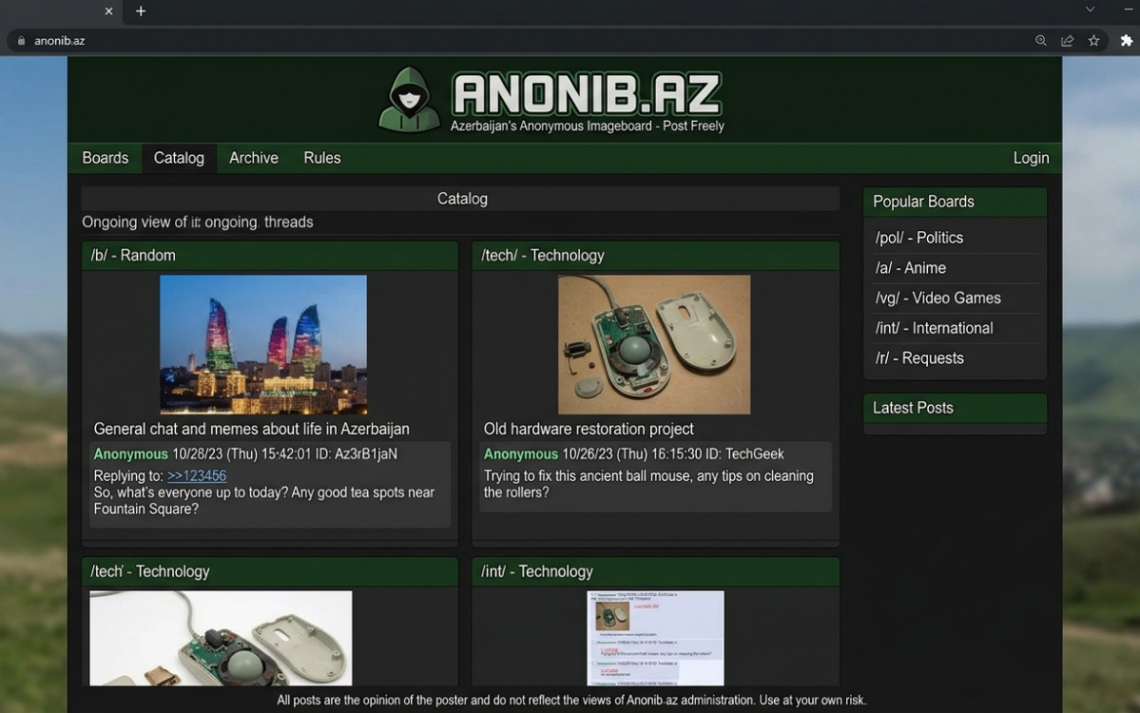
Searches for Anonib az can be confusing because the phrase is often treated online as though it were a standalone platform, browser, or privacy tool. The better-supported interpretation is different: it points back to the AnonIB anonymous image-board ecosystem, while “AZ” likely reflects Arizona-related search intent or a regional board label rather than a distinct privacy product.
That distinction matters. Historical reporting describes AnonIB as an anonymous image-sharing forum notorious for intimate images posted or traded without the subjects’ consent, and Dutch authorities seized the original forum in April 2018 after a lengthy cybercrime investigation. Later clones, archives, lookalike domains, and SEO pages should not automatically be treated as the same service or as being run by the original operators.
This guide explains the history, search intent, legal exposure, cybersecurity concerns, and victim-response options connected with Anonib az without directing readers toward harmful material.
What Is Anonib az?
The most useful way to understand Anonib az is to separate the two parts of the query.
AnonIB is commonly understood as “anonymous image board.” Historical versions of the site allowed people to post images and comments with little visible identity information, while boards were organized by topics and geographic areas. Reporting from multiple countries documented that the platform became associated with “collector” behavior, location-specific requests, doxxing, and non-consensual intimate imagery.
The “az” portion is less definitive. Publicly indexed archival pages show that AnonIB-style boards were organized by U.S. states, including Arizona. That makes Arizona-related search intent a plausible explanation, but it is more accurate to call this an inference than a proven official product name.
Is Anonib az an anonymous browser?
No credible historical source reviewed for this article describes Anonib az as an encrypted browser, VPN, Tor replacement, or privacy-focused web browser. The documented AnonIB service was an image board, not software designed to conceal a user’s entire browsing activity.
That is an important misinformation check. A site can allow anonymous posting while still exposing technical information such as IP addresses, device characteristics, cookies, timestamps, referrer data, or server logs. “Anonymous” in a public-facing interface does not mean technically untraceable.
The AnonIB History Behind the Search Term
To understand why the keyword remains sensitive, you need the history behind it.
AnonIB gained notoriety because users did not merely share generic adult content. Journalistic investigations described forums where individuals requested images of identifiable women, organized material by location or institution, and traded private photographs as collectible assets. A 2017 Canadian investigation, for example, documented university-related threads and victims discovering intimate images posted alongside identifying information.
In April 2018, Dutch police seized the forum following an investigation that began after a woman reported stolen intimate images. Contemporary reports said investigators arrested multiple suspects and found large quantities of personal data and images associated with hacking and unauthorized sharing.
This history is central to understanding Anonib az today. The keyword is not just about an old message board; it sits inside a broader ecosystem of anonymous posting, copied archives, reposting, search indexing, and image-based abuse.
Why clones and archives complicate the picture
When a controversial platform disappears, the name often survives.
Domains change. Archives appear. Copycat sites reuse branding. Search pages republish old descriptions. Some sites may preserve old thread structures, while others may simply use the name to attract traffic.
For that reason, readers should avoid assuming that every page carrying “AnonIB” branding has continuity with the forum seized in 2018. The safer research practice is to evaluate each domain independently: ownership, HTTPS implementation, privacy policy, moderation rules, takedown process, reputation, and whether reputable sources have documented its operation.
Why Anonib az Raises Serious Privacy and Consent Concerns
The core risk surrounding Anonib az is not anonymity itself. Anonymous communication can have legitimate uses, including whistleblowing, political discussion, and sensitive support communities.
The problem begins when anonymity is combined with intimate material, identifiable targets, weak moderation, and a culture that rewards redistribution.
Non-consensual intimate imagery is not “just leaked content”
A private image can be authentic and still be unlawfully or abusively shared.
Consent to create an intimate image is not the same as consent to publish it. Consent to send an image to one person is not blanket permission for that person to repost it, archive it, sell it, trade it, or attach a name and social profile to it.
That distinction is reflected in modern law. Arizona’s current civil statute, for example, states that prior consent to creating an image or to a previous disclosure does not by itself establish consent to a later disclosure.
Doxxing multiplies the harm
Image-based abuse becomes more dangerous when a post includes a real name, school, employer, social account, city, phone number, or other identifying details.
Now the victim is dealing with more than an unwanted image. They may face harassment, impersonation, stalking, extortion, employment consequences, or repeated contact from strangers.
That is one reason location-based boards associated with AnonIB drew so much scrutiny: geography can transform otherwise fragmented personal data into a practical targeting tool. ABC’s reporting on the 2018 takedown described country-based categorization and links to victims’ social profiles.
Is Anonib az Legal in Arizona?
There is no meaningful legal answer based only on the name Anonib az. Legality depends on conduct: what is posted, how it was obtained, whether the depicted person consented, whether the person is identifiable, whether there is an intent to harm, and whether minors are involved.
For Arizona readers, two state laws are especially relevant.
Arizona criminal law: A.R.S. § 13-1425
Arizona Revised Statutes § 13-1425 makes certain intentional disclosures of identifiable nude or sexual images unlawful when the depicted person had a reasonable expectation of privacy and the disclosure is made with intent to harm, harass, intimidate, threaten, or coerce.
The statute also states that sending an image electronically does not, by itself, eliminate the depicted person’s reasonable expectation of privacy. Electronic disclosure can carry more serious classification under the statute.
The law has also been updated to address realistic computer-generated representations in specified circumstances, reflecting the growing relevance of sexual deepfakes.
Arizona civil remedies: A.R.S. § 12-741
Arizona also provides a civil cause of action for unauthorized disclosure or threatened disclosure of intimate images in qualifying cases.
Available remedies can include damages, monetary gains attributable to the disclosure, punitive damages, attorney fees, costs, and injunctive relief. The statute specifically defines private material to include content obtained through methods such as theft, fraud, voyeurism, or exceeding authorized access to an account or device.
This means a person harmed through an Anonib az-related post may have more than one legal pathway depending on the facts.
Federal Law Changed the Removal Landscape
The U.S. legal framework became significantly stronger with the TAKE IT DOWN Act.
Signed into law on May 19, 2025, the Act criminalizes certain publication of non-consensual intimate visual depictions and establishes removal duties for covered platforms. The Federal Trade Commission began enforcing the platform notice-and-removal provisions on May 19, 2026.
Covered platforms must provide a clear process for valid removal requests and, after receiving a qualifying request, remove the reported intimate content and known identical copies within 48 hours. The rules can apply to both real intimate imagery and qualifying digital forgeries, including AI-generated or altered sexual images.
For anyone researching Anonib az, this is one of the most important current developments. Old articles that discuss revenge-porn law only at the state level may now be materially incomplete.
Cybersecurity Risks of AnonIB-Style Sites
Even when a visitor never uploads anything, browsing an unofficial adult image board can introduce security and privacy risks.
The danger is not limited to explicit content. Low-trust websites commonly create exposure through aggressive ad networks, deceptive redirects, fake download buttons, malicious browser-notification prompts, credential phishing, or files disguised as media.
A practical rule: do not treat “anonymous posting” as a security feature.
If you encounter a page using Anonib az branding or a similar name, avoid entering credentials you reuse elsewhere. Do not install browser extensions, sideloaded apps, “private viewers,” download managers, or certificates promoted by the site.
Also remember that HTTPS only encrypts traffic between your browser and the site. It does not prove that the operator is trustworthy, that uploaded material is legal, or that logs are not retained.
What to Do If Your Images Appear on Anonib az
If you discover intimate material of yourself on a site connected to Anonib az, prioritize preservation, removal, and personal safety.
Do not begin by arguing publicly with posters. Public confrontation can sometimes trigger more reposting, additional harassment, or deletion of evidence you may later need.
Instead:
- Record the URLs and timestamps. Save the page address, date, thread title, usernames or post identifiers, and any visible context.
- Preserve evidence without redistributing it. Screenshots can be useful, but avoid forwarding intimate files unnecessarily.
- Use the platform’s reporting or takedown process. In the U.S., covered platforms may have duties under the TAKE IT DOWN Act.
- Request search-result removal. Google allows qualifying individuals or authorized representatives to request removal of personal sexual imagery from Search results. Google notes that removing a Search result does not remove the file from the hosting website itself.
- Use hash-based prevention tools. StopNCII.org can create a digital fingerprint of an intimate image on your device and share the hash—not the underlying image—with participating platforms to help detect matching uploads.
- Escalate threats or extortion. If someone is threatening physical harm, blackmail, stalking, or sexual extortion, contact the appropriate local authorities and preserve the messages.
- Speak with a qualified lawyer when necessary. A lawyer can evaluate state civil claims, criminal reporting, preservation demands, subpoenas, copyright options, and emergency injunctive relief.
If a U.S. covered platform fails to remove qualifying content within 48 hours of a valid request, the FTC now provides a reporting channel for potential TAKE IT DOWN Act violations.
How to Evaluate Claims About Anonib az Online
Search results around controversial or adult-oriented brands are unusually noisy. That makes source evaluation part of the topic itself.
Before trusting a page that claims to explain Anonib az, ask:
- Does it distinguish the original 2018-seized AnonIB forum from later clones or archives?
- Does it cite police, legislation, major reporting, or recognized victim-support organizations?
- Does it make unsupported claims that the service is a VPN, encrypted browser, or guaranteed-anonymity tool?
- Does it provide a real privacy policy and takedown procedure?
- Does it encourage downloading unknown software?
- Does it treat non-consensual imagery as entertainment rather than abuse?
- Does it explain the difference between de-indexing a search result and removing the source file?
That last point is especially important. Google can remove qualifying results from its search products, but the hosting site must remove the underlying content for it to disappear at the source.
Safer Alternatives for Anonymous Online Discussion
If your real goal is anonymous conversation rather than intimate-image sharing, you do not need an AnonIB-style platform.
Choose services based on transparent moderation, account security, abuse reporting, data-retention disclosures, and a credible operator. For higher-risk communication, consider established privacy technologies and communities that clearly document what anonymity they provide—and what they do not.
The key principle is simple: privacy is a technical and governance property, not a marketing word.
A platform that says “anonymous” but provides no meaningful privacy documentation, security model, reporting process, or accountable operator should not be treated as a trustworthy anonymity service.
FAQ About Anonib az
1. What does Anonib az mean?
Anonib az most plausibly refers to AnonIB-related search intent with an Arizona connection, rather than a separate mainstream browser or privacy application. Historical and archival material shows that AnonIB-style boards were organized geographically, including by U.S. state, but the exact phrase should not be treated as an officially verified product name without domain-specific evidence.
2. Is Anonib az still online?
The original Anon-IB forum documented in major reporting was seized by Dutch authorities in April 2018. Later websites, mirrors, archives, and lookalike domains may use similar branding, but their existence does not establish that they are the original service or operated by the same people.
3. Is it illegal to view or post content on Anonib az?
The legal answer depends on the content and conduct. Posting, threatening to post, hacking to obtain, or redistributing non-consensual intimate imagery can trigger criminal or civil liability, while material involving minors raises even more serious legal issues.
In Arizona, A.R.S. § 13-1425 and § 12-741 address qualifying disclosures and civil claims; federal law now adds protections through the TAKE IT DOWN Act.
4. Can I remove my photos from Google if they appeared on an AnonIB-style site?
Yes. Qualifying personal sexual images can be submitted to Google for removal from Search.
Google also offers options related to duplicate images and future search protection, but removal from Google Search does not automatically delete the original image from the website hosting it.
5. What is the fastest response if someone threatens to upload my private images?
Preserve the threat, avoid paying or negotiating impulsively, secure your accounts, document where the material appears, and use the relevant platform’s reporting process.
StopNCII.org can help participating platforms identify matching images through on-device hashing, while U.S. users may also have rights under state law and the federal TAKE IT DOWN Act. If there is extortion, stalking, or immediate danger, contact law enforcement or an appropriate victim-support service.
Conclusion: Treat Anonib az as a Privacy-Risk Topic, Not a Curiosity
The most responsible way to approach Anonib az is to separate verified history from recycled search-page claims. The documented AnonIB ecosystem was an anonymous image-board network associated with serious consent and privacy abuses, and the original forum was seized by Dutch authorities in 2018.
If you are researching the term, verify the exact domain before trusting claims about ownership, security, or anonymity. If your images are involved, document the evidence, request removal at the source, remove qualifying search results, consider StopNCII hashing, and use legal or law-enforcement channels when the situation involves threats, hacking, harassment, or extortion.
Do not feed the reposting cycle. Protect the victim, preserve the evidence, and use the removal mechanisms that now exist.