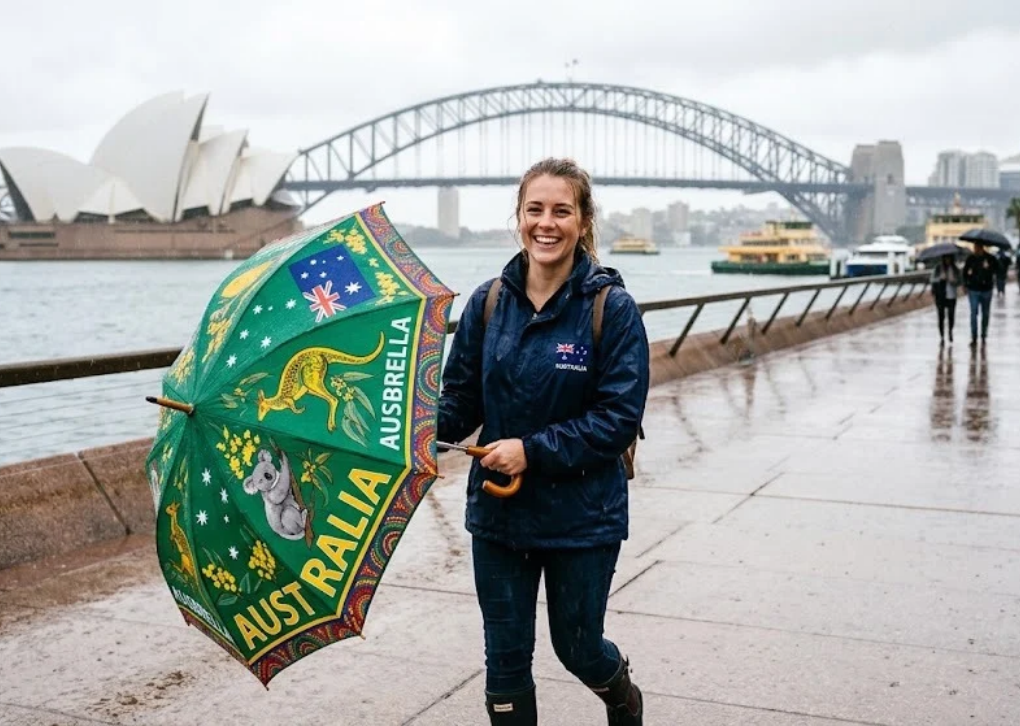
Outdoor umbrellas often look impressive when first installed, but strong winds, relentless sunshine, and constant exposure can quickly reveal weaknesses in their construction. Ausbrella takes a different approach, combining reinforced engineering, durable materials, and specialized wind-resistant technology to create outdoor shade solutions for demanding environments. Designed and manufactured in Australia, this premium umbrella range aims to deliver dependable performance in places where ordinary patio umbrellas may struggle.
From luxurious resort terraces to busy restaurant courtyards, structural reliability matters just as much as appearance. An umbrella that bends, shifts, or suffers fabric damage can become an expensive maintenance problem and potentially create safety risks.
That explains the growing interest in heavy-duty outdoor umbrellas with documented performance specifications. This guide explores the technology, available models, wind ratings, installation requirements, practical advantages, and purchasing considerations that buyers should understand before investing.
What Is Ausbrella?
Ausbrella is an Australian-made range of heavy-duty outdoor market umbrellas developed by Awnet, a Melbourne-based manufacturer of commercial umbrellas and café barriers. Unlike compact umbrellas designed for personal use, these products provide shade over larger outdoor spaces while incorporating structural features intended to improve resistance to challenging weather conditions.
Awnet identifies founder Chris Pierias as the creator of the range. His objective was to address weaknesses associated with conventional outdoor umbrellas by reconsidering the central pole, supporting frame, canopy attachment, and opening mechanism.

The resulting products are particularly relevant to hospitality businesses, public facilities, resorts, and premium residential properties. They also appeal to buyers who prioritize long-term durability over the lowest initial purchase price.
The Idea Behind Its Development
Traditional market umbrellas must balance several competing requirements. They need sufficient strength to carry a large canopy, manageable weight for operation, and a structure capable of responding to outdoor wind loads.
Increasing pole thickness alone does not necessarily deliver the most efficient solution. A heavier structure may become difficult to operate while still leaving weak points around its joints, ribs, or anchoring system.
The engineering philosophy behind this umbrella range focuses on strengthening multiple connected components. Its reinforced mast works alongside an interlocking frame and mechanically secured fabric to create a more integrated shade structure.
How Ausbrella Engineering Improves Outdoor Durability
A premium shade umbrella is more than a fabric cover supported by a pole. Its performance depends on how effectively every component transfers loads through the frame and into a stable foundation.
Ausbrella incorporates several distinctive structural features that help explain its positioning within the commercial outdoor shade market. Understanding these features makes it easier to evaluate its practical benefits rather than relying entirely on advertising claims.
1. Twin-Skin Aluminium Pole Technology
The central feature is a twin-skin aluminium mast, which uses an inner tubular section, an outer wall, and connecting internal reinforcement.
This arrangement differs from a basic single-wall hollow pole. The additional internal structure is intended to improve resistance to bending and provide strength without relying solely on a heavier solid mast.
The underlying technology is described in Australian patent documentation titled A Mast and Umbrella. Patent AU2018202191B2, granted in December 2019, describes interconnected tubular portions and a supporting umbrella frame.
2. Reinforced Interlocking Frame
A strong mast has limited value if the ribs or connecting brackets fail under pressure. The manufacturer therefore uses interlocking frame components designed to contribute to overall structural performance.
Its Storm and Hurricane product descriptions refer to eight radial arms and an interlocking support system. These components distribute the canopy support around the centre mast rather than depending on a single connection point.
3. Secure Bolt-On Canopy
The umbrella canopy is mechanically attached to its supporting structure. This bolt-on fabric system is intended to reduce the likelihood of the cover becoming insecure when exposed to demanding conditions.
Secure attachments matter because wind can produce uplift and fluctuating pressure across a large fabric surface. The durability of the canvas itself is only one consideration; the way it connects to the frame is equally important.
4. Rope-Free Opening Mechanism
Many conventional commercial umbrellas use cords, pulleys, or crank mechanisms that require attention during operation. The range features an opening system that Awnet describes as operating without ropes or pulleys.
Removing these components eliminates some common cord-related maintenance concerns. However, operators should still receive instructions on correct opening, closing, and inspection procedures.
5. Stainless-Steel Ground Socket
The manufacturer also offers a matching stainless-steel in-ground socket. This provides a dedicated mounting interface between the umbrella mast and its foundation.
A robust socket alone does not guarantee a safe installation. The surrounding foundation, embedded depth, soil conditions, and specified fixings must all be suitable for the particular umbrella and location.
Ausbrella Models: Storm 135 vs Hurricane 160+
Choosing an outdoor umbrella involves more than selecting a canopy colour. The two principal models target different levels of wind exposure, making their engineering specifications especially important.
Manufacturer-published model comparison
| Feature | Storm 135 | Hurricane 160+ |
|---|---|---|
| Published wind performance | 135 km/h | Tested above 160 km/h |
| Centre mast | Twin-skin aluminium | Double twin-skin construction |
| Frame | Reinforced interlocking system | Reinforced interlocking system |
| Canopy attachment | Bolt-on | Bolt-on |
| Opening | Rope-free | Rope-free |
| Warranty advertised | 5 years | 5 years |
| Typical consideration | General commercial and residential sites | More exposed or demanding locations |
Specifications are based on Awnet’s dedicated model pages. Actual suitability depends on the tested configuration, engineering requirements, mounting, and site conditions.
Storm 135: Strong Performance for Everyday Commercial Use
The Storm 135 is designed for outdoor settings that need significant structural strength without necessarily requiring the highest-performing model in the range.
Awnet publishes a 135 km/h wind rating on the dedicated Storm product page. The manufacturer describes the model as suitable for most Australian regions, although site-specific engineering requirements should determine whether it is appropriate for a particular installation.
Restaurants, landscaped courtyards, hotel gardens, and residential entertaining areas are potential applications. Buyers should still confirm the canopy dimensions and anchoring arrangement covered by the relevant engineering documents.
Hurricane 160+: Designed for More Demanding Exposure
The Hurricane 160+ introduces a stronger double twin-skin mast construction. It is intended for locations where wind exposure is a particularly significant design concern.
According to Awnet, the model underwent testing at the Monash University Mechanical and Aerospace Wind Tunnel Facility. The manufacturer reports exposure to approximately 161 km/h during the test and states that engineering certification and the wind-tunnel report are available upon request.
That is substantial reported performance for a folding market umbrella. Still, testing at a particular wind speed does not establish that every size, installation, or real-world weather scenario will produce the same result.
Understanding Ausbrella Wind Ratings and Safety Claims
Wind resistance is one of the most important specifications when comparing heavy-duty outdoor shade structures. Unfortunately, it is also one of the easiest features to misunderstand.
A figure such as 135 km/h does not tell the entire story. Engineers must consider the location, exposure, structural geometry, load transfer, and installation method before determining whether a product is appropriate for a particular site.
Why Wind Speed Alone Is Not Enough
Wind pressure increases approximately with the square of wind speed. This means a relatively modest increase in wind speed can produce a much larger increase in aerodynamic loading.
The situation becomes more complicated around buildings. Airflow may accelerate around corners, generate uplift beneath a canopy, or create turbulent gusts that differ from controlled laboratory conditions.
Australian structural wind-design practice considers geographic wind regions, terrain, shielding, and topography. These factors are included in the framework of AS/NZS 1170.2:2021, which deals with wind actions on structures.
Is It Really the World’s Strongest Umbrella?
Awnet markets the product using the description “The World’s Strongest Umbrella.” Its reported wind-tunnel testing and specialized engineering provide a factual basis for discussing its high-wind performance.
However, that marketing description should not be interpreted as an independently established worldwide ranking. A universal comparative study covering every commercial umbrella manufacturer has not been demonstrated by the cited documentation.
Buyers should focus on verifiable evidence instead: test reports, engineering certifications, approved installation arrangements, and the specific wind performance of their chosen configuration.
Where Can Ausbrella Be Used?
Ausbrella is designed primarily for situations where outdoor shade must combine practicality, durability, and visual appeal. Its applications extend beyond conventional garden furniture.
The main advantage is that the umbrella can be considered as part of a broader outdoor-space design rather than simply an accessory added after construction.
Restaurants, Cafés, and Hospitality Venues
For restaurants, outdoor seating represents usable commercial space. Reliable shade improves customer comfort and helps create a more inviting environment during sunny weather.
A commercial umbrella must also accommodate tables, chairs, customer movement, and staff access. Operators should measure the entire occupied area, not simply the tabletop, before choosing canopy dimensions.
Hotels, Resorts, and Poolside Areas
Poolside installations face particular challenges because of prolonged sunlight, moisture, and open exposure. Premium shade systems can support guest comfort while maintaining a consistent visual style.
Resort operators should consider the effect of reflected UV radiation from water and surrounding hard surfaces. Cancer Council guidance explains that shade remains only one part of effective sun protection.
Public Parks and Council Spaces
Outdoor umbrellas in public areas must account for repeated use, supervision, and potential misuse. Their structural design and attachment methods therefore deserve especially careful evaluation.
Local authorities may also require supporting documentation for planning, engineering compliance, accessibility, and public liability. A manufacturer’s wind rating should not replace those project-specific requirements.
Premium Residential Properties
Homeowners with exposed patios, courtyards, or outdoor kitchens may benefit from a commercial-grade umbrella. Such an installation can provide a more permanent appearance without necessarily constructing a fixed roof.
However, the strongest available model is not automatically the most economical choice. A sheltered backyard may have very different requirements from an exposed coastal terrace.
Ausbrella Installation: What Buyers Must Check
Installation is arguably as important as the umbrella itself. Even a carefully engineered product can become unsafe if the mounting arrangement is inadequate.
Ausbrella uses a dedicated in-ground socket concept, but the appropriate foundation must be selected according to the site and manufacturer’s engineering instructions. Avoid assuming that an ordinary portable umbrella base can substitute for a specified structural mounting system.
Measure the Entire Outdoor Space
Start by recording the dimensions of the area requiring shade. Account for furniture, pedestrian circulation, neighbouring walls, doorways, and overhead obstructions.
Remember that shade moves throughout the day as the sun changes position. A canopy that covers a table at midday may leave part of the seating exposed later in the afternoon.
Verify the Foundation and Fixings
Before ordering, obtain confirmation of the required foundation design. This may involve an engineer or qualified installer assessing the pavement, concrete footing, existing slab, or ground conditions.
Pay attention to services beneath the installation area, including drainage, electrical cables, and irrigation. Cutting or drilling into an existing surface without confirming these conditions can create avoidable costs and hazards.
Establish Safe Operating Procedures
Commercial operators should document who is responsible for inspecting and operating outdoor umbrellas. Staff need clear instructions about closing procedures, unusual movement, damage, and approaching severe weather.
A high wind rating is not permission to ignore weather warnings. Follow the manufacturer’s operating limits, and close or secure the umbrella whenever conditions or site instructions require it.
How Does Ausbrella Compare With Ordinary Patio Umbrellas?
The most meaningful comparison is not simply price or appearance. It is the total package of engineering, installation requirements, expected service demands, and available support.
Ordinary patio umbrellas are often designed for flexibility and affordability. They can be excellent solutions for sheltered residential settings, particularly where the umbrella is stored regularly.
Commercial-grade shade structures place greater emphasis on predictable installation and documented performance. They may require more planning and upfront investment, but they can offer advantages in heavily used locations.
Important Differences to Evaluate
Structural design: Examine mast reinforcement, frame joints, ribs, and attachment hardware.
Wind evidence: Compare tested conditions and engineering documentation rather than marketing descriptions alone.
Canopy material: Consider UV resistance, colour retention, water resistance, and replacement availability.
Mounting requirements: Check whether the installation needs an engineered socket or foundation.
Maintenance: Investigate cleaning procedures, replacement components, and service access.
Warranty: Review exactly which parts, failures, and installation conditions are covered.
A stronger umbrella is not necessarily more convenient for every user. Buyers who prioritize portability may prefer a lighter design, while businesses operating exposed outdoor dining areas may place greater value on structural assurance.
Ausbrella Fabric, UV Protection, and Weather Resistance
The canopy plays a major role in determining how an outdoor umbrella performs over time. Structural strength cannot compensate for fabric that deteriorates quickly under sunlight, moisture, and repeated exposure.
Awnet identifies solution-dyed acrylic canvas as its standard market-umbrella fabric, with other material options available across its wider product range. The company describes its acrylic fabrics as resistant to UV exposure, fading, and rot.
Why Solution-Dyed Acrylic Matters
Solution-dyed fabric incorporates colour during fibre production rather than relying entirely on colour applied to the finished textile. This process is commonly used in outdoor materials where colour stability matters.
For hospitality properties, fading is more than a cosmetic issue. Unevenly coloured canopies can undermine visual consistency across a terrace or restaurant frontage, particularly when replacement panels are introduced.
Does Strong Fabric Guarantee Complete UV Protection?
No canopy should be treated as providing total protection from ultraviolet radiation under every condition. Reflected sunlight, canopy edges, fabric characteristics, and exposure time all influence the protection people receive.
Cancer Council guidance distinguishes the UV protection of a material from protection provided by the entire shade structure. Buyers should request fabric-specific UV performance documentation rather than assuming a particular protection rating applies to the complete installation.
Buying an Ausbrella: Costs, Customization, and Quotes
Price matters, but a premium commercial umbrella should be evaluated using its total installed cost rather than the initial product price alone. Foundation work, freight, installation, accessories, and possible customization can materially change the budget.
Awnet does not publish a standard retail price for every configuration on its principal product pages. Consequently, an accurate purchasing decision requires a current quotation for the specific project.
What Should a Complete Quotation Include?
Request an itemized proposal showing the model, canopy dimensions, fabric type, mounting system, delivery cost, and installation responsibilities. Ask whether engineering documentation applies to the exact size and configuration being quoted.
Additional specifications may be necessary for commercial branding, custom colours, or specialized site conditions. Awnet states that it can accommodate one-off customer orders as well as larger quantities and offers customization across its umbrella products.
Assessing Long-Term Value
The cheapest option can become expensive when frequent repairs, replacement canopies, or installation changes are required. Conversely, paying for extreme wind performance that a sheltered site does not need may provide limited additional benefit.
A useful purchasing approach is to compare annualized ownership costs. Add the installed purchase price and anticipated maintenance costs, then divide by a realistic service period based on the site’s operating conditions.
This comparison is only a planning tool, not a prediction of product lifespan. Buyers should avoid assuming that the warranty period equals the maximum useful life of the umbrella.
Ausbrella Maintenance and Warranty Considerations
Durable outdoor equipment still requires routine care. Exposure to airborne dirt, coastal salt, moisture, and repeated handling can affect both structural components and fabric appearance.
Awnet currently advertises a five-year warranty on the frame and acrylic canvas cover for the Storm and Hurricane models. Buyers should obtain the complete written warranty, including exclusions and any requirements relating to installation or maintenance.
Practical Maintenance Practices
A sensible inspection routine includes checking bolts, canopy attachment points, frame joints, and the mounting socket. Any unexpected looseness, deformation, corrosion, or unusual movement should be investigated before further use.
Remove loose debris using a soft brush and follow the manufacturer’s approved fabric-cleaning instructions. Avoid aggressive chemicals or pressure-washing methods unless they are expressly permitted for the particular canopy material.
After severe weather, examine the complete structure before reopening it. Commercial venues should retain maintenance records and report suspected structural damage to a qualified professional.
A Detail Worth Checking: Warranty Differences
Warranty information may vary between product categories and printed or digitally branded fabrics. Awnet’s general market-umbrella FAQ distinguishes the five-year frame-and-cover warranty from shorter fading coverage for some printed materials.
That distinction is relevant to restaurants and businesses using branded canopies. Ask for warranty terms covering the finished configuration, rather than relying exclusively on the standard product headline.
The Patent History Behind Ausbrella
The engineering story includes a useful detail that is often overlooked in simplified product descriptions. Patent references should be checked against the actual record instead of relying on phrases such as “patent pending.”
Awnet’s website references Australian application 2014200765. That original application is listed as abandoned, but a related divisional application subsequently became granted patent AU2018202191B2 in December 2019.
The granted document describes the mast construction and associated umbrella support mechanism. Its existence helps explain the underlying technology, although patent protection alone does not prove superiority over competing products.
This distinction matters when assessing engineering claims. Patent status establishes an intellectual-property record; independent testing and engineering certification provide different types of evidence about physical performance.
Is Ausbrella the Right Investment for Your Outdoor Space?
The right buyer is someone who needs more than occasional shade. Commercial venues, public-space managers, and owners of exposed residential properties may find meaningful value in a system designed around structural reinforcement and documented wind performance.
Other buyers may have simpler needs. A compact courtyard used occasionally may be adequately served by a less elaborate umbrella, provided it is installed and operated safely.
Before making a decision, identify the site’s exposure, required shade coverage, installation constraints, maintenance responsibilities, and available budget. Then compare the resulting requirements with the manufacturer’s documented configurations.
For an exposed site, prioritize engineering review over attractive headline specifications. A well-matched installation is more important than selecting the model with the largest published number.
Frequently Asked Questions About Ausbrella
1. What is Ausbrella, and who manufactures it?
Ausbrella is a premium outdoor market umbrella range designed and manufactured by Awnet in Melbourne, Australia. Awnet is associated with Asigns Pty Ltd and has operated in the commercial umbrella and outdoor shade sector since 1980.
The range is intended for applications where large-scale shade and reinforced construction are particularly important. Typical customers include hospitality venues, resorts, public facilities, and residential buyers seeking commercial-grade equipment.
2. How much wind can an Ausbrella withstand?
The Storm 135 has a manufacturer-published wind rating of 135 km/h, while the Hurricane 160+ has been reported as wind-tunnel tested above 160 km/h. The manufacturer specifically describes testing of the Hurricane at approximately 161 km/h.
Those figures should be interpreted alongside the relevant engineering documentation and tested configuration. Foundation design, surrounding terrain, installation quality, and actual weather conditions can all affect performance.
3. Is Ausbrella suitable for a residential backyard?
Yes, the product range can be used in residential outdoor spaces, including patios, poolside areas, and garden entertaining zones. Its reinforced design may be particularly useful where exposure or frequent use creates requirements beyond those of a basic patio umbrella.
However, homeowners should account for the greater installation requirements associated with commercial-grade shade systems. Professional advice can help determine whether the additional engineering and expense are justified.
4. How much does Ausbrella cost, and where can it be purchased?
A single standard price cannot reliably represent the entire product range because the final cost depends on the model, dimensions, materials, installation, and delivery arrangements. Buyers should request a quotation directly from Awnet.
The manufacturer’s official product range provides information about available models and contact options. When requesting a quote, include the project location, intended use, required shade area, and any special mounting or branding requirements.
5. Does Ausbrella require regular maintenance?
Yes, regular inspections are important even when an umbrella is built with reinforced components and durable outdoor fabrics. Operators should check structural connections, canopy attachments, the opening mechanism, and the mounting arrangement.
Cleaning should follow the manufacturer’s approved methods, particularly where specialist fabrics or printed finishes are involved. Any visible damage or unusual movement should be assessed before continued operation, and the applicable warranty terms should be kept with the installation records.
Conclusion: Choosing Ausbrella With Confidence
Ausbrella offers a distinctive approach to outdoor shade through reinforced aluminium mast construction, interlocking support components, secured fabric attachments, and manufacturer-reported high-wind testing. Its Storm 135 and Hurricane 160+ models serve different exposure requirements, making careful product selection essential.
The strongest reason to consider this umbrella range is not a marketing slogan. It is the opportunity to assess an engineered shade structure using documented product specifications, available testing records, and installation requirements.