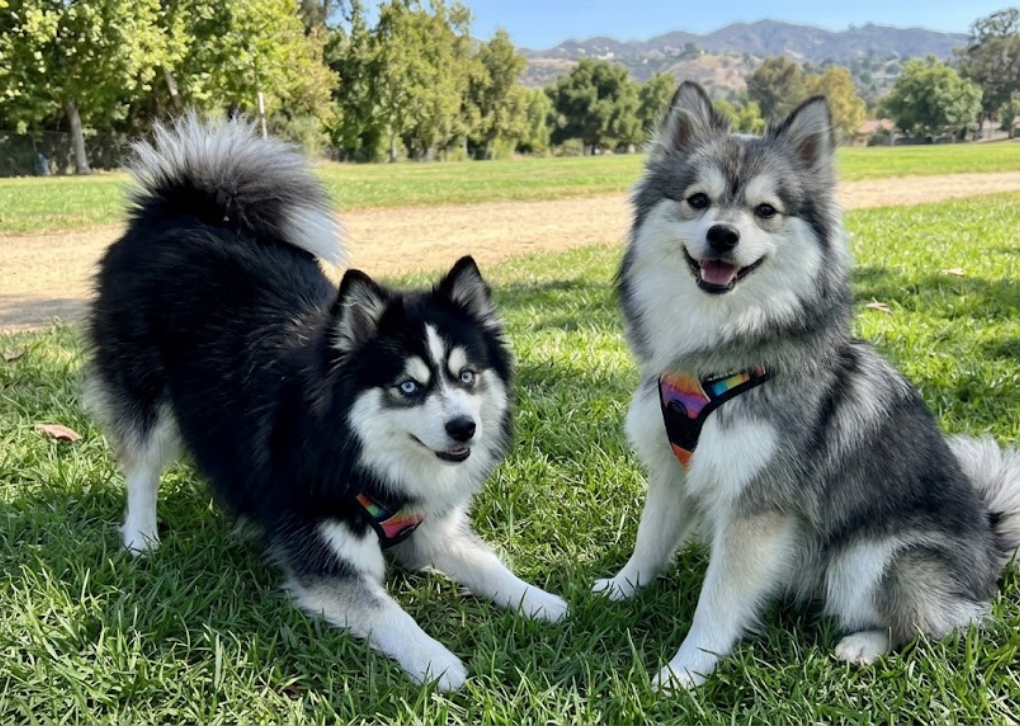
The Pomerusky is a charming designer dog commonly associated with the cross between a Pomeranian and a Siberian Husky. Often called a Pomsky, this distinctive canine combines the fluffy appearance of the Pomeranian with the striking facial features, expressive eyes, and energetic personality associated with the Husky.
Imagine a dog with a compact-looking body, a thick double coat, a fox-like expression, and an adventurous personality. That combination explains much of the fascination surrounding the Pomerusky. However, there is more to this hybrid than its attractive appearance.
These dogs can be intelligent, affectionate, playful, vocal, and occasionally stubborn. Their physical characteristics and personalities also vary considerably because they inherit different combinations of traits from two breeds with very different sizes and temperaments.
One important clarification: Pomerusky is not a universally standardized breed name. Most authoritative pet-care resources use Pomsky for the Pomeranian-Siberian Husky cross. This guide uses Pomerusky as the requested keyword while explaining the commonly recognized Pomsky crossbreed.
If you are considering bringing one home, understanding its genetics, exercise requirements, grooming needs, potential health problems, and training requirements will help you make a responsible decision.
1. Pomerusky Origins: Where Does This Unique Dog Come From?
The Pomerusky combines two well-known Spitz-type dogs: the Pomeranian and the Siberian Husky.
Although both belong to the broader Spitz family, their original purposes and physical characteristics are quite different.
The Pomeranian Parent
The Pomeranian originated from larger Spitz-type working dogs associated with the Pomerania region of Europe.
Pomeranians are recognized for their:
Small, compact bodies.
Thick, fluffy double coats.
Alert expressions and pointed ears.
Confident and sometimes fearless personalities.
Strong attachment to their human companions.
Despite their small size, Pomeranians often behave like much larger dogs. They are intelligent, alert, and naturally inclined to announce unfamiliar sounds or visitors.
The Siberian Husky Parent
The Siberian Husky was developed by the Chukchi people of northeastern Siberia for endurance sled work and companionship.
Huskies are known for their:
Athletic bodies and impressive stamina.
Dense double coats.
Blue, brown, or differently colored eyes.
Friendly but independent personalities.
Strong running instincts and considerable exercise requirements.
These characteristics explain why a Pomerusky can be both an affectionate household companion and an energetic dog that needs substantial daily stimulation.
When Did the Pomerusky Become Popular?
The modern Pomsky cross began attracting attention around 2012. Artificial insemination was used in early breeding programs because of the considerable size difference between Pomeranians and Siberian Huskies.
The American Pomsky Kennel Club describes the early development of the cross during this period. Its popularity increased as photographs and videos of Husky-like puppies circulated online.
PetMD+1
The important distinction is that popularity does not automatically establish a standardized breed. The Pomerusky remains a crossbreed rather than a universally recognized purebred dog.
2. Pomerusky Appearance and Physical Characteristics
One of the most interesting things about the Pomerusky is that no two dogs are guaranteed to look alike.
Some puppies inherit more characteristics from their Pomeranian parent, while others develop a noticeably Husky-like appearance. Even puppies from the same litter can have different coat patterns, facial structures, and body proportions.
Pomerusky Size and Weight
Adult size depends on genetics, breeding lines, and the particular combination of parental characteristics.
A commonly reported adult weight range is approximately 12–35 pounds (5.4–15.9 kg), although some individuals fall outside this range.
| Physical characteristic | Typical description |
|---|---|
| Weight | Approximately 12–35 pounds |
| Height | Approximately 10–15 inches |
| Body type | Compact to moderately athletic |
| Coat | Thick double coat |
| Ears | Usually upright and pointed |
| Tail | Often fluffy and curved |
| Eye colors | Brown, blue, amber, or mixed |
| Average lifespan | Approximately 12–15 years |
These figures are general estimates, not guaranteed breed standards. The PetMD breed guide reports a similar broad weight range and emphasizes the influence of both parents.
PetMD+2
Practical tip: Ask to see the adult parents and their actual weights before purchasing a puppy. Puppy size at eight weeks is not a reliable way to predict its final adult weight.
Common Coat Colors and Patterns
A Pomerusky can inherit numerous coat colors and markings.
Common possibilities include:
Black and white: A classic Husky-inspired appearance.
Gray and white: Often associated with traditional Siberian Husky markings.
Cream: A softer, lighter appearance.
Brown and white: A combination of warm and contrasting shades.
Red and white: An attractive variation influenced by parental genetics.
Solid-colored coats: Possible depending on inherited pigmentation genes.
The coat may be fluffy like a Pomeranian’s or denser and more Husky-like.
Eyes and Facial Features
The eyes are often among the most recognizable features of this cross.
Some dogs inherit blue eyes from their Husky ancestry, while others have brown or amber eyes. Heterochromia, in which each eye has a different color, is also possible.
However, blue eyes should never be treated as a guarantee of Husky ancestry or superior health. Appearance alone cannot establish a dog’s genetic background.
3. Pomerusky Temperament and Personality
The Pomerusky personality is one of the biggest reasons people find this crossbreed appealing.
These dogs can combine the Pomeranian’s confidence and alertness with the Husky’s sociable, energetic, and independent nature. The result is often an entertaining companion with a surprisingly big personality.
However, temperament varies between individual dogs.
Are Pomeruskies Affectionate?
Generally, yes.
Many Pomeruskies enjoy spending time with their owners, participating in family activities, and receiving attention. Some develop particularly strong attachments to one person.
They may enjoy:
Sitting beside their owners.
Playing interactive games.
Following family members around the home.
Learning tricks for rewards.
Participating in outdoor adventures.
However, affection should not be confused with an ability to tolerate being alone for extended periods.
Intelligence and Stubbornness
Both parent breeds are intelligent, which can make training rewarding.
Unfortunately, intelligence does not always translate into obedience.
A Pomerusky may quickly understand a command but decide that another activity is more interesting. This combination of intelligence and independence can challenge inexperienced owners.
Short training sessions, positive reinforcement, and consistent expectations generally work better than punishment or repetitive commands.
Are Pomeruskies Good Family Dogs?
They can be excellent family companions when properly socialized and supervised.
However, households with very young children should consider their individual dog’s temperament and physical size. Small or excitable dogs can become uncomfortable when children handle them roughly.
Teach children to:
Avoid pulling the dog’s tail or ears.
Never disturb it while eating or sleeping.
Approach calmly rather than chasing it.
Respect its resting space.
Interact under adult supervision.
A dog’s friendliness should never replace responsible supervision.
Do Pomeruskies Bark a Lot?
They can be vocal.
Pomeranians are known for alert barking, while Siberian Huskies frequently communicate through howling, whining, and other vocalizations.
A Pomerusky may inherit either or both tendencies.
Early training can help manage excessive barking, but owners should not expect every individual to become a completely quiet companion.
4. Pomerusky Exercise Requirements and Daily Activity
A Pomerusky may have a relatively compact body, but that does not necessarily mean it has low energy requirements.
The Husky influence can contribute to athleticism, curiosity, and a desire for regular activity.
Most individuals benefit from a combination of physical exercise and mental stimulation.
How Much Exercise Does a Pomerusky Need?
A reasonable starting routine for a healthy adult is approximately 45–60 minutes of daily activity, adjusted to its age, health, fitness, and individual energy level.
A practical daily schedule might include:
| Activity | Suggested duration |
|---|---|
| Morning walk | 20 minutes |
| Interactive play | 10–15 minutes |
| Evening walk | 20 minutes |
| Mental enrichment | 10 minutes |
Puppies need shorter, age-appropriate play sessions rather than forced endurance exercise.
Avoid strenuous exercise during extreme heat, particularly because the dense double coat can make overheating a concern.
Best Activities for a Pomerusky
Consider incorporating these activities into its routine:
Walking: Provides physical activity and opportunities to explore.
Fetch: Encourages movement and interaction.
Puzzle toys: Challenge problem-solving abilities.
Scent games: Encourage natural sniffing and exploration.
Obedience training: Combines mental engagement with useful life skills.
Supervised outdoor play: Provides opportunities to burn energy safely.
Secure fencing and reliable leash management are particularly important. Some dogs inherit a strong desire to chase moving animals or explore beyond their familiar surroundings.
5. Pomerusky Grooming and Coat Maintenance
Grooming is an important part of responsible Pomerusky ownership.
Both parent breeds have double coats, meaning these dogs can develop substantial seasonal shedding. Their thick fur requires consistent maintenance to prevent tangles, trapped debris, and uncomfortable matting.
How Often Should You Brush a Pomerusky?
Aim for brushing approximately three to four times per week, increasing the frequency during heavier shedding periods if necessary.
Useful grooming equipment includes:
A suitable slicker brush.
A metal comb for checking deeper coat layers.
A dog-specific detangling product.
Nail clippers or a pet nail grinder.
Dog-specific shampoo.
Brush gently and work through the coat in sections. Pay particular attention to areas behind the ears, under the legs, and around the tail.
Bathing Requirements
Most dogs do not require frequent baths unless they become dirty or develop an odor.
A bath approximately every four to eight weeks may suit some individuals, but the correct frequency depends on coat condition and lifestyle.
Use a gentle canine shampoo and rinse thoroughly. Moisture trapped inside a dense coat can contribute to skin irritation, so drying should be thorough.
Do Pomeruskies Shed?
Yes. Shedding is an important consideration.
Some dogs shed moderately throughout the year and more heavily during seasonal coat changes.
If you want a dog that leaves very little hair around your home, this crossbreed may not be an ideal choice.
Should You Shave a Pomerusky?
Generally, shaving a healthy double coat down to the skin is not recommended simply to reduce shedding or make the dog cooler.
The coat provides insulation and helps protect the skin. Instead, maintain regular brushing and discuss significant coat problems with a professional groomer or veterinarian.
6. Pomerusky Health Problems and Veterinary Considerations
A responsible owner should understand the potential health concerns associated with both parent breeds.
Crossbreeding does not automatically eliminate inherited diseases. A mixed-breed dog can inherit genetic vulnerabilities from either side of its family.
Potential concerns include the following.
1. Hip Dysplasia
Hip dysplasia occurs when the hip joint develops abnormally, potentially leading to discomfort, reduced mobility, and arthritis.
Possible warning signs include:
Difficulty getting up.
Reluctance to jump.
Reduced interest in exercise.
Changes in walking or running.
Hind-leg stiffness.
Veterinary examination and appropriate imaging can help establish a diagnosis.
2. Patellar Luxation
Patellar luxation occurs when the kneecap moves out of its normal position.
This condition is particularly relevant when considering small-dog ancestry.
Some affected dogs occasionally skip or hold up one rear leg before returning to normal movement. More severe cases may require veterinary treatment or surgery.
3. Eye Conditions
Eye health deserves attention because both parent breeds can have inherited eye conditions.
Regular veterinary examinations can identify abnormalities early.
Breeders should provide appropriate eye-screening documentation for their breeding dogs rather than relying on statements that a puppy looks healthy.
4. Dental Problems
Smaller dogs can be susceptible to dental crowding and periodontal disease.
Establish a dental-care routine early:
Brush teeth regularly with dog-specific toothpaste.
Arrange professional dental examinations.
Monitor gum condition and breath.
Avoid using human toothpaste.
5. Skin and Coat Problems
Thick coats can hide irritation, parasites, and skin abnormalities.
Check regularly for redness, excessive scratching, unpleasant odors, hair loss, or unusual skin changes.
How Long Does a Pomerusky Live?
A typical estimated lifespan is around 12–15 years, although individual longevity depends on genetics, preventive healthcare, nutrition, exercise, and overall living conditions.
PetMD+2
Recommended Preventive Healthcare
A responsible care plan should include:
Routine veterinary examinations.
Vaccinations according to veterinary recommendations.
Appropriate parasite prevention.
Dental examinations.
Healthy weight management.
Regular physical activity.
Breed-relevant genetic and health screening.
For additional confidence, request documented health evaluations of both parents. The Siberian Husky Club of America, for example, publishes specific guidance covering eye examinations, hip evaluation, and relevant genetic testing for its breed.
Siberian Husky Club of America, Inc
7. Pomerusky Training and Socialization
Training should begin as early as possible, ideally during puppyhood.
The Pomerusky can inherit the intelligence of both parent breeds, but it may also develop independence, distractibility, and stubborn habits. Early structure makes everyday life considerably easier.
Start With Basic Obedience
Prioritize these commands:
Sit: Helps establish basic impulse control.
Stay: Encourages patience and self-control.
Come: Builds an important safety behavior.
Leave it: Helps prevent unwanted interactions with objects.
Down: Encourages calm behavior.
Heel: Improves leash manners.
Use treats, praise, toys, and short training sessions to encourage good behavior.
Avoid harsh corrections. They can create anxiety and undermine the trust between a dog and its owner.
Socialization Is Essential
Introduce your puppy gradually to different environments, people, sounds, surfaces, and appropriately vaccinated, friendly dogs.
Positive experiences during early development can help reduce fearfulness and improve confidence.
Do not overwhelm a puppy with too many unfamiliar experiences at once. Allow it to approach new situations at its own pace.
Can a Pomerusky Be Left Alone?
These dogs may become distressed when separated from their owners for extended periods, particularly if they have not learned to spend time independently.
Gradually teach your dog that short periods alone are safe. Provide appropriate toys, a comfortable resting area, and predictable routines.
If signs of separation anxiety develop, consult a veterinarian or qualified canine behavior professional.
8. Pomerusky Diet and Nutrition Requirements
Nutrition has a direct influence on a Pomerusky’s energy, coat quality, body condition, and general well-being.
Because the crossbreed can vary considerably in size, feeding amounts should be based on the individual dog’s age, weight, activity level, and nutritional requirements.
What Should a Pomerusky Eat?
Choose a complete and balanced commercial dog food appropriate for its life stage.
Look for:
High-quality, clearly identified protein sources.
Appropriate fat content.
Essential fatty acids.
Vitamins and minerals.
Adequate dietary fiber.
Nutritional suitability for its age and size.
Puppies require growth-appropriate nutrition, while adult dogs generally need a maintenance diet.
Senior dogs may benefit from adjustments based on activity level, body condition, and veterinary recommendations.
Feeding Schedule
A general feeding schedule is:
| Age | Typical feeding frequency |
|---|---|
| 8–12 weeks | 3–4 meals daily |
| 3–6 months | 3 meals daily |
| 6–12 months | 2–3 meals daily |
| Adult | Usually 2 meals daily |
| Senior | Based on individual needs |
These are general guidelines rather than strict nutritional rules.
Avoid excessive treats and table scraps. Maintaining a healthy body weight is especially important for dogs that may inherit joint vulnerabilities.
Fresh drinking water should always be available.
9. Is a Pomerusky Suitable for Apartment Living?
Yes, a Pomerusky can adapt to apartment living, provided its exercise and behavioral needs are met.
A large backyard is not necessarily essential. However, access to regular walks, play opportunities, and mental enrichment is important.
Before choosing this dog for an apartment, consider:
Potential advantages:
Manageable physical size compared with many larger breeds.
Strong potential for human companionship.
Adaptability to indoor living.
Enjoyment of interactive games and activities.
Potential challenges:
Vocal behavior may disturb neighbors.
Dense fur requires regular cleaning and grooming.
High energy can lead to destructive behavior without stimulation.
Separation difficulties may become problematic.
Secure outdoor exercise arrangements are necessary.
A Pomerusky living in an apartment still needs an active lifestyle. A small living space should never mean a sedentary dog.
10. Pomerusky Puppies: How to Choose a Responsible Breeder
Finding a healthy puppy requires more research than choosing the cutest photograph online.
Because this crossbreed does not have a universally standardized appearance, misleading advertisements and exaggerated promises can complicate the buying process.
Questions to Ask Before Buying
Ask the breeder:
Can I meet the puppy’s mother and see information about the father?
What are the parents’ adult weights and health histories?
Have the parents undergone relevant health screenings?
Can you provide veterinary records and vaccination information?
Has the puppy received appropriate early socialization?
What health guarantee and post-purchase support do you provide?
What is the puppy’s documented parentage?
A responsible breeder should answer these questions openly.
Watch Out for These Warning Signs
Be cautious if a seller:
Guarantees that every puppy will remain extremely small.
Advertises blue eyes as a guarantee of superior quality.
Refuses to provide veterinary records.
Cannot explain the puppy’s parentage.
Offers immediate delivery without appropriate preparation.
Keeps puppies in visibly poor conditions.
Pressures buyers to make deposits quickly.
The American Pomsky Kennel Club publishes a breeder code of ethics and guidelines concerning responsible breeding practices. These resources can provide useful questions to ask, although membership or certification should not replace independent verification.
APKC+1
Why Parent Size Matters
A Pomeranian and a Siberian Husky have dramatically different body sizes.
That difference makes responsible breeding particularly important. Early-generation Pomskies have historically been produced using artificial insemination, with a Siberian Husky female and a Pomeranian male in the original breeding approach.
Never assume that a puppy will stay tiny simply because one parent is small.
Adoption Is Another Option
Consider contacting animal shelters and rescue organizations.
Some mixed-breed dogs may be listed under different names, so searching for Pomeranian-Husky mixes, Pomskies, and similar descriptions can broaden your options.
Adoption also gives prospective owners an opportunity to assess an older dog’s established size and personality.
11. Pomerusky Ownership Costs and Long-Term Responsibilities
The purchase price is only one part of the financial commitment.
A responsible owner should budget for the dog’s entire life rather than focusing exclusively on the initial payment.
| Expense category | What to consider |
|---|---|
| Initial purchase or adoption | Breeder price, adoption fees, transport |
| Veterinary care | Examinations, vaccinations, preventive treatment |
| Food | Complete and balanced nutrition |
| Grooming | Brushes, shampoos, professional grooming |
| Training | Classes, equipment, professional support |
| Accessories | Leash, harness, bedding, toys |
| Emergency care | Unexpected illness or injury |
Prices vary considerably depending on location, breeder reputation, veterinary costs, and the dog’s individual needs.
In Pakistan, prospective owners should also consider the availability of experienced veterinarians, suitable grooming services, reliable pet-food suppliers, and safe exercise environments.
Is an Expensive Pomerusky Puppy Always Better?
No.
A high price does not guarantee healthy genetics, responsible breeding, or an excellent temperament.
Prioritize verified parentage, health documentation, appropriate puppy care, and breeder transparency over rare colors or fashionable appearance.
12. Pomerusky vs. Pomeranian vs. Siberian Husky
Understanding the differences between the three can help determine which dog best matches your lifestyle.
| Characteristic | Pomerusky | Pomeranian | Siberian Husky |
|---|---|---|---|
| Breed type | Crossbreed | Purebred | Purebred |
| Size | Variable | Small | Medium |
| Coat | Thick double coat | Thick double coat | Thick double coat |
| Energy | Moderate to high | Moderate to high | High |
| Intelligence | High | High | High |
| Vocal tendencies | Variable | Often vocal | Often howls |
| Grooming | Regular | Regular | Regular |
| Predictability | Lower | Higher | Higher |
| Exercise needs | Individual-dependent | Moderate | High |
The biggest distinction is predictability.
Purebred dogs generally have established breed standards and more predictable physical characteristics. A Pomerusky can inherit a wider combination of traits, making individual assessment particularly important.
13. Frequently Asked Questions About Pomerusky Dogs
1. Is a Pomerusky a real dog breed?
A Pomerusky is a real type of dog, but it is generally classified as a designer crossbreed rather than an established purebred breed. It combines a Pomeranian and a Siberian Husky.
The commonly used name is Pomsky. Major kennel clubs such as the American Kennel Club do not recognize it as an established purebred breed with its own official breed standard.
2. How big does a Pomerusky get when fully grown?
Most commonly reported adult Pomeruskies weigh approximately 12–35 pounds and stand around 10–15 inches tall.
However, these measurements are estimates. Genetics, parental size, and breeding combinations can produce considerably different results.
Ask for the adult weights of both parents before making a purchasing decision.
3. Are Pomeruskies good family dogs?
Yes, many Pomeruskies can become affectionate and playful family companions.
They generally benefit from early socialization, consistent training, and appropriate interaction with children and other pets.
However, individual temperament matters. Families with very young children should supervise interactions and teach children how to handle dogs respectfully.
4. Do Pomeruskies shed a lot?
Yes, shedding can be substantial because both parent breeds have dense double coats.
Regular brushing, particularly during seasonal shedding periods, helps remove loose hair and prevent tangles.
They are not considered hypoallergenic dogs, so they may not be suitable for households where significant dog allergies are a concern.
5. How long does a Pomerusky live?
The commonly reported life expectancy is approximately 12–15 years.
Good nutrition, regular exercise, dental care, preventive veterinary examinations, and responsible breeding can contribute to a healthier life.
However, no breeder or owner can guarantee a particular lifespan.
Conclusion: Is a Pomerusky the Right Dog for You?
The Pomerusky is an appealing companion that brings together the distinctive appearance and personality of two popular Spitz-type breeds.
Its fluffy coat, expressive eyes, intelligence, playful behavior, and affectionate nature make it an attractive option for people looking for an energetic family companion.
But appearance should never be the only reason to choose one.
These dogs need consistent grooming, appropriate exercise, positive training, early socialization, and long-term veterinary care. Their adult size, personality, and physical appearance can also be less predictable than those of established purebred dogs.
Before bringing a Pomerusky home, take these five steps:
Research the health and temperament of both parent breeds.
Find a responsible breeder or investigate reputable adoption organizations.
Request documented parental health evaluations and puppy veterinary records.
Evaluate your available time, living arrangements, and financial resources.
Prepare a realistic long-term plan for grooming, exercise, nutrition, and veterinary care.
The best dog is not necessarily the smallest, fluffiest, or most expensive puppy. It is the one whose needs you can consistently meet throughout its life.
Research References and Further Reading
For readers who want to investigate the subject beyond this guide, the following resources offer useful information:
PetMD: Pomsky Dog Breed Health and Care — Breed characteristics, exercise, and everyday care.
American Pomsky Kennel Club: History of a Pomsky — Background on the development of the crossbreed.
American Pomsky Kennel Club: Code of Ethics — Breeding standards and responsible ownership considerations.
Siberian Husky Club of America: Health Statement — Health screening considerations for Siberian Huskies.
Kennel Club of Pakistan: Responsible Breeding — Guidance on ethical breeding, animal welfare, and puppy care.
Petfinder: Pomsky Breed Information — General breed characteristics and adoption information.
Editorial note: Pomerusky is used as the target search term, while Pomsky is the more widely established name for the Pomeranian-Siberian Husky cross. Physical measurements, behavior, and health risks should be treated as individual-dependent rather than guaranteed breed characteristics.