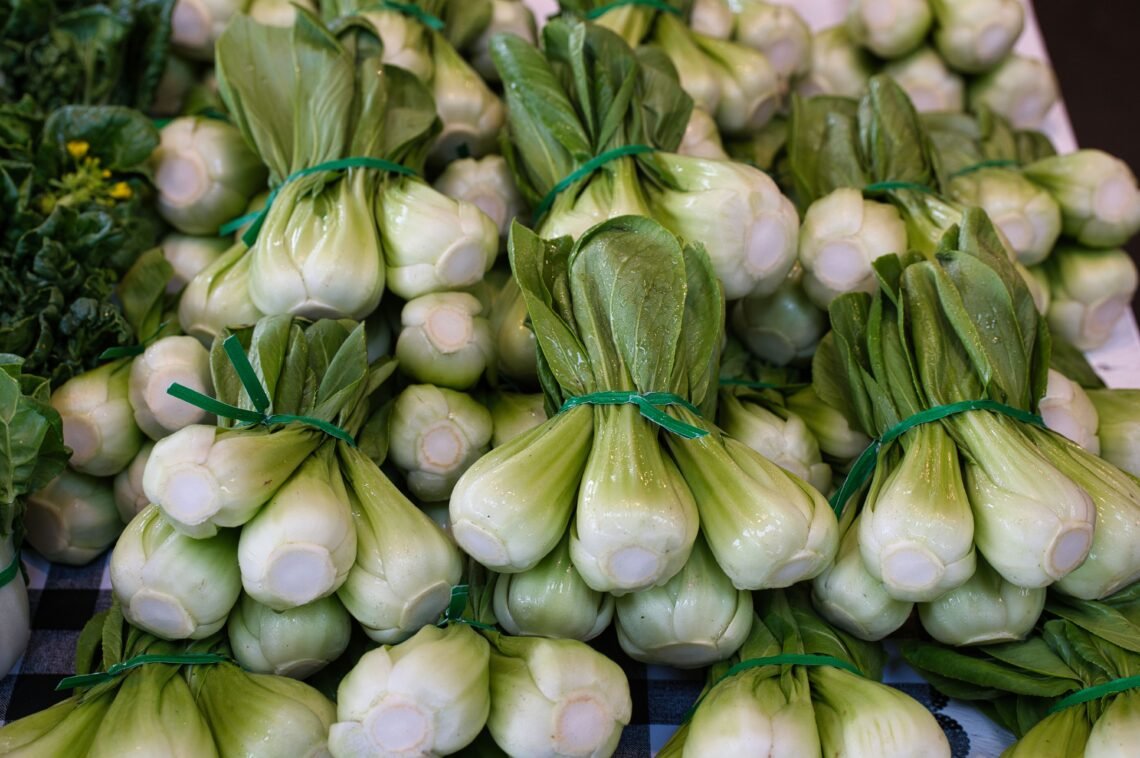
Yalla choy is one of those search terms that looks simple until you try to verify it. Recent web pages use the name for at least three different things: water spinach, choy sum, and a supposed hybrid slang or tea expression. Those are not minor spelling differences. They point to different plants, different culinary traditions, and, in the United States, potentially different legal rules.
The safest answer is also the most useful: Yalla choy is not a botanical identity you should rely on by itself. Authoritative agricultural sources identify water spinach as Ipomoea aquatica and choy sum as Brassica rapa var. parachinensis; they are unrelated vegetables with visibly different growth habits.
Quick Answer: What Is Yalla Choy?
If you searched the phrase after seeing it in an article, recipe, market listing, or social post, use context before assuming a meaning.
- If the plant has long, hollow stems and arrow-shaped or variable green leaves, the writer may mean water spinach, also called ong choy or kangkong: Ipomoea aquatica.
- If it has upright green flowering stalks, oval leaves, and small yellow flowers, the writer may mean choy sum, or Chinese flowering cabbage: Brassica rapa var. parachinensis.
- If there is no plant at all, some recent sites use the term as informal internet slang or a tea-culture label. Those explanations are inconsistent and should be treated as emerging web usage, not established etymology.
That distinction matters. It prevents a recipe error, a gardening mistake, and—in the case of water spinach in the U.S.—a possible regulatory problem.
Why Yalla Choy Is So Confusing Online
The current search landscape does not agree on a single definition. One gardening page explicitly equates the phrase with water spinach. Another calls it a Brassica related to choy sum. Other pages describe a modern cross-cultural expression built around Arabic “yalla,” tea, vegetables, or internet slang.
That contradiction is the key fact many summaries miss. When a term has no stable identity across sources, the responsible approach is not to select the most repeated answer. It is to verify the underlying entity.
The Water Spinach Interpretation
Water spinach is a tropical or subtropical aquatic and semiaquatic vegetable in the morning glory family, Convolvulaceae. University of Georgia Extension describes Ipomoea aquatica as a freshwater plant with numerous common names, while the U.S. Geological Survey notes its hollow stems, variable leaves, creeping or floating habit, and ability to reproduce from fragments.
This interpretation is plausible when a page mentions ong choy, kangkong, hollow stems, wet soil, ponds, ditches, or vigorous vine-like growth. It is not plausible merely because the word “choy” appears in the search phrase.
The Choy Sum Interpretation
Choy sum is a completely different crop. UF/IFAS Extension classifies it in the mustard family, Brassicaceae, as Brassica rapa var. parachinensis (with related taxonomic treatments also used). It is an annual, cool-season leafy vegetable grown for tender flowering stems bearing leaves and yellow flowers.
If a page describes an upright plant roughly 8–16 inches tall, shallow roots, green stems, and small yellow flowers, it is describing choy sum—not water spinach.
The Slang or Tea Interpretation
A third cluster of recent pages frames Yalla choy as a playful multilingual expression. Here, the first element is easier to verify: Arabic yalla is a colloquial interjection meaning “come on,” “let’s go,” or “hurry up.”
The second element is much less secure in this exact phrase. Some articles connect it to tea; others to Cantonese food vocabulary or simply to a catchy sound. Because those explanations conflict, presenting one as a proven historical origin would overstate the evidence.
Is Yalla Choy the Same as Water Spinach?
Not as a verified universal rule. Some current web pages use Yalla choy as another name for water spinach, but authoritative references for Ipomoea aquatica use established names such as water spinach and document other vernacular names without establishing this newer phrase as a standard taxonomic label.
If you are buying a plant, seed, or fresh vegetable, ask for the scientific name. For water spinach, that is Ipomoea aquatica. This one step is more reliable than matching a loose English nickname.
How to Recognize Water Spinach
Look for a combination of traits rather than one feature:
- long, often hollow stems;
- leaves that may be arrowhead-shaped or otherwise variable;
- a sprawling, creeping, or floating habit;
- strong adaptation to wet ground or freshwater environments;
- morning-glory-like flowers when the plant blooms.
In the kitchen, ong choy is commonly stir-fried quickly. A traditional family recipe published by Made With Lau, for example, pairs it with fermented bean curd, garlic, ginger, and chile and emphasizes the vegetable’s long leafy stems.
Is Yalla Choy the Same as Choy Sum?
Again, not automatically. One visible strand of search content identifies the term with a Brassica vegetable, but choy sum already has a well-documented identity: Chinese flowering cabbage, Brassica rapa var. parachinensis.
Choy sum is grown primarily for its tender flowering shoots. UF/IFAS notes that all above-ground parts are edible and that the crop typically develops small yellow flowers at the tops of shoots.
How Choy Sum Differs From Water Spinach
The two vegetables are easy to separate once you know what to inspect. Choy sum is an upright Brassica with flowering stalks and yellow blossoms; water spinach is an aquatic or semiaquatic morning-glory relative with hollow, trailing stems. Their botany, climate preferences, and regulatory status are not interchangeable.
That is why recipes or gardening guides using Yalla choy without a scientific name deserve a second look.
Nutrition and Health Claims: Identify the Vegetable First
Search results often attach broad claims such as “superfood,” “detox,” improved eyesight, heart protection, or anti-inflammatory effects to ambiguous plant names. That is poor evidence practice. Nutrient composition and research findings belong to a specific food, not to an uncertain keyword.
For choy sum, UF/IFAS describes the vegetable as particularly rich in folate and carotenoids and discusses sulfur-containing compounds associated with Brassica vegetables. The same source also notes research on antioxidant measurements after steaming.
Water spinach is also consumed as a leafy vegetable and has a distinct nutritional and agricultural literature, but you should not simply copy choy sum values onto it—or vice versa. University of Georgia Extension treats Ipomoea aquatica as its own crop with separate botany, production considerations, and food value.
The practical rule is simple: confirm the species before repeating a nutrition number or health claim. For consumers, that improves accuracy. For publishers, it is a basic E-E-A-T safeguard.
How to Cook It Without Guessing
If a seller labels a bunch Yalla choy, inspect the vegetable before choosing a cooking method.
For water spinach, quick high-heat cooking works well because the leaves wilt rapidly while the hollow stems retain texture. Chinese preparations commonly use garlic, fermented bean curd, or savory sauces; both Made With Lau and The Woks of Life show fast wok-based methods for ong choy.
For choy sum, blanching, steaming, soups, and stir-frying are all established options. UF/IFAS specifically notes stir-frying with garlic or dried chile and use in salads and soups.
A good home-cooking workflow is:
- Identify the species or established market name.
- Wash the leaves and stems thoroughly and remove damaged tissue.
- Separate thicker stems from leaves if their cooking times differ.
- Cook only until the stems are tender-crisp and the leaves are just wilted.
- Season after tasting; tender Asian greens can be overwhelmed by excessive sauce.
Those techniques align with the quick-cooking approaches documented for both ong choy and choy sum.
Growing Yalla Choy? Check the Scientific Name Before Planting
This is where the naming problem becomes more than semantic.
If the seed is actually choy sum, UF/IFAS describes it as a cool-season crop, with 15–25°C (59–77°F) temperatures favoring strong stalks and leaf growth. It is cultivated like a fast Brassica, not like an aquatic vine.
If the seed is water spinach, the picture changes dramatically. The plant thrives in moist to aquatic conditions, spreads readily from stem fragments, and can form dense mats. U.S. authorities consider its invasive potential significant.
A Critical U.S. Legal Note
As of August 2026, Ipomoea aquatica remains listed in 7 CFR §360.200 as a Federal noxious weed under the names water-spinach and swamp morning-glory. USDA APHIS states that permits are required for the importation and/or interstate movement of Federal noxious weeds. State rules can add further restrictions or permitting requirements.
So if a seed listing markets Yalla choy as water spinach and promises effortless pond or backyard cultivation in the United States, do not plant first and research later. Verify federal and state requirements before buying, moving, or propagating it.
How to Tell What a Seller or Article Means
You can usually resolve the ambiguity in less than a minute. Look for the strongest clue, then verify it against a scientific name.
Likely water spinach
- scientific name: Ipomoea aquatica;
- terms: ong choy, kangkong, water spinach;
- hollow, trailing stems;
- wet or aquatic growing conditions.
Likely choy sum
- scientific name: Brassica rapa var. parachinensis;
- terms: choy sum, choi sum, Chinese flowering cabbage;
- upright green stems;
- small yellow flowers;
- cool-season Brassica production.
Likely slang, branding, or a modern cultural label
- no botanical name;
- social-media, gaming, café, tea, or lifestyle context;
- explanations centered on Arabic “yalla” plus a disputed interpretation of “choy.”
If none of those clues appears, the source has not given you enough information to identify the subject confidently.
What the Search Results Get Wrong—and How to Evaluate Them
The biggest problem with Yalla choy content is entity collapse: several unrelated ideas are merged under one keyword because they sound compatible. A page may borrow the hollow stems of water spinach, the Brassica taxonomy of choy sum, and the “let’s go” meaning of Arabic yalla, then present the mixture as one coherent tradition. The contradictory current search results show exactly this pattern.
That creates polished prose but weak factual reliability.
Before trusting a page, check whether it does three things: names a scientific species when discussing a plant, cites an agricultural or botanical authority for identification, and distinguishes documented usage from speculation. If it makes medicinal claims, look for evidence tied to the exact species and preparation rather than generic statements about leafy greens.
For ambiguous or fast-emerging search terms, uncertainty disclosed clearly is a mark of expertise, not a weakness.
FAQ About Yalla Choy
What Does Yalla Choy Mean?
There is no single well-verified meaning across current search results. Some pages use it for water spinach, some for choy sum or another Asian green, and others for informal slang or a tea-related concept. The most reliable interpretation depends on context and, for plants, the scientific name.
Is Yalla Choy a Real Vegetable?
The phrase is used online as a vegetable label, but that does not make it a precise botanical name. If the product is meant to be water spinach, look for Ipomoea aquatica. If it is choy sum, look for Brassica rapa var. parachinensis.
Can I Eat Yalla Choy Raw?
Do not make that decision from the ambiguous name alone. First identify the actual vegetable and follow handling advice appropriate to that crop and product. Choy sum is used in salads as well as cooked dishes according to UF/IFAS, while water spinach is widely used in cooked preparations such as stir-fries.
Can I Grow Yalla Choy at Home?
Possibly—but identify the species first. Choy sum is a conventional cool-season Brassica. Water spinach is Ipomoea aquatica, which is federally regulated as a noxious weed in the United States; importation and interstate movement are subject to USDA APHIS permitting rules, with state requirements potentially adding more restrictions.
Is Yalla Choy an Arabic Phrase?
The yalla portion has a clear Arabic basis and is used colloquially for meanings such as “come on” or “let’s go.” The complete two-word expression is much less settled: recent web pages disagree over whether “choy” points to tea, vegetables, or a playful internet suffix. Treat claims of an ancient or universally recognized phrase with caution unless a credible linguistic source documents them.
Final Takeaway
The smartest way to understand Yalla choy is not to memorize one convenient definition. Identify the entity behind the label. If it is a vegetable, look for the scientific name, stem structure, flowers, and growing habit. If it appears in a social or tea context, recognize that the modern phrase has competing explanations and a less certain history.
For shoppers, cooks, and gardeners, the next step is practical: check the label for Ipomoea aquatica or Brassica rapa var. parachinensis before you buy, cook, or plant anything. For publishers, cite the underlying species and clearly label uncertain etymology. That small amount of verification turns a confusing keyword into accurate, genuinely useful information.