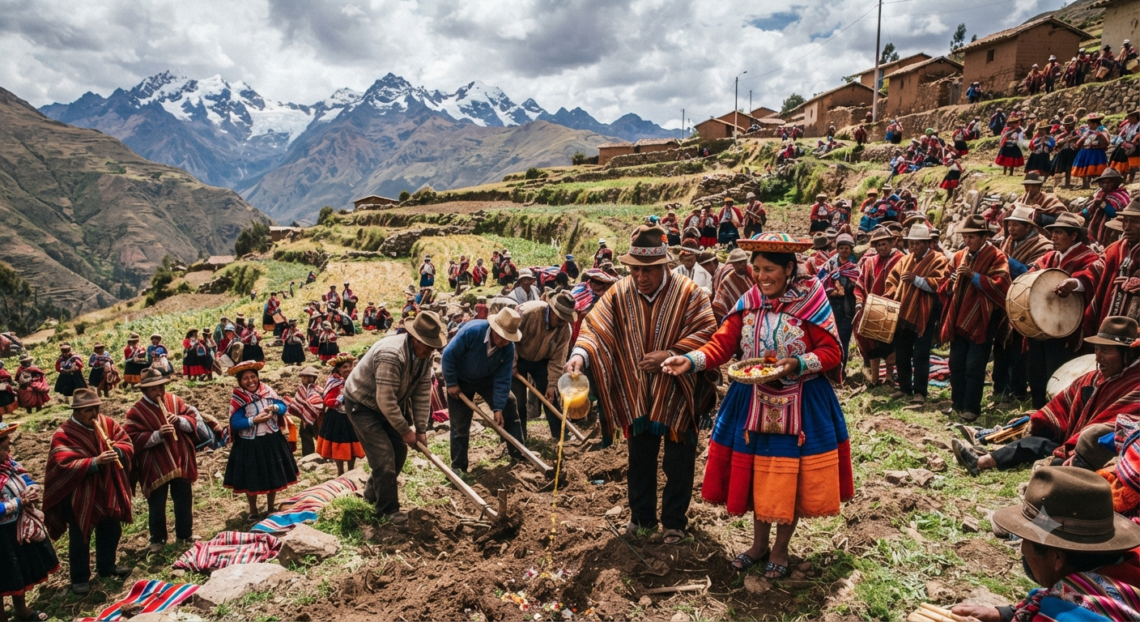
Uncuymaza is an unusual term that has begun appearing across blogs, search results, and branded web pages, yet it does not have one universally accepted meaning. The strongest verifiable interpretation is that it functions as a distinctive digital name associated with a general-interest content website, while many broader claims about ancient philosophy, Indigenous heritage, art, health, travel, and technology remain unsupported or contradictory.
That distinction matters. A reader searching the word may encounter polished articles that sound authoritative but describe entirely different things. Rather than repeating those claims, this guide separates what can be confirmed from what appears to be speculation, explains why the term is spreading, and gives readers a practical framework for judging any page that uses it.
What Is Uncuymaza? The Evidence-Based Answer
At present, the clearest identifiable use of Uncuymaza is as the name of a multi-topic online publishing platform. Its homepage describes the site as a destination for technology, lifestyle, entertainment, online trends, tutorials, and practical guides, while its About page presents it as a growing platform created by writers, researchers, and content creators. These are the website’s own descriptions, not independent certification of its quality or authority.
The term is therefore best understood through three layers. Each layer reflects a different part of its present online identity:
- A proper name: It identifies a website or online publishing brand.
- An emerging digital keyword: Other publishers are creating explanatory pages around it because people are searching for the term.
- An unsettled neologism: It may acquire additional meanings through use, but no stable, independently documented definition has yet become dominant.
This answer is less dramatic than calling the term an ancient tradition or revolutionary technology. It is also more honest. When evidence is thin, precision creates more value than storytelling.
Why Does Uncuymaza Have So Many Conflicting Meanings?
Search results currently present a striking range of interpretations. One site refers to it as a modern digital platform, another site uses the term as a flexible buzzword, while still others describe it as an Andean philosophy, cultural art style, dietary supplement, travel destination, and even artificial intelligence-powered game development framework.
These meanings cannot all be objectively true according to traditional etymology and historical definition. Therefore, the keyword clearly undergoes reinterpretation in the search results to fit different ideological and creative agendas.
A Blank-Slate Word Invites Reinvention
An established word has decades or centuries of objective definition, including dictionary definitions, historical usage notes, and etymological roots. A newly invented word or a rarely used terminology regains popularity, so the expectations of what it should mean are not set in stone. Writers can claim that this word signifies concepts from around the world: balanced lifestyle, artistic self-expression, health, innovation, and tribal wisdom. All these interpretations can be partially true if supported by credible researchers. Moreover, brand owners use such under-defined terms to invent new words, and communities of practice give them unique meanings. However, presenting speculative and unsubstantiated etymology as factual information creates misleading narratives about a concept’s true origins, which can be considered unethical if done intentionally.
Search-Driven Publishing Can Create an Echo Chamber
Low-competition keywords attract publishers because a well-optimized page may rank without competing against major reference sites. Once several articles repeat a claim, later writers may treat repetition as proof, even when every page traces back to another unsourced blog.
This creates an information loop. A statement becomes visible, visibility creates apparent credibility, and apparent credibility encourages further repetition. Readers should therefore ask whether an article cites a dictionary, archive, academic paper, Indigenous institution, official organization, named expert, or primary document—not merely another SEO blog.
Is Uncuymaza an Ancient Andean or Quechua Concept?
There is currently no reliable evidence in the reviewed sources establishing Uncuymaza as a recognized ancient Andean philosophy, a traditional Quechua expression, or a historically documented Indigenous worldview. Pages making that claim typically describe themes such as reciprocity, harmony, community, nature, and balance, but they do not provide verifiable linguistic records, ethnographic citations, historical texts, or testimony from identified Andean knowledge holders.
Those themes are genuinely important in Andean cultures, but authoritative sources use documented concepts. UNESCO material on the Qhapaq Ñan identifies ayni, duality, and systems of reciprocity as principles within Andean worldviews. The Smithsonian’s National Museum of the American Indian also explains ayni as an ongoing cycle of reciprocal labor or exchange with roots reaching back to pre-Inka communities.
That difference is essential. A modern author may use a coined word as a personal metaphor for balance, but that does not automatically make the word ancestral.
Why Cultural Attribution Requires Extra Care
Attaching an undocumented term to Indigenous heritage can unintentionally erase real language and replace specific traditions with a generalized “mystical” aesthetic. It may also lead readers to cite invented material in schoolwork, journalism, branding, tourism, or commercial products.
Responsible content should:
- Name the exact language, region, community, or source when making cultural claims.
- Prefer Indigenous institutions, museums, academic research, and primary testimony.
- Distinguish modern interpretation from historical tradition.
- Avoid presenting decorative imagery as evidence of cultural origin.
- Correct earlier claims when stronger evidence becomes available.
Absence from a limited online search cannot prove that a word has never been used locally. It does mean that publishers should not label it ancient or culturally authoritative without stronger documentation.
Uncuymaza as a Digital Publishing Platform
The current website using this name positions itself as a broad information hub rather than a specialist publication. Its stated categories include technology insights, app reviews, online tools, entertainment updates, lifestyle tips, tutorials, and trending subjects. It also claims to emphasize easy navigation, regular updates, research-based writing, and user-focused content.
For readers, the broad scope has both advantages and limitations. A general-interest site can be useful for discovering topics or reading beginner-friendly overviews, but breadth alone does not demonstrate expertise. A strong article on software, health, finance, law, or cultural history requires different kinds of qualifications and evidence.
Readers should therefore evaluate the individual page rather than relying on the brand description alone. The usefulness of one article does not automatically establish the reliability of every other subject covered by the website.
A Practical Quality Checklist
Before relying on a page, look for the following signals:
- Named authorship: Is a real author identified, with relevant experience or a transparent biography?
- Primary sourcing: Are important claims linked to official documents, original research, recognized institutions, or direct interviews?
- Publication history: Does the page show a publication date, meaningful updates, and corrections?
- Editorial transparency: Can readers understand how content is researched, reviewed, and amended?
- Clear scope: Does the writer separate established facts, reported claims, opinion, and speculation?
- Contact and policy pages: Are ownership, privacy practices, advertising relationships, and editorial responsibilities explained?
- Proportionate confidence: Does the language become cautious when the evidence is uncertain?
A polished layout, high word count, or confident tone cannot substitute for these signals. Trust should come from verifiable expertise and evidence, not presentation alone.
Uncuymaza vs. UncutMaza: Do Not Confuse the Spellings
Uncuymaza and UncutMaza are not the same spelling, and searchers should not assume they refer to the same service. The similar-looking name “UncutMaza” has been associated in search results with adult-oriented streaming and download websites, including pages that raise concerns about redirects, ownership transparency, and unauthorized content.
This distinction matters for user safety and brand reputation. A mistyped address or careless link could take a reader to an unrelated site with very different content.
Use these precautions:
- Check every letter in the domain before opening it.
- Avoid downloading unknown files or browser extensions.
- Do not enter payment details or account credentials on an unfamiliar copycat domain.
- Scan suspicious links with a reputable security service.
- Leave immediately if a page triggers aggressive redirects, pop-ups, or unexpected adult material.
No website should be declared safe merely because its name appears in search results. Safety depends on the exact domain, current ownership, page behavior, data practices, and the action a visitor intends to take.
How the Term Can Be Used in Branding and Creative Work
As a coined or uncommon name, Uncuymaza has several branding advantages. It is distinctive, visually memorable, and broad enough to support a publication, creative studio, community project, digital product, or fictional concept.
Its ambiguity is also a liability. Prospective users may not know how to pronounce it, what category it belongs to, or whether it is connected to similarly spelled websites. Any new project using the term would need a clear descriptor, consistent visual identity, and a concise definition repeated across its homepage, metadata, social profiles, and press materials.
A responsible brand strategy should include:
- A trademark search in every market where the name will be used.
- Domain and social-handle checks for exact and confusingly similar spellings.
- A one-sentence positioning statement that defines the project.
- Clear audience and category signals.
- Monitoring for impersonation, typo domains, and reputation confusion.
- Cultural review before using Indigenous symbols, language claims, or traditional motifs.
A unique name can reduce direct naming competition, but it does not guarantee organic rankings, legal availability, trust, or commercial success. The name still needs a useful product, credible content, and consistent public positioning behind it.
Why Unusual Digital Terms Become Search Trends
Curiosity is a powerful search trigger. When users repeatedly encounter an unfamiliar term in recommendations, social posts, domain names, or related searches, many will look it up simply to determine whether it refers to a product, person, place, platform, or cultural idea.
An ambiguous keyword can therefore attract several forms of search intent:
- Informational intent: Users want a definition or origin.
- Navigational intent: Users are looking for a particular website.
- Safety intent: Users want to know whether a domain is legitimate.
- Comparative intent: Users are trying to distinguish similar spellings.
- Commercial intent: Creators may be investigating the name for branding or marketing.
- Trend intent: Readers want to understand why the term is suddenly appearing online.
A strong resource should satisfy these overlapping needs without inventing a single dramatic explanation. Answering the basic definition first helps users quickly decide whether they have reached the right page.
How to Write About Uncuymaza Without Spreading Misinformation
The best content begins with the uncertainty rather than hiding it. Tell readers what is known, what the named website says about itself, which alternative meanings are circulating, and which claims lack independent support.
A reliable article should follow this sequence:
- Define the verifiable use first. Explain that the term currently functions most clearly as a digital name and online keyword.
- Attribute self-published claims. Write “the website describes itself as” instead of treating promotional statements as objective fact.
- Compare competing interpretations. Show readers that the search landscape is inconsistent.
- Test cultural claims against authoritative sources. Use museums, universities, Indigenous organizations, dictionaries, and archival material.
- Label creative interpretations. A modern philosophy, art theme, or fictional concept can be valuable when it is honestly presented as newly developed.
- Update the article. If a verified origin, founder statement, trademark record, or established community usage emerges, revise the definition and document the change.
This approach serves readers better than manufacturing certainty. It also creates genuine information gain because it explains not only the term, but why the available answers disagree.
Can Uncuymaza Be Treated as a Modern Philosophy?
A creator could deliberately define Uncuymaza as a new philosophy involving balance, community, environmental care, or creative expression. There is nothing inherently wrong with developing a contemporary idea around an original name.
The creator would, however, need to describe it as a modern framework rather than an inherited Andean teaching. Its principles, founder, publication date, influences, and intended applications should be stated openly so readers can distinguish its genuine development from fictional antiquity.
A transparent description might explain that the concept was inspired by several ethical traditions without claiming ownership of those traditions. That approach allows creative freedom while respecting documented Indigenous knowledge.
What Could Uncuymaza Mean in the Future?
Words gain meaning through repeated social use. If one platform, creator, community, or product becomes strongly associated with Uncuymaza, that usage may eventually dominate search intent.
Several paths are possible. The term could remain a general-interest website name, become a broader creative label, develop into a fictional or philosophical concept with an explicitly modern origin, or fade as search attention moves elsewhere. The outcome will depend on consistent usage, public adoption, transparent authorship, and whether credible sources begin documenting it.
The key point is that future meaning should not be projected backward as ancient history. A new concept can still be meaningful without pretending to be old.
Key Takeaways
- The most defensible current definition is a digital name associated with a multi-topic content platform.
- No reliable evidence reviewed here establishes the word as an ancient Andean or Quechua concept.
- Competing pages assign contradictory meanings, including art, wellness, travel, philosophy, and technology.
- Real Andean ideas such as ayni should be discussed using authoritative cultural and historical sources.
- Readers should distinguish the spelling from UncutMaza and verify the exact domain they visit.
- Publishers should label speculation, creative interpretation, and self-description clearly.
Frequently Asked Questions About Uncuymaza
What does Uncuymaza mean?
The word does not currently have a single established dictionary definition. The most verifiable use is as a distinctive name for an online content platform, while broader meanings appear to be modern interpretations created by different websites. Treat any highly specific definition cautiously unless it is supported by primary or authoritative sources.
Is Uncuymaza a Quechua word?
No authoritative evidence reviewed for this guide confirms it as a recognized Quechua word. Some articles associate it with Andean values, but established sources discussing Andean reciprocity use documented terms such as ayni. A cultural origin should not be claimed without linguistic records, community testimony, or credible scholarship.
Is Uncuymaza a website?
Yes. A website using the name describes itself as a broad digital publishing platform covering technology, lifestyle, entertainment, trends, and practical guides. That description explains the brand’s stated purpose, although readers should still assess the quality and sourcing of each article independently.
Is Uncuymaza safe to use?
There is not enough independent evidence to issue a universal safety guarantee. Visiting a general article is different from downloading a file, creating an account, sharing personal information, or making a payment. Confirm the exact domain, inspect privacy and contact information, avoid unexpected downloads, and leave if the site behaves suspiciously.
Is Uncuymaza the same as UncutMaza?
No. The spellings differ, and “UncutMaza” has been associated with unrelated adult-streaming websites. Users should check URLs carefully because similar names can lead to very different content and risk profiles.
Conclusion: Verify the Term Before You Repeat the Story
Uncuymaza is a useful case study in how online meaning can form faster than reliable documentation. The term is real as a searchable name and website identity, but many dramatic origin stories surrounding it are not backed by strong evidence.
The next step is simple: when you encounter a new claim, trace it to the earliest credible source. Look for named experts, language records, institutional references, transparent authorship, and primary documents. Use the term creatively if it fits your project—but define your interpretation openly, avoid unsupported cultural attribution, and never confuse repetition with proof.