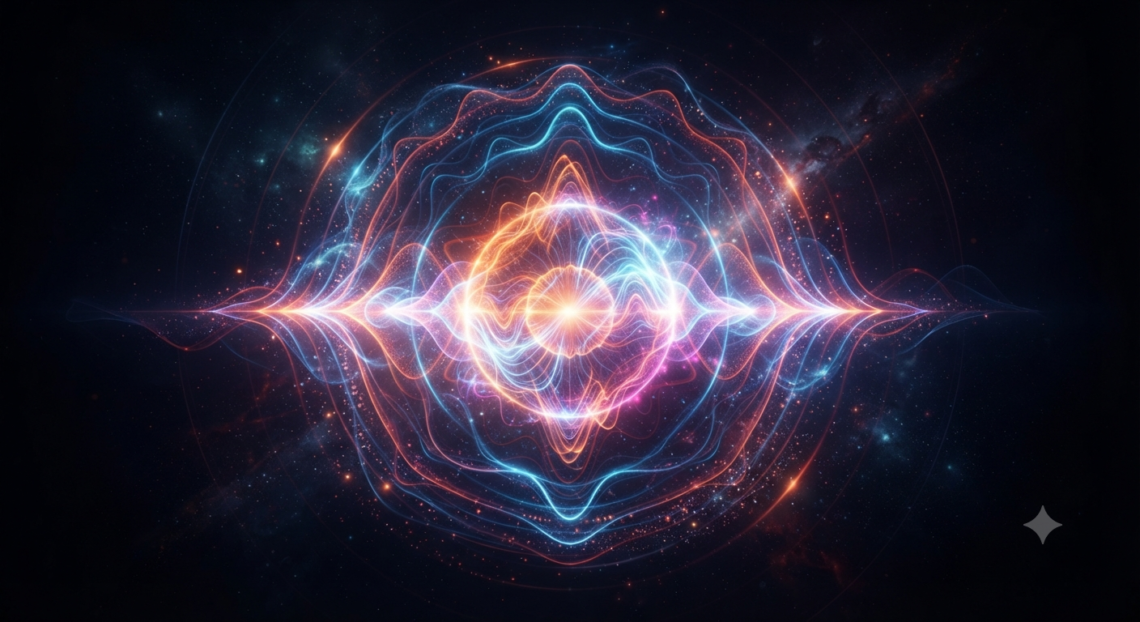
Pulsamento is an emerging, flexible term used online to describe a pulse, recurring beat, rhythmic movement, or pattern that gives a system a sense of continuity. You may encounter it in articles about music, body awareness, creativity, technology, or the “rhythm of life,” yet those uses are not always consistent.
That inconsistency matters. Rather than treating the word as a formally established scientific, medical, or musical label, the most accurate approach is to understand it as a descriptive concept built around pulse and repetition. Standard references define pulsation as rhythmic throbbing, vibrating, or recurring change, while music theory uses pulse or beat for the recurring foundation that carries music through time.
This guide separates useful meaning from internet exaggeration. It explains what the term can reasonably communicate, where more precise vocabulary is needed, and how musicians, writers, designers, coaches, and curious readers can apply the idea without presenting speculation as fact.
What Does Pulsamento Mean?
At its clearest, the term means a continuing pulse-like pattern. That pattern may be audible, visible, physical, behavioral, or metaphorical: a drumbeat, a flashing signal, a breathing cycle, a repeated movement, or the rise and fall of activity within a team.
Several recent webpages define the word broadly as rhythm, beat, vibration, energy, or recurring movement. The overlap between those definitions suggests a shared central idea, but the variation also shows that the term is being shaped by online usage rather than controlled by one universally accepted technical definition.
A practical working definition is:
A recurring pulse or pattern that organizes movement, timing, attention, or change.
This definition is broad enough to explain current usage while avoiding unsupported claims. It also makes clear that context determines whether the better technical term is beat, tempo, rhythm, oscillation, frequency, heart rate, pulse, cycle, cadence, or signal.
Is Pulsamento a Real Word or an Internet-Born Concept?
The spelling appears across newer informational websites, creative pages, and general-interest content, but it does not function like a widely standardized English technical term. In the sources reviewed for this article, authoritative references consistently explain neighboring words such as pulse, pulsation, and rhythm, while newer sites assign the exact term a range of meanings from music and biology to productivity and emotional energy.
That does not make it meaningless. Language often develops through analogy, branding, translation, artistic usage, and repeated online adoption.
It does mean responsible writers should avoid statements such as “scientists call this…” or “doctors diagnose…” unless they can cite a field-specific source using the exact term. A safer formulation is: “The word is commonly used online as a broad label for rhythmic or pulse-like activity.”
What the Term Is Not
To prevent confusion, do not automatically treat it as:
- A recognized medical diagnosis
- A proven wellness therapy
- A universal law of physics
- A standard notation instruction in music
- A single company, app, or platform
- A synonym for every kind of repetition
The name is also used in web branding. For example, Pulsamento.net presents itself as a broad informational platform, while Pulsamento.com has appeared as a parked domain rather than a clearly defined service, showing why searchers may arrive with very different intentions.
Pulsamento in Music: Pulse, Beat, Rhythm, and Meter
Music is the most intuitive setting for the concept because listeners naturally feel recurring time. You tap your foot, nod your head, clap, dance, or anticipate the next beat even when no instrument plays on every pulse.
Music theory, however, gives each timing concept a more precise name. Pulse or beat is the regularly recurring foundation; tempo describes its speed; meter organizes beats into repeating strong-and-weak groupings; and rhythm describes the durations and placement of sounds and silences within that framework.
Used informally, Pulsamento can describe the felt momentum created by those elements working together. It is especially useful in creative commentary—“the track has a restless pulse” or “the performance develops a slow, breathing motion”—but it should not replace established terminology in a technical lesson.
A Simple Listening Exercise
Try this with any song:
- Tap the most comfortable steady beat.
- Count how many taps form a repeating group.
- Notice which tap feels strongest.
- Listen for notes that land between taps.
- Increase or reduce the playback speed and observe what changes.
The steady tapping represents pulse. The grouping suggests meter, the playback speed affects tempo, and the pattern of notes around your taps forms rhythm.
This exercise turns an abstract concept into something measurable. It also reveals an important point: a musical pulse can remain steady while melodies, accents, syncopations, and textures change around it.
How Pulsamento Relates to the Human Body
The human body contains many real rhythms, but each has its own scientific name. The heartbeat produces the arterial pulse; breathing cycles between inhalation and exhalation; sleep and hormone activity are influenced by circadian timing; and walking often settles into a repeating gait.
The American Heart Association explains that heart rate, commonly called pulse, is the number of heartbeats per minute. For most adults at calm rest, 60 to 100 beats per minute is commonly considered normal, although fitness, medication, stress, hormones, and other factors can affect it.
Circadian rhythms are different. They involve physical, mental, and behavioral changes across roughly 24 hours, influenced strongly by light and darkness and coordinated by biological clocks throughout the body.
Pulsamento may be used metaphorically to connect these phenomena under the idea of “body rhythm,” but it should not blur their differences. A heartbeat, respiratory rate, sleep-wake cycle, and hormonal rhythm operate on different timescales and are measured in different ways.
Pulse Is Not the Same as Palpitations
A pulse is the beat produced as the heart pumps blood through the arteries. Palpitations are the noticeable or uncomfortable awareness of a heartbeat that may feel racing, pounding, fluttering, irregular, skipped, or unusually strong.
Do not use a vague lifestyle label when describing a possible symptom to a healthcare professional. Say exactly what you feel, when it starts, how long it lasts, whether the rhythm seems regular, and whether it occurs with chest pain, fainting, dizziness, or shortness of breath.
Persistent or worsening palpitations, especially with other concerning symptoms, deserve medical assessment. The concept discussed here is not a diagnosis and should never substitute for clinical advice.
Pulsamento in Nature and Physical Systems
Nature is full of recurring activity: waves arrive at a shoreline, tides rise and fall, seasons repeat, insects produce patterned sounds, and some stars vary in brightness. These examples make “the pulse of nature” a powerful metaphor.
Physics and engineering require greater precision. A pulse may be a brief burst of energy, while frequency measures how often a repeating event occurs, period measures the time per cycle, and amplitude describes the size of a variation.
Pulsation can also refer to a periodically recurring increase and decrease in a quantity such as pressure, volume, or voltage.
In this setting, Pulsamento works best as accessible language before the technical explanation begins. A science writer might introduce the “pulsing behavior” of a system, then identify the actual measurable variables rather than leaving the reader with only a poetic label.
Rhythm, Attention, and Daily Work
People often describe productivity as if it were a machine that should run at constant output. Human attention rarely behaves that way.
Energy, concentration, interruption, recovery, and motivation fluctuate throughout the day. Calling those fluctuations Pulsamento can be useful as a reflective framework, provided it is not marketed as a scientifically validated productivity method.
A grounded approach is to observe patterns before trying to optimize them:
- Record your strongest focus periods for one week.
- Note sleep, meals, caffeine, meetings, and interruptions.
- Separate high-energy work from low-friction administrative work.
- Schedule difficult tasks during repeatedly strong periods.
- Review the pattern monthly instead of reacting to one unusual day.
This is essentially pattern tracking, not a hidden law of success. The value comes from the quality of your observations and decisions, not from the label itself.
Creative and Design Applications of Pulsamento
Designers can use rhythmic repetition to direct attention. Repeated spacing, alternating scale, animation timing, visual contrast, and recurring shapes can create movement even on a static page.
In motion design, a pulse may be literal: an element expands and contracts, opacity rises and falls, or light travels through a sequence. Used poorly, the effect becomes distracting; used carefully, it can signal status, guide the eye, or make an interface feel responsive.
Writers can create similar movement through sentence length, paragraph rhythm, repeated motifs, and controlled pauses. A sequence of short lines accelerates the reading experience. A longer reflective sentence slows it down.
For brand strategists, Pulsamento also has naming appeal because it suggests vitality, movement, culture, sound, and connection. Before adopting it, check trademark availability, domain ownership, pronunciation in target markets, and whether users might confuse the brand with health or music services.
A Practical Pulsamento Framework
The concept becomes more useful when reduced to four questions:
1. What Is Repeating?
Identify the event: a beat, action, signal, breath, customer behavior, animation, or work habit. Avoid describing a “rhythm” until you can point to the repeated unit.
2. How Often Does It Repeat?
Measure the interval. In music that may be beats per minute; in biology, breaths or heartbeats per minute; in business, daily, weekly, monthly, or seasonal activity.
3. How Regular Is It?
Some patterns are consistent, while others vary. Variation is not automatically failure: syncopation creates musical interest, heart rate changes with activity, and demand often follows seasonal cycles.
4. What Does the Pattern Influence?
Ask whether the repetition supports coordination, anticipation, emotional impact, performance, navigation, or decision-making. A pattern matters because of its effect, not merely because it exists.
This framework prevents vague interpretation. It turns Pulsamento from an attractive word into a practical way to examine timing and recurrence.
Common Misconceptions
“Everything That Repeats Has the Same Kind of Rhythm”
No. A heartbeat, ocean tide, drum pattern, and software polling interval differ in cause, scale, regularity, and meaning.
“A Natural Rhythm Is Always Healthy or Optimal”
Also false. Natural processes can be irregular, disrupted, or harmful, and a repeated habit can be inefficient. Description is not endorsement.
“Feeling a Pulse Means Something Is Wrong”
Not necessarily. Exercise, stress, caffeine, and lack of sleep can make the heartbeat more noticeable, although recurring or concerning symptoms should be assessed appropriately.
“The Term Has One Official Definition”
Current online usage does not support that claim. The most defensible interpretation is broad and contextual: a pulse-like recurrence that creates structure, movement, or continuity.
How to Use the Word Accurately
Use Pulsamento when you want an expressive umbrella term, then clarify the exact phenomenon. That combination preserves creativity and accuracy.
Good examples include:
- “The installation uses a slow visual pulsation to guide attention.”
- “The song’s underlying beat creates a steady sense of forward motion.”
- “We tracked weekly demand cycles before changing staffing.”
- “The breathing exercise uses equal-length intervals.”
- “The interface animation repeats every two seconds.”
Avoid presenting metaphor as measurement. If a reader needs to act on the information, provide the established term, unit, method, and context.
Frequently Asked Questions
What Is Pulsamento in Simple Words?
It is a broad, emerging word for a recurring pulse, beat, movement, or pattern. Its exact meaning depends on context, so a writer should explain whether the subject is music, body rhythm, technology, design, or behavior.
Is Pulsamento an Official Musical Term?
It is better treated as an informal or descriptive expression than as a universal music-theory label. Established terms such as pulse, beat, tempo, meter, rhythm, accent, and syncopation communicate musical timing more precisely.
Is Pulsamento a Medical Condition?
No evidence from standard health terminology supports treating it as a diagnosis. For health discussions, use specific words such as pulse, heart rate, palpitation, arrhythmia, breathing rate, or circadian rhythm, depending on what is actually happening.
Can the Concept Improve Focus or Productivity?
It may help as a metaphor for observing repeated periods of energy, concentration, and recovery. Benefits come from tracking behavior and adjusting schedules—not from assuming the word itself describes a proven productivity system.
Why Is Pulsamento Becoming Popular Online?
The term is memorable and semantically flexible. It can evoke music, heartbeat, motion, emotion, technology, and creative energy, which makes it attractive for general articles and branding—but also increases the risk of vague or exaggerated definitions.
Conclusion: Use the Idea, Keep the Language Precise
Pulsamento is most useful as an accessible way to talk about recurring pulse, timing, movement, and patterned change. It can connect ideas across music, design, nature, body awareness, work, and technology, but it should not be presented as an established diagnosis, scientific law, or universal technical term.
Start by identifying what repeats, measuring how often it happens, checking how regular it is, and deciding what effect the pattern creates. Then name the precise concept—beat, heart rate, frequency, circadian rhythm, cadence, cycle, or signal—so the reader receives both an engaging explanation and information they can trust.