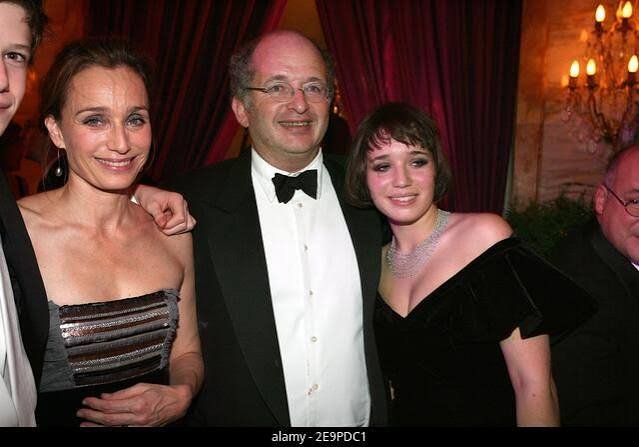
François Olivennes is a French obstetrician-gynecologist best known for his work in infertility treatment, assisted reproductive technology, and in vitro fertilization. While some people recognize his name because of his former marriage to British actress Kristin Scott Thomas, his professional identity is firmly rooted in reproductive medicine, clinical research, and patient-centered fertility care.
Over several decades, he has worked in major French hospitals, contributed to international fertility research, published medical literature, and written accessible books about conception and pregnancy. His career offers a useful window into how modern fertility medicine has evolved—from highly standardized IVF protocols toward more individualized, evidence-based treatment.
François Olivennes Quick Facts
- Full name: François Olivennes
- Date of birth: January 4, 1959
- Place of birth: Boulogne-Billancourt, France
- Nationality: French
- Profession: Obstetrician-gynecologist and reproductive medicine specialist
- Primary expertise: Infertility, IVF, assisted reproductive technology, ovarian stimulation
- Former spouse: Kristin Scott Thomas
- Children: Three
- Known family members: Armand Olivennes, Maria Landau, Denis Olivennes and Frédéric Olivennes
- Professional base: Paris, France
Public biographical records identify him as a French physician born in Boulogne-Billancourt in 1959. His current medical profile describes him as a specialist in the treatment of both female and male infertility.
Who Is François Olivennes?
François Olivennes is a French professor of medicine and fertility specialist whose work has focused on assisted reproductive medicine, commonly known in France as assistance médicale à la procréation, or AMP.
His clinical field covers some of the most complex areas of reproductive healthcare, including:
- Unexplained infertility
- Female and male infertility
- In vitro fertilization
- Intracytoplasmic sperm injection
- Ovarian stimulation
- Embryo transfer
- Fertility preservation
- Recurrent treatment failure
- Pregnancy planning at an advanced maternal age
His professional profile says he previously directed assisted reproduction units at Antoine Béclère Hospital in Clamart and Cochin Hospital in Paris before moving into private practice in 2006.
That combination of hospital leadership, scientific research, private clinical practice, and public education explains why his name appears across medical publications, fertility conferences, books, interviews, and general-interest media.
Early Life and Family Background
François Olivennes was raised in an intellectually prominent French family. His father, Armand Olivennes, was a psychiatrist and poet, while his mother, Maria Landau, worked in psychoanalysis.
Armand was born into a German Jewish family under the surname Olievenstein. Members of the family fled Nazi Germany and settled in France during the 1930s. Historical profiles of the family report that the name was later changed from Olievenstein to Olivennes.
This family history was profoundly shaped by the Holocaust. In a later account concerning the Olivennes family, François reportedly stated that more than 80% of their extended family had been exterminated during the Shoah.
He grew up as the eldest of three brothers:
- François Olivennes, the physician
- Denis Olivennes, a French business executive and media figure
- Frédéric Olivennes, a media and cultural-sector executive
The brothers eventually pursued different careers, but all three became associated with influential French professional circles.
The Medical and Intellectual Influence of His Family
Medicine, psychiatry, psychology, literature, and public life all formed part of the family environment.
His uncle, Claude Olievenstein, was a well-known French psychiatrist associated with addiction treatment. His father combined psychiatric work with poetry, while his mother practiced psychoanalysis. This background does not by itself explain his decision to enter reproductive medicine, but it provides important context.
Fertility treatment is never purely technical. It frequently involves grief, uncertainty, relationships, expectations, identity, and emotional vulnerability. A physician raised around psychiatry and psychoanalysis may have had an unusually early awareness of those human dimensions.
François Olivennes’ Medical Education
François Olivennes completed his medical training in France and reportedly graduated from medical school in 1985. He later pursued advanced study in reproductive biology and obtained qualifications connected to the biology of reproduction.
His academic and clinical path led him toward reproductive endocrinology, infertility treatment, and assisted reproductive technology.
This was a significant period to enter the field. IVF was still relatively new, and many practices that are routine today—including individualized ovarian stimulation, refined embryo transfer, and advanced fertility preservation—were still being developed.
His generation of specialists did not simply learn an established medical discipline. They helped build it.
Hospital Career and Leadership in Reproductive Medicine
One of the defining phases of the career of François Olivennes was his work in the French public hospital system.
He held senior positions in assisted reproduction units at two respected institutions:
Antoine Béclère Hospital
François Olivennes worked at Antoine Béclère Hospital in Clamart, where he became involved in the management of its assisted reproduction program.
The hospital has long been associated with obstetrics, gynecology, reproductive biology, and fertility medicine. Working in such an environment gave him access to multidisciplinary teams involving gynecologists, embryologists, biologists, anesthesiologists, laboratory specialists, and psychologists.
Cochin Hospital in Paris
He later worked at Cochin Hospital, another major Parisian teaching hospital. His professional listings indicate that he directed assisted reproductive medicine services at both Béclère and Cochin.
Hospital leadership in fertility medicine involves far more than treating individual patients. It may include:
- Designing treatment protocols
- Supervising clinical teams
- Coordinating laboratory and medical procedures
- Evaluating safety standards
- Reviewing pregnancy and live-birth outcomes
- Managing ovarian hyperstimulation risks
- Training younger physicians
- Supporting research and publication
This institutional experience helped establish his authority in IVF and reproductive medicine.
Private Practice and IVF Care in Paris
In 2006, François Olivennes left full-time public hospital practice and began working privately in Paris. His current professional profile continues to identify him as a gynecologist specializing in infertility.
He has also been associated with the Eylau La Muette assisted reproduction center in Paris. ESHRE materials have identified him as an MD and PhD affiliated with the ART unit at Eylau La Muette.
Private fertility practice can offer greater continuity between physician and patient, although the essential clinical principles remain the same. Treatment must be selected according to the cause of infertility, age, ovarian reserve, semen analysis, medical history, prior outcomes, and individual goals.
The available evidence suggests that his work has consistently favored a more personalized approach rather than treating every IVF patient with an identical protocol.
François Olivennes and In Vitro Fertilization
IVF is one of the central subjects associated with François Olivennes.
During an IVF cycle, the ovaries are usually stimulated to produce several mature eggs. The eggs are collected, fertilized in a laboratory, and monitored as embryos before one or more are transferred to the uterus.
Every stage introduces clinical decisions. Doctors must determine:
- Which stimulation protocol to use
- What medication dose is appropriate
- How to monitor follicle development
- When to trigger final egg maturation
- Whether conventional IVF or ICSI is indicated
- How many embryos should be transferred
- Whether embryos should be frozen
- How to reduce multiple-pregnancy risks
Olivennes’ scientific work has addressed several of these questions.
Research on Individualized Ovarian Stimulation
One of his notable areas of interest has been predicting how a patient’s ovaries will respond to fertility medication.
In a professional presentation for the European Society of Human Reproduction and Embryology, he grouped predictors of ovarian response into three broad categories:
- Clinical factors, including age, body mass index, and the cause of infertility
- Ultrasound findings, including antral follicle count and ovarian volume
- Hormonal markers, which help estimate ovarian reserve and likely response
The goal of using these predictors is to personalize treatment, choose a suitable starting dose, reduce cancelled cycles, avoid poor response, and limit the risk of ovarian hyperstimulation syndrome.
This approach is important because “more medication” does not automatically produce a better IVF outcome. Excessive stimulation can increase discomfort, cost, and medical risk without guaranteeing a healthy pregnancy.
Why Personalization Matters
Two patients of the same age can respond very differently to the same medication. One may produce too few follicles, while the other may develop an excessive ovarian response.
Individualization helps clinicians balance competing priorities:
- Obtaining an adequate number of mature eggs
- Minimizing avoidable medication
- Preventing ovarian hyperstimulation
- Reducing cycle cancellation
- Protecting patient comfort
- Maintaining realistic expectations
This is now a central principle of contemporary reproductive medicine.
Patient-Friendly IVF
François Olivennes has also published work related to patient-friendly ovarian stimulation.
A 2003 article authored by Olivennes discussed the idea that successful IVF should not be judged solely by a positive pregnancy test. The broader objective is the safe birth of a healthy child through treatment that minimizes unnecessary burdens and complications.
Patient-friendly IVF may involve:
- Simpler treatment schedules
- Lower medication burdens when appropriate
- Reduced risk of ovarian hyperstimulation
- Fewer invasive procedures
- Clearer communication
- Greater attention to emotional well-being
- Efforts to prevent high-order multiple pregnancies
A later qualitative study involving a “Friendly IVF” model found that many participants viewed the approach as a valuable first option for treatment.
The concept remains highly relevant. Fertility care can be physically exhausting and psychologically demanding. A technically effective protocol may still be poor-quality care if patients do not understand it, cannot tolerate it, or feel excluded from decision-making.
Research on IVF Safety and Family Outcomes
The research record connected to François Olivennes extends beyond ovarian stimulation.
He has participated in studies examining the broader consequences of assisted reproduction, including treatment safety, pregnancy management, embryo transfer methods, and family outcomes.
Multiple Births and Child Development
One co-authored study examined the behavioral and cognitive development of children conceived through IVF or ICSI. It reported that families with twins experienced greater parenting and developmental challenges than families with singletons.
This finding supports one of the most important shifts in fertility medicine: moving away from transferring multiple embryos merely to raise short-term pregnancy rates.
A multiple pregnancy is not simply “two babies instead of one.” It carries increased risks of:
- Premature birth
- Low birth weight
- Pregnancy complications
- Neonatal intensive care
- Developmental difficulties
- Physical and emotional strain on parents
The modern emphasis on singleton pregnancy reflects a more complete definition of IVF success.
Ovarian Hyperstimulation Syndrome
Olivennes has also written about strategies for preventing ovarian hyperstimulation syndrome, a potentially serious complication of fertility medication.
His work in this area reviewed approaches designed to reduce risk during ovarian stimulation.
Prevention may involve careful dose selection, close ultrasound and hormonal monitoring, adjusted trigger medication, embryo freezing, or postponing embryo transfer when necessary. The exact strategy depends on the patient and treatment protocol.
Embryo Transfer and Endometrial Preparation
He has contributed to research comparing stimulated and artificial cycles for preparing the endometrium before frozen embryo transfer. A randomized trial involving his co-authorship examined how different preparation strategies affected treatment.
He has also participated in research involving uterine biological markers and implantation, including work assessing leukemia inhibitory factor within the uterine environment.
These studies highlight a crucial reality: embryo quality is only one part of implantation. The timing and receptivity of the uterine lining also matter.
Continued Scientific Activity
François Olivennes’ publication record spans several decades.
His research has included:
- Ovarian stimulation protocols
- Predictors of ovarian response
- Embryo transfer
- Infertility linked to endometriosis
- Ovarian hyperstimulation prevention
- IVF outcomes
- Pregnancy and child development after assisted conception
- Fertility treatment for patients with genetic risks
- Patient-centered reproductive care
A 2015 randomized, controlled, non-inferiority study listed him as an author and examined medications used in ovarian stimulation.
His name also appears on a 2025 publication discussing the role of luteinizing hormone in patients showing a suboptimal response to IVF stimulation.
That recent co-authorship indicates continued engagement with reproductive medicine research rather than a career confined to earlier decades.
Membership and Role in European Fertility Medicine
François Olivennes has been associated with the European Society of Human Reproduction and Embryology, widely known as ESHRE.
Historical ESHRE documentation lists him among professionals involved in the organization’s development and activities.
ESHRE plays a major role in the fertility field by supporting:
- Scientific conferences
- Clinical guidance
- Embryology standards
- Professional training
- Research collaboration
- Ethical discussion
- Evidence-based fertility care
Participation in such networks allows researchers and physicians to compare outcomes across countries, challenge established practices, and build consensus around safer treatment.
Books by François Olivennes
Alongside his scientific publications, François Olivennes has written or co-written books for general readers.
Don’t Wait Too Long to Have a Baby
Written with Laurence Beauvillard, this book explores fertility, reproductive aging, and the biological limits that can affect conception.
The publisher Odile Jacob lists the title among his published works.
Its central topic remains relevant because social expectations and reproductive biology do not always align. People may delay parenthood for education, career development, financial stability, relationships, or personal readiness, yet fertility—particularly female fertility—declines with age.
Everything You Need to Know Before Pregnancy
This practical book, also written with Laurence Beauvillard, addresses preparation for pregnancy and questions prospective parents may have before conception.
Topics associated with preconception planning commonly include:
- Medical checkups
- Vaccination status
- Nutrition
- Folic acid
- Lifestyle factors
- Medication review
- Genetic history
- Fertility expectations
- When to seek medical advice
Having a Child in the 21st Century
This title examines how reproductive medicine, delayed parenthood, assisted conception, genetics, and changing family structures influence modern parenthood.
The book reflects the broader social role that fertility specialists often occupy. They do not deal only with laboratory techniques. They also encounter ethical and cultural questions about who can become a parent, when intervention is appropriate, and how medicine should respond to new family models.
François Olivennes and Kristin Scott Thomas
Outside medicine, François Olivennes is frequently searched because of his former marriage to Kristin Scott Thomas, the acclaimed British-French actress.
The couple married in 1987 and had three children:
- Hannah Olivennes
- Joseph Olivennes
- George Olivennes
They divorced in 2005. Public biographical accounts identify François as the father of the actress’s three children.
Their son Joseph later became an actor. A profile of Joseph describes him as born in Paris in 1991 to Kristin Scott Thomas and doctor François Olivennes.
It is worth maintaining perspective when discussing this part of his life. His connection to a famous actress explains some public interest, but it does not define his professional legacy.
Is François Olivennes Still Practicing Medicine?
Publicly available medical listings continue to present François Olivennes as a practicing gynecologist and infertility specialist in Paris.
His Doctolib profile states that he practices privately and specializes in treating female and male infertility.
Patients searching for any fertility physician should still verify current appointment availability, professional registration, clinic affiliation, fees, insurance coverage, and referral requirements directly through official medical channels.
Online biographies are not a substitute for current clinical information.
What Makes His Career Significant?
The importance of François Olivennes lies less in a single discovery than in the range of his involvement across reproductive medicine.
His work connects four major areas:
1. Clinical Treatment
He has treated infertility in both hospital and private settings, working with patients who may have highly complex reproductive histories.
2. Scientific Research
His publications examine practical questions that influence IVF treatment, including stimulation, implantation, safety, multiple pregnancy, and patient outcomes.
3. Professional Education
His involvement in international meetings and European reproductive medicine has contributed to knowledge-sharing among fertility professionals.
4. Public Communication
His books translate complicated medical subjects into language that non-specialists can understand.
That final role matters. Fertility misinformation spreads easily, particularly online. Physicians who explain reproductive aging, IVF limits, and pregnancy preparation can help people make earlier and more realistic decisions.
A Balanced View of François Olivennes
A credible biography should separate confirmed professional information from assumptions.
Reliable public evidence supports the following conclusions:
- He is a French obstetrician-gynecologist specializing in infertility and IVF.
- He directed assisted reproduction units at prominent French hospitals.
- He later moved into private practice in Paris.
- He has authored and co-authored peer-reviewed reproductive medicine studies.
- He has written books about fertility, conception, pregnancy, and modern parenthood.
- He was formerly married to Kristin Scott Thomas and has three children.
Claims about his private relationships, personal wealth, daily life, or current family circumstances should be treated cautiously unless supported by direct, reputable evidence.
This distinction is essential for E-E-A-T. A trustworthy profile should not turn missing information into fabricated certainty.
Frequently Asked Questions About François Olivennes
Who is François Olivennes?
François Olivennes is a French obstetrician-gynecologist, professor of medicine, and specialist in infertility and assisted reproduction. He is known for his clinical work in IVF, research on ovarian stimulation and treatment safety, and books about fertility and pregnancy.
What is François Olivennes known for?
He is primarily known for treating infertility and contributing to reproductive medicine research. His work has addressed ovarian response, patient-friendly IVF, ovarian hyperstimulation prevention, embryo transfer, implantation, and family outcomes following assisted conception.
He is also known publicly as the former husband of actress Kristin Scott Thomas.
Was François Olivennes married to Kristin Scott Thomas?
Yes. François Olivennes and Kristin Scott Thomas married in 1987 and later divorced in 2005. They have three children: Hannah, Joseph, and George.
Where has François Olivennes worked?
He has worked at Antoine Béclère Hospital in Clamart and Cochin Hospital in Paris, where he directed assisted reproduction services. He moved into private practice in 2006 and has been associated with fertility care in Paris, including the Eylau La Muette ART center.
Has François Olivennes written any books?
Yes. His books include works about reproductive aging, pregnancy preparation, sexuality, and parenthood in the era of assisted reproduction. One of his best-known titles is Don’t Wait Too Long to Have a Baby, co-written with Laurence Beauvillard.
Conclusion
François Olivennes has built a career at the intersection of clinical medicine, reproductive science, professional education, and public communication. His hospital leadership, IVF research, patient-centered treatment philosophy, and fertility books have made him a recognizable figure in French reproductive medicine.
Readers researching François Olivennes should focus first on his verified medical contributions rather than reducing his identity to a celebrity marriage. His most meaningful legacy lies in the evolution of safer, more individualized fertility treatment and in helping patients understand the realities of conception.
Anyone considering fertility treatment should use this profile as background information only. The practical next step is to consult a qualified reproductive medicine specialist who can evaluate personal medical history, ovarian reserve, semen parameters, age, prior treatment, and individual family-building goals.