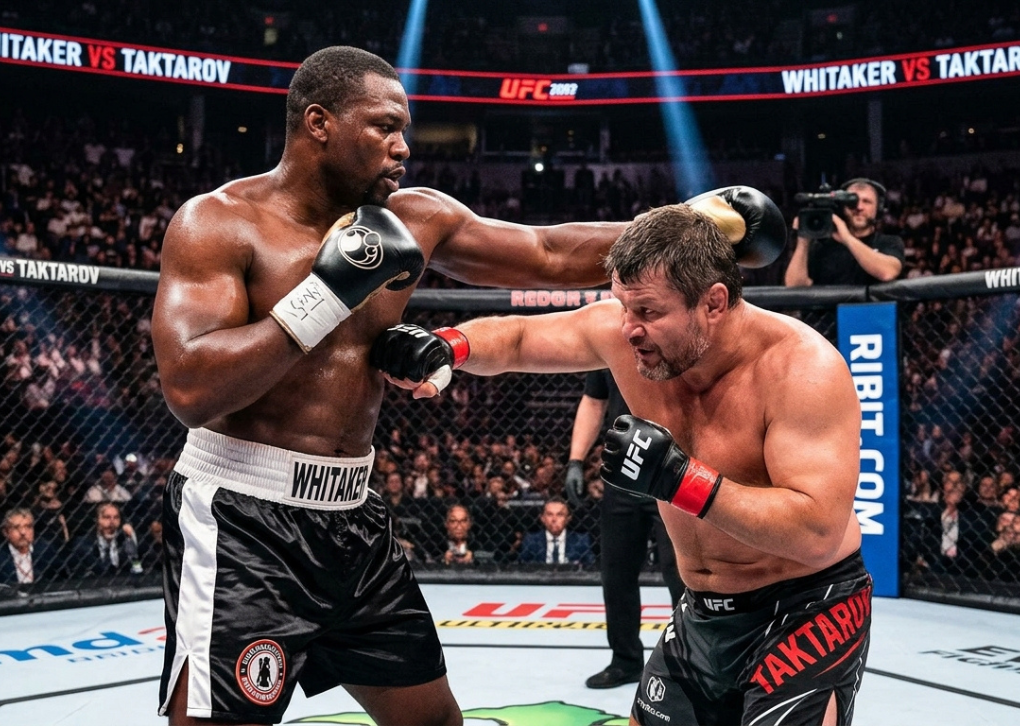
The debate around Lance Whitaker vs Oleg Taktarov brings together two very different worlds of fighting. One man built his reputation through heavyweight boxing, knockout power, and professional ring experience. The other became famous as an early mixed martial arts pioneer, using sambo, grappling, and relentless submission attacks to defeat opponents in the raw early days of MMA.
This matchup never happened in reality, but it remains an intriguing “what if” scenario for combat sports fans. The question is not simply who was tougher. It is about whether elite boxing fundamentals could overcome elite grappling ability, and whether old-school MMA survival skills could neutralize a powerful heavyweight striker.
A true comparison requires looking beyond records. Fight environment, rules, conditioning, experience, and technical specialization would all dramatically influence the outcome.
Lance Whitaker vs Oleg Taktarov: The Tale of Two Combat Sports Eras
The biggest reason this matchup creates debate is because Whitaker and Taktarov represented different stages of combat sports evolution.
Lance Whitaker competed as a professional heavyweight boxer and was known as “Mount.” His career included notable heavyweight contests, a significant knockout record, and experience against established boxing opponents. Available records list Whitaker with a professional boxing record featuring 35 wins, including 28 knockouts, before later career updates recorded additional bouts.
Oleg Taktarov came from a completely different background. Nicknamed “The Russian Bear,” he was a sambo and judo specialist who became one of the recognizable figures of early UFC competition. He won the UFC 6 tournament and developed a reputation for submission grappling, toughness, and composure under pressure.
The matchup represents a classic combat sports question:
- Can a world-class striker stop a world-class grappler before being taken down?
- Can a grappler survive enough striking damage to reach a submission position?
- Does specialized excellence beat overall adaptability?
Those questions make this hypothetical fight fascinating.
Fighter Breakdown: Lance Whitaker’s Strengths and Weaknesses
Boxing Power and Heavyweight Experience
Whitaker’s greatest advantage would almost certainly be his boxing ability.
Heavyweight boxing requires exceptional timing, distance control, and the ability to generate fight-ending power with limited opportunities. A skilled heavyweight puncher does not need many openings. One clean combination can change everything.
Whitaker’s advantages would include:
- Superior punching mechanics
- Professional heavyweight ring experience
- Long-range striking ability
- Understanding of movement and angles
- Knockout threat throughout the contest
A fighter with Whitaker’s background would likely want to keep the fight standing. The ideal scenario would involve controlling distance, using the jab, and forcing Taktarov to absorb damaging punches while trying to close the gap.
The Problem With Pure Boxing in MMA Rules
The weakness is equally clear.
Boxing does not prepare athletes for takedowns, leg attacks, clinch wrestling, or submissions. A boxer can have extraordinary hands but still be vulnerable when the fight leaves the striking range.
Against an experienced grappler, every punch carries a risk. Throwing aggressively can create openings for level changes, body locks, and takedown attempts.
That tactical challenge would be the central issue in Lance Whitaker vs Oleg Taktarov.
Oleg Taktarov’s Advantages: Grappling, Endurance, and Survival
The Russian Bear’s MMA Skill Set
Taktarov’s greatest weapon was not raw athleticism. It was adaptability.
His background in sambo and judo gave him tools that were extremely valuable in early MMA: throws, positional control, joint locks, and submission attacks. His recorded MMA career includes numerous submission victories, reflecting how central grappling was to his success.
Against a boxer, Taktarov would likely avoid a prolonged striking exchange. His strategy would be simple:
- Close distance safely
- Force clinch situations
- Attack the takedown
- Control position
- Search for submissions
This approach is exactly why specialized MMA fighters often create problems for elite boxers.
Mental Toughness and Fight IQ
Taktarov was also known for his ability to remain calm during difficult fights. Early MMA often rewarded fighters who could handle chaos, fatigue, and unpredictable situations.
A fighter entering an unfamiliar environment needs more than technique. They need problem-solving ability. Taktarov’s experience in mixed-rule competition would give him an important advantage in a fight where anything could happen.
Lance Whitaker vs Oleg Taktarov: Style Matchup Analysis
Striking Battle: Clear Advantage to Whitaker
If the fight stayed upright, Whitaker would have the advantage.
A professional heavyweight boxer’s hands are designed for damage. The speed, accuracy, and combinations developed through years of boxing training are difficult for non-boxers to replicate.
Taktarov was durable, but absorbing repeated heavyweight punches would be dangerous. The longer the fight remained standing, the more the advantage would shift toward Whitaker.
Grappling Exchange: Major Advantage to Taktarov
The situation changes immediately once grappling begins.
Taktarov would have the edge in:
- Takedown knowledge
- Submission awareness
- Ground positioning
- Experience fighting outside boxing rules
A boxer placed on the ground against a skilled submission fighter faces a completely different technical challenge.
The key question is whether Whitaker could prevent that transition.
Physical Comparison: Size, Reach, and Athletic Factors
Physical attributes would also matter.
Whitaker competed as a heavyweight boxer and stood around 6 feet 7 inches tall, giving him significant height and reach advantages.
Taktarov competed around the heavyweight range in MMA but was closer to 6 feet tall. His advantage was not size; it was skill diversity and grappling experience.
A size difference can matter, especially when a striker understands how to maintain distance. However, MMA history repeatedly shows that technical grappling can overcome physical disadvantages when the larger fighter lacks defensive skills.
Who Would Win Lance Whitaker vs Oleg Taktarov?
Predicting the winner depends almost entirely on the rules.
Under professional boxing rules, Whitaker would be the overwhelming favorite. Taktarov would be entering Whitaker’s world, where his grappling ability would be unavailable.
Under MMA rules, the balance changes dramatically.
Taktarov would likely have the better path to victory because he could attack areas where Whitaker had less experience. His strategy would involve surviving the early striking danger and forcing the fight into grappling exchanges.
A realistic MMA prediction would favor Taktarov by submission, while a boxing prediction would favor Whitaker by knockout or decision.
The matchup is therefore less about finding one universal winner and more about understanding how rules shape combat.
Why Fans Still Discuss Lance Whitaker vs Oleg Taktarov
Combat sports fans love fantasy matchups because they reveal the strengths and weaknesses of different fighting systems.
This matchup represents a historical transition:
- Boxing represents refined striking specialization.
- Early MMA represents adaptation and mixed skill development.
- Heavyweight power represents physical danger.
- Grappling represents technical control.
The discussion also highlights how modern fighters evolved. Today’s elite MMA athletes train across multiple disciplines because history has shown that being excellent in one area is rarely enough.
Lessons Modern Fighters Can Learn From This Matchup
The biggest lesson from Lance Whitaker vs Oleg Taktarov is that specialization has limits.
A few important takeaways:
- Striking excellence requires defensive awareness against takedowns.
- Grappling excellence requires methods to survive dangerous strikers.
- Physical advantages matter, but technical preparation often decides outcomes.
- The best fighters continue evolving.
The matchup is a reminder that combat sports are constantly changing. Yesterday’s specialists inspire tomorrow’s complete fighters.
Frequently Asked Questions About Lance Whitaker vs Oleg Taktarov
Was Lance Whitaker vs Oleg Taktarov an actual fight?
No. Lance Whitaker vs Oleg Taktarov was not an official professional fight. It is a hypothetical comparison between a heavyweight boxer and an MMA pioneer from different combat sports backgrounds.
Who had the better striking ability between Lance Whitaker and Oleg Taktarov?
Lance Whitaker had the stronger striking background because he competed professionally in heavyweight boxing. His career was built around boxing technique, punching combinations, and knockout power.
Could Oleg Taktarov submit Lance Whitaker?
Under MMA rules, Taktarov would have a realistic submission path. His sambo and grappling background gave him the tools needed to take opponents down and finish fights on the ground.
Who would win Lance Whitaker vs Oleg Taktarov under boxing rules?
Under boxing rules, Lance Whitaker would likely be favored because the contest would focus entirely on his strongest skill: heavyweight boxing.
Why is Lance Whitaker vs Oleg Taktarov an interesting fantasy matchup?
The matchup is interesting because it compares two different philosophies of fighting. Whitaker represents elite striking specialization, while Taktarov represents mixed martial arts adaptation and grappling strategy.
Final Verdict: A Battle Defined by Rules, Not Just Fighters
Lance Whitaker vs Oleg Taktarov is fascinating because there is no simple answer. The winner changes depending on the environment.
In a boxing ring, Whitaker’s size, experience, and knockout ability would create a major advantage. In an MMA cage, Taktarov’s grappling knowledge and submission skills would give him the tools to change the fight completely.
The bigger lesson is that combat sports cannot be judged by reputation alone. Skills exist within specific systems. A champion boxer is not automatically an MMA champion, and an elite grappler is not automatically a heavyweight boxing contender.
For fans analyzing fantasy matchups, the next step is to compare fighters by ruleset, skill compatibility, and strategic advantages rather than simply asking who is tougher.