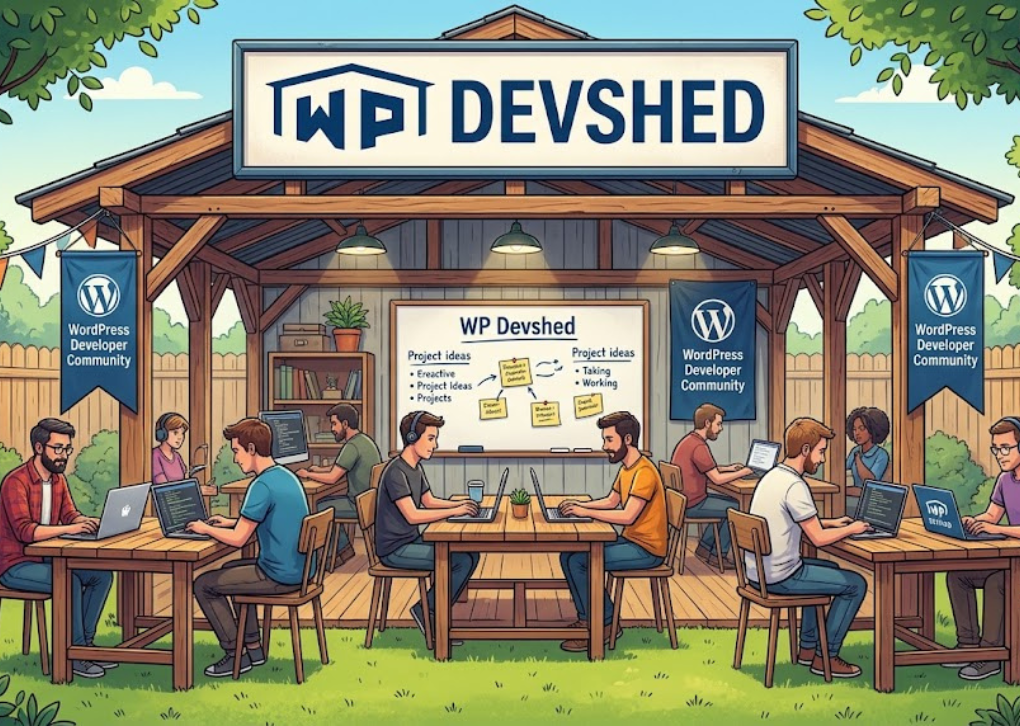
Wpdevshed.com is a long-running website built around WordPress, website creation, hosting, themes, plugins, and digital publishing. For readers trying to understand what the platform actually offers today, the most useful answer is not simply “a WordPress blog.” It is better viewed as a hybrid resource: part historical WordPress theme project, part educational library, part hosting-review site, and increasingly a broader technology and online-business publication.
That mix gives the website genuine depth, but it also means readers should use different sections differently. A beginner looking for basic WordPress guidance may value an evergreen tutorial, while a site owner comparing hosting companies should pay much closer attention to testing methodology, update dates, affiliate relationships, and whether the recommendation matches their own traffic and technical requirements.
What Is Wpdevshed.com?
Wpdevshed.com describes its goal as helping WordPress webmasters build and maintain better websites. According to its About page, the project began in 2012 as an exercise in learning WordPress theme development, with the idea that creating free themes would be a practical way to understand how quality WordPress themes are built. The site says its themes have accumulated more than one million downloads over time.
That origin matters. The website was not created only as a content publication; it grew out of hands-on theme development. Its official WordPress.org profile also provides an independent signal of that history: the WP Dev Shed account joined WordPress.org in 2013, carries a Theme Developer badge, and is associated with 16 themes, including The Newswire, Looper, Cartel, Superfit, and WP Jurist.
Today, the site covers a wider range of subjects. Its current blog includes WordPress, web hosting, site security, artificial intelligence, online marketing, social media, infrastructure, design tools, and other technology topics. That broader editorial direction is visible in recent article listings, which include subjects such as VPS performance, data sovereignty, cloud security, AI chatbots, email deliverability, and website marketing.
What You Can Find on Wpdevshed.com
The value of the site becomes clearer when its content is separated into practical categories rather than treated as one large blog.
1. Free WordPress Themes
The site still prominently presents free WordPress themes. Its homepage highlights themes such as Looper, Superfit, Cartel, and Blue Chip, while the WordPress.org developer profile confirms a larger theme history.
For users, this history is useful for two reasons. First, it shows that WP Dev Shed has participated directly in the WordPress theme ecosystem rather than writing about themes only from the outside. Second, it gives readers a way to cross-check a theme on WordPress.org before installing it.
Before using any older free theme, check:
- The latest update date
- Compatibility with your WordPress version
- PHP requirements
- Active installations and recent reviews
- Block editor and Gutenberg compatibility
- Accessibility support
- Reported security or maintenance issues
A theme can have a legitimate history and still be a poor fit for a new production website if development has slowed.
2. WordPress Tutorials and Beginner Guides
The site has a substantial archive of tutorials aimed at bloggers, business owners, and people learning WordPress. Examples include guides about starting a blog, identifying a WordPress theme used by another site, backing up a website, working with themes, and handling common administration tasks.
The strongest use case for this archive is conceptual learning. Older articles can still explain ideas such as themes, backups, user roles, site structure, and publishing workflows very well.
The limitation is time sensitivity. WordPress changes, hosting dashboards change, plugins are retired, and security best practices evolve. If a tutorial contains specific interface instructions, plugin recommendations, code snippets, PHP assumptions, or security advice, verify those details against current WordPress documentation before applying them to a live site.
Wpdevshed.com and WordPress Hosting Reviews
Hosting is one of the most commercially important sections of the site. It publishes comparisons and individual reviews covering shared hosting, managed WordPress hosting, VPS providers, and related services.
Its current hosting page says it uses a standardized approach for performance comparisons and explains that WP Dev Shed moved its own site from WP Engine to WPX Hosting, citing cost, support, performance, and capacity as reasons. That kind of first-hand operational detail can be useful because it goes beyond generic feature tables.
Still, hosting recommendations should never be copied blindly. A host that works well for a content publication may not be the best choice for a WooCommerce store, membership platform, learning management system, high-traffic news site, or agency managing dozens of client installations.
When reading one of its hosting reviews, compare at least these factors:
- Data-center location and latency for your audience
- Backup frequency and restoration process
- PHP worker or CPU limits
- Staging environments
- Malware scanning and incident response
- Email hosting availability
- CDN integration
- Migration support
- Renewal pricing
- Cancellation and refund terms
The right host is the one that fits your workload, not the one with the longest feature list.
How Wpdevshed.com Makes Money
Transparency around monetization is an important E-E-A-T signal, especially on websites that review hosting and software.
The site states that it earns income by referring webmasters to hosting companies and other tools and services. Its FTC disclosure says the site has affiliate relationships with many, though not all, companies it recommends, and that referral commissions do not add extra cost for the customer. The disclosure also states that its shared-hosting recommendations are based on accounts it holds with the companies and ongoing research into their relative performance.
Affiliate monetization is not automatically a problem. Many high-quality technology publications use it. What matters is whether commercial incentives are clearly disclosed and whether the editorial content gives readers enough evidence to make an independent decision.
A smart reader should therefore treat affiliate links as a disclosure issue, not an automatic credibility failure.
Is Wpdevshed.com Legit and Trustworthy?
There are several positive legitimacy signals around WP Dev Shed.
The domain has a documented history going back more than a decade, the site has an official WordPress.org profile, and that profile records theme-development activity and historical contributions. The About page also explains the project’s origins, purpose, theme work, and monetization model.
At the same time, “legitimate” and “always correct” are not the same thing. No technology site should be used as the sole authority for security changes, plugin compatibility, legal compliance, pricing, or critical hosting decisions.
A better trust model is evidence-based:
- Use the article to understand the topic.
- Check the publication or update date.
- Verify technical details with official documentation.
- Compare commercial recommendations with at least two independent sources.
- Test major changes on staging before applying them to a production website.
That method protects you from outdated information on any technology website.
The Biggest Strengths of Wpdevshed.com
The first strength is historical WordPress experience. The site’s theme-development background gives it more context than a publication created purely to rank informational keywords.
The second is breadth. Readers can move from beginner WordPress tutorials to hosting comparisons, site security, web infrastructure, marketing, social media, and technology topics without leaving the domain.
The third is free access. Much of the educational material can be read without a paid subscription, and the site has historically distributed free themes and plugins.
The fourth is commercial disclosure. The presence of an explicit FTC disclosure makes the business relationship behind hosting and tool recommendations easier to understand.
Where Wpdevshed.com Has Limitations
The biggest limitation is inconsistency in content age. Some WordPress tutorials in the archive were published years ago, while other pages and reviews are labeled for 2026. A reader who lands from Google should therefore inspect dates and context rather than assume every step reflects the current WordPress interface or plugin ecosystem.
Another limitation is editorial breadth. The blog now covers subjects far beyond WordPress, including marketing, social platforms, AI, business technology, security, and infrastructure. That variety may be useful, but it can make the site feel less narrowly specialized than a publication focused exclusively on WordPress engineering.
There is also an important distinction between the site’s historical community activity and present-day contribution levels. WordPress.org currently shows no recent contributions from the WP Dev Shed profile during the latest listed 12-month period, although the profile preserves substantial older theme activity. That does not mean the website is inactive; it simply means readers should not use historical contribution records as proof of current WordPress-core or theme-team activity.
Who Should Use Wpdevshed.com?
The site is most useful for readers who want practical website knowledge without immediately diving into developer documentation.
It is particularly relevant for:
- WordPress beginners learning terminology and site-management basics
- Bloggers researching domains, hosting, themes, and publishing workflows
- Small-business owners maintaining their own websites
- Marketers who need a working understanding of WordPress and web tools
- Site owners comparing hosting providers
- Designers researching themes and website-building options
- Developers looking for historical context or beginner-facing explanations they can share with clients
Advanced developers may still find selected articles useful, but for API behavior, hooks, core changes, security-sensitive code, and current platform specifications, primary documentation should remain the final authority.
How to Use Wpdevshed.com More Effectively
The best way to use the site is to treat it as a research starting point rather than a one-click decision engine.
Start With the Problem, Not the Product
If you need faster hosting, define the bottleneck first. Is the issue server response time, database load, uncached WooCommerce requests, image weight, third-party scripts, or traffic spikes?
Only then should you compare providers. This avoids paying for a more expensive hosting plan when the real issue exists elsewhere in the WordPress stack.
Check Dates Before Copying Technical Steps
A five-year-old explanation of a WordPress concept may still be excellent. A five-year-old recommendation for a plugin, security configuration, PHP version, or hosting interface may require verification.
That distinction is critical when using older WordPress tutorials.
Separate Editorial Information From Commercial Intent
If the site recommends a hosting provider or paid tool, read the reasoning and disclosure, then compare specifications, current pricing, independent benchmarks, and support policies yourself.
Good affiliate content should help you understand why a product is recommended instead of simply pushing you toward a purchase button.
Use WordPress.org as a Cross-Check
For themes and plugins, verify active versions, compatibility, changelogs, support history, and developer activity on WordPress.org whenever possible. The official WP Dev Shed profile is especially useful for confirming its historical theme portfolio.
How Wpdevshed.com Fits Into the Modern WordPress Research Process
The WordPress information ecosystem is fragmented. Official documentation explains the platform, hosting companies explain their infrastructure, plugin developers document their products, and independent publishers compare options from a user perspective.
WP Dev Shed occupies the independent-publisher layer. Its strongest role is helping readers discover options, understand concepts, and build a shortlist. It should complement, not replace, WordPress.org documentation, vendor changelogs, security advisories, performance testing, and hands-on staging.
That distinction is especially important in 2026 because WordPress sites increasingly depend on interconnected services: CDNs, managed hosting, security platforms, analytics, email delivery, AI tools, payment systems, and third-party APIs. A good article can narrow the field, but implementation decisions still need current technical verification.
What Makes a Useful WordPress Resource in 2026?
A useful WordPress website is no longer simply one that publishes hundreds of tutorials. Search users increasingly need information that explains context, risks, alternatives, and practical implementation.
Strong resources should ideally provide:
- Clear publication and update dates
- Author information
- First-hand testing where relevant
- Screenshots or reproducible instructions
- Affiliate disclosures
- Technical limitations
- Pros and cons rather than one-sided recommendations
- Links to primary documentation
- Explanations of who a product is and is not suitable for
These factors become especially important when evaluating hosting, security software, SEO plugins, backup solutions, or performance products.
Wpdevshed.com already demonstrates some of these signals through its history, author attribution, disclosures, and first-hand hosting commentary. Readers can strengthen the research process further by checking primary sources before making decisions that involve money or production infrastructure.
FAQ About Wpdevshed.com
What is Wpdevshed.com used for?
Wpdevshed.com is a website focused on WordPress, hosting, themes, plugins, website management, technology, marketing, and related digital tools. It began as a WordPress theme-development project and later expanded into a broader educational and review publication.
Users may encounter the site while researching WordPress tutorials, hosting companies, free themes, blogging advice, site security, marketing tools, or broader web-development subjects.
Is Wpdevshed.com a WordPress development agency?
No. Its About page explicitly says WP Dev Shed is not a web development agency. The site provides content, free themes and plugins, and limited support around its own themes, but directs users with complex development requirements toward professional developers or specialist services.
This distinction matters if you need custom development, debugging, WooCommerce modifications, performance engineering, or ongoing site maintenance.
Does Wpdevshed.com offer free WordPress themes?
Yes. The site showcases free themes, and its WordPress.org profile lists 16 themes associated with the WP Dev Shed account.
Before installing any theme, verify its latest update, compatibility, support status, PHP requirements, accessibility features, and current security posture. Historical popularity alone should not determine whether a theme belongs on a new website.
Can I trust Wpdevshed.com hosting recommendations?
They can be useful as one input in your research. The site discloses affiliate relationships and says it has used accounts with recommended shared hosts and conducted comparative research.
You should still compare current pricing, independent performance benchmarks, customer-support quality, renewal terms, backup policies, server limits, and data-center options before purchasing hosting.
Is Wpdevshed.com only about WordPress?
No. WordPress remains central to the brand and its history, but the current blog also publishes material about hosting, cybersecurity, artificial intelligence, marketing, social media, cloud infrastructure, design, and online business.
That broader scope makes the publication relevant to more website owners, although readers searching for highly specialized WordPress engineering information may still need primary developer documentation.
Final Verdict: Is Wpdevshed.com Worth Using?
Wpdevshed.com is best understood as an established WordPress-rooted publishing site with a real theme-development history, a large archive of educational content, hosting reviews, free resources, and an increasingly broad technology focus. Its longevity, WordPress.org footprint, and clear affiliate disclosure are meaningful trust signals, but readers should still distinguish between evergreen explanations, older tutorials, and time-sensitive commercial recommendations.
Use the site to learn, compare, and build a shortlist. Then verify anything that affects security, compatibility, pricing, or production infrastructure through current primary sources before taking action.
That approach gets the most value from Wpdevshed.com while avoiding the most common mistake readers make with any long-running technology publication: assuming that every useful article is automatically current.